Lichens symbiotic close
1344×768 · AVIF · CC BY 4.0
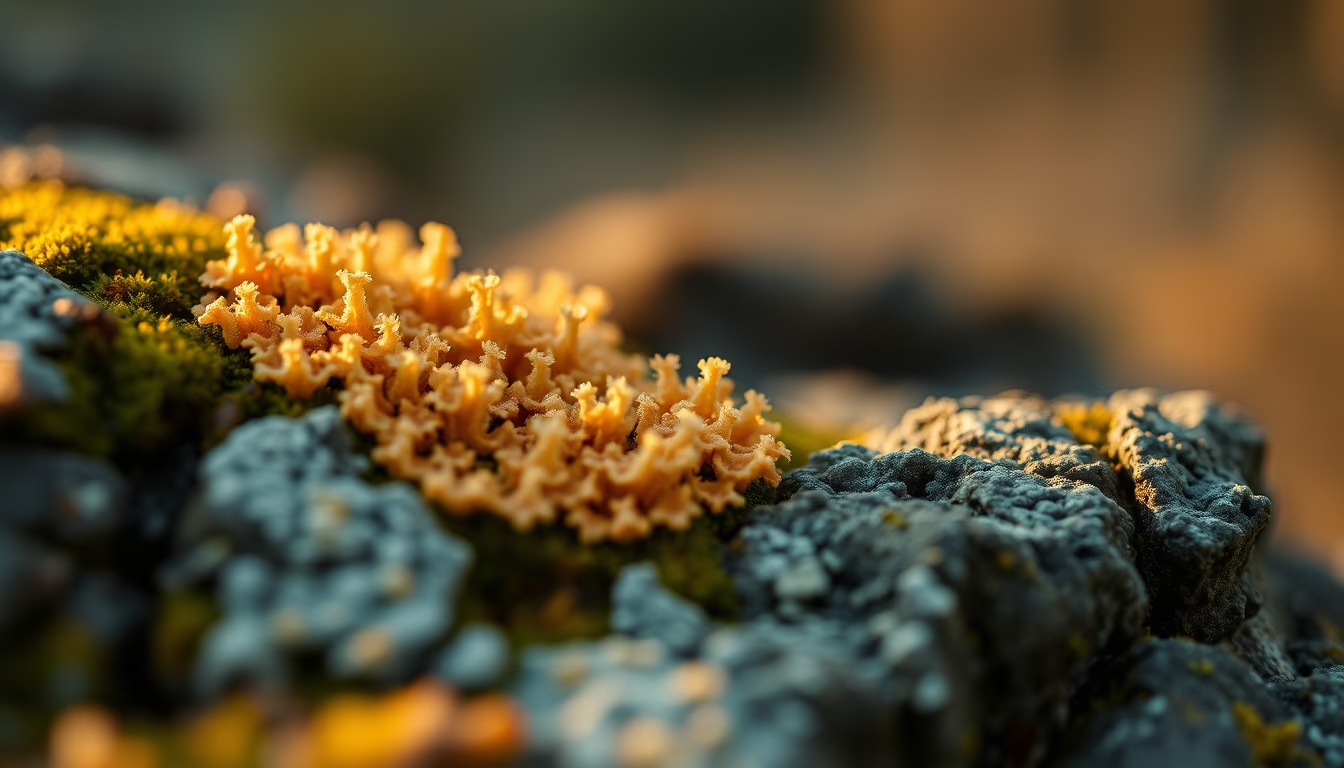
Lichens are symbiotic associations between fungi and algae or cyanobacteria, forming pioneer organisms in various ecosystems.
About this subject
Lichens represent one of the most fascinating examples of mutualistic symbiosis in nature. This association involves a fungus (mycobiont) and one or more photosynthetic partners (photobionts), which can be green algae or cyanobacteria. The fungus provides structure and protection, while the photobiont produces carbohydrates through photosynthesis. This relationship allows lichens to colonize extreme environments, such as rocky surfaces, tree bark, deserts, and polar regions, where few other organisms survive.
In Brazil, lichens are abundant in biomes such as the Atlantic Forest, the Amazon, and the Cerrado. They play crucial ecological roles: they are bioindicators of air quality, as they absorb pollutants directly from the atmosphere; they contribute to soil formation through rock weathering; and they serve as food and shelter for microfauna. It is estimated that there are more than 20,000 species of lichens worldwide, with great diversity still to be cataloged.
Historically, lichens were used in the production of natural dyes, such as litmus, used as a pH indicator, and in traditional medicine for their antimicrobial properties. Some lichens produce unique chemicals, such as lichen acids, which protect them against herbivores and pathogens. In popular culture, they are often mistaken for mosses, but their structure and physiology are completely different.
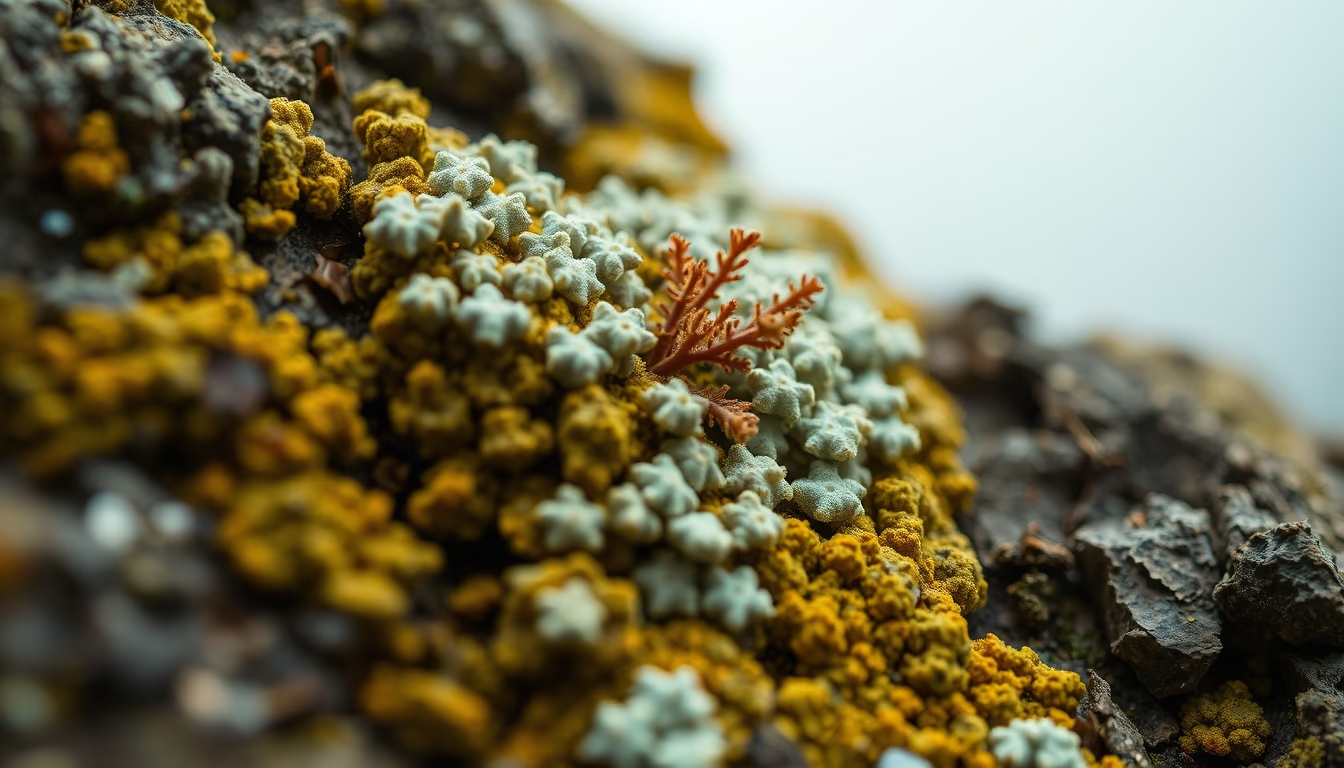
The close-up photograph reveals details of lichen morphology, such as soredia (propagules) and apothecia (fungal reproductive structures). This intimate view allows appreciation of the complexity of an organism that is, in fact, an integrated community of distinct species, functioning as a single body.
Frequently Asked Questions
What are lichens and how do they form?
Lichens are composite organisms formed by the symbiotic association between a fungus and algae or cyanobacteria. The fungus provides structure and protection, while the photosynthetic partner produces food. They arise when both organisms meet in the environment and establish a mutualistic relationship.
Why are lichens ecologically important?
Lichens serve as bioindicators of air pollution by accumulating toxins; they contribute to soil formation by weathering rocks; and they provide habitat and food for invertebrates. They also play a role in nutrient cycling in fragile ecosystems.
Where can lichens be found in Brazil?
In Brazil, lichens are common on tree trunks in the Atlantic Forest and Amazon, on rocky outcrops in the Cerrado, and even in urban areas such as walls and roofs. They are especially diverse in regions with high humidity and low pollution.
Direct URL
https://pub-c7d6a6ea828543ac903a74a341ccb2e1.r2.dev/imagens/lichens-symbiotic-close-cinematic-wide-shot-fresh8.avifHow to credit
Include a visible link back to UtilizAí. Copy one of the snippets below:
<a href="https://xn--utiliza-eza.com/en/midia/imagens/lichens-symbiotic-close-cinematic-wide-shot-fresh8">Lichens symbiotic close</a> by <a href="https://xn--utiliza-eza.com">UtilizAí</a>, licensed under <a href="https://creativecommons.org/licenses/by/4.0/">CC BY 4.0</a>.
[Lichens symbiotic close](https://xn--utiliza-eza.com/en/midia/imagens/lichens-symbiotic-close-cinematic-wide-shot-fresh8) by [UtilizAí](https://xn--utiliza-eza.com), CC BY 4.0
License: CC-BY-4.0