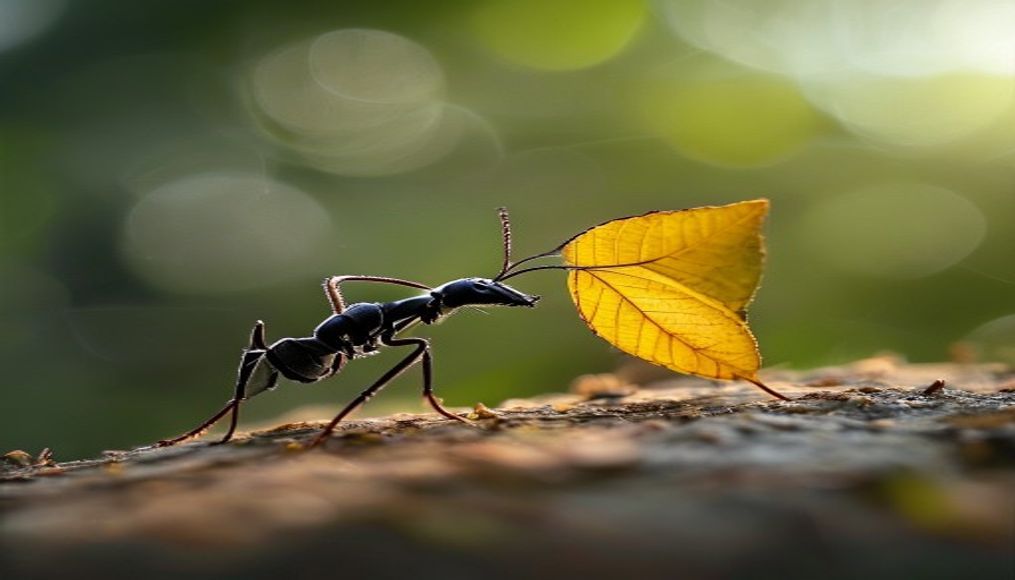
Leafcutter ant carrying
1344×768 · AVIF · CC BY 4.0
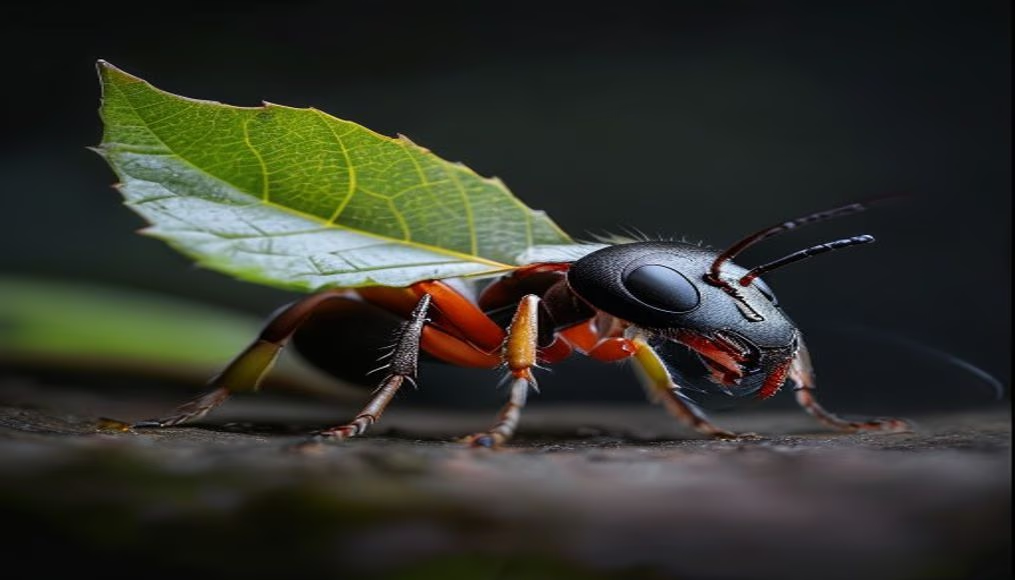
Leafcutter ants (Atta spp.) carry leaf fragments to cultivate fungus in underground nests, a remarkable example of symbiosis and ant agriculture.
About this subject
Leafcutter ants, belonging to the genera Atta and Acromyrmex, are found throughout the Americas, from the southern United States to Argentina. These social insects have a worker caste specialized in cutting and transporting pieces of leaves, flowers, and other vegetation. A single worker can carry up to 50 times its own weight, and large colonies may contain millions of individuals with an extensive tunnel system stretching several meters deep.
The cutting process uses sharp mandibles, and ants form chemical trails to guide others between the food source and the nest. The leaves are not eaten directly; they serve as a substrate for a symbiotic fungus of the genus Leucoagaricus, which is the colony's primary food source. This mutualistic relationship is considered a form of agriculture, having evolved about 50 million years ago.
Each colony has a queen that can live over a decade, producing thousands of eggs per day. Workers divide tasks such as cutting, transporting, fungus care, and defense. Some species have large-headed soldiers for protection. Communication occurs via pheromones and vibrations, enabling efficient coordination.
Ecologically, leafcutter ants are important soil engineers: their nests aerate and turn the soil, recycle nutrients, and influence vegetation. However, in agricultural areas they are considered pests, defoliating eucalyptus, citrus, and other crops. Control is done with bait insecticides, but their complex social organization makes management challenging.
Frequently Asked Questions
Why do leafcutter ants cut leaves?
They cut leaves to cultivate a symbiotic fungus inside the nest. This fungus is the colony's main food source, and leaves serve as a substrate for its growth.
How can a leafcutter ant carry such a large leaf?
They have strong mandibles and adapted muscles, capable of carrying up to 50 times their own weight. They also use chemical trails to optimize transport.
What is the ecological importance of leafcutter ants?
Leafcutter ants are ecosystem engineers: their nests aerate the soil, recycle nutrients, and influence vegetation. However, they can also be significant agricultural pests.
Direct URL
https://pub-c7d6a6ea828543ac903a74a341ccb2e1.r2.dev/imagens/leafcutter-ant-carrying-studio-editorial-portrait-p1.avifHow to credit
Include a visible link back to UtilizAí. Copy one of the snippets below:
<a href="https://xn--utiliza-eza.com/en/midia/imagens/leafcutter-ant-carrying-studio-editorial-portrait-p1">Leafcutter ant carrying</a> by <a href="https://xn--utiliza-eza.com">UtilizAí</a>, licensed under <a href="https://creativecommons.org/licenses/by/4.0/">CC BY 4.0</a>.
[Leafcutter ant carrying](https://xn--utiliza-eza.com/en/midia/imagens/leafcutter-ant-carrying-studio-editorial-portrait-p1) by [UtilizAí](https://xn--utiliza-eza.com), CC BY 4.0
License: CC-BY-4.0