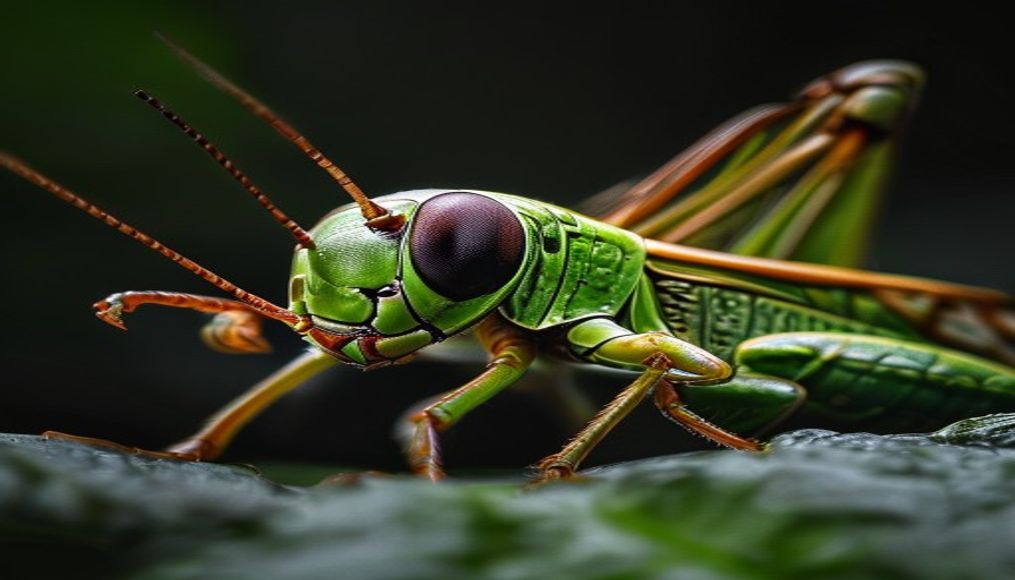
Praying mantis green macro
1344×768 · JPG · CC BY 4.0
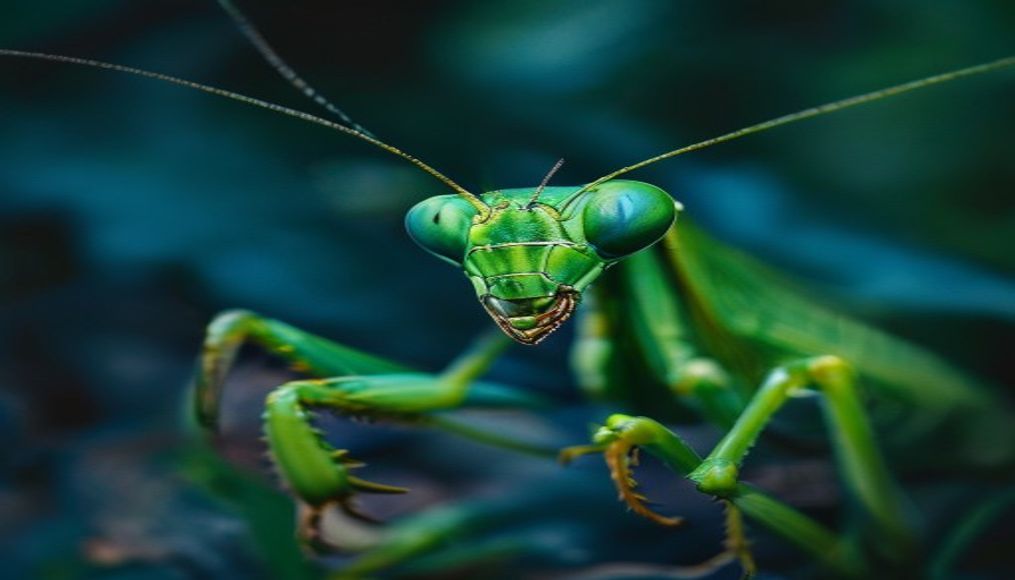
The praying mantis is a predatory insect known for its prayer-like stance and rotating head, found in various tropical ecosystems.
About this subject
The praying mantis (order Mantodea) is a carnivorous insect inhabiting tropical and subtropical regions worldwide. In Brazil, it is common in Cerrado, Atlantic Forest, and even urban gardens. Its common name comes from the posture of its forelegs, resembling hands in prayer. In fact, this stance is a hunting strategy: the insect remains motionless for hours, waiting for prey to approach, then captures it with a rapid strike that takes less than a tenth of a second.
A striking feature of the mantis is its triangular head, which can rotate up to 180 degrees, providing binocular vision and depth perception. This ability is rare among insects and crucial for calculating the exact distance to prey. They feed mainly on flies, crickets, grasshoppers, and even small lizards or birds. Females are known for sexual cannibalism: after mating, many devour the male to obtain nutrients for egg production.
Praying mantises play an important ecological role as natural pest controllers and are used in some countries as biological control agents in agriculture. Their camouflage is remarkable: green and brown colors help them blend with leaves and twigs. Additionally, they display a deimatic behavior when threatened, raising their body and spreading wings to appear larger. The life cycle includes egg deposition in oothecae (foamy structures) that protect the eggs during winter or dry season.
Frequently Asked Questions
Why is the praying mantis called so?
The name comes from the posture of its forelegs, which resemble hands in prayer. In fact, this stance is an adaptation for quickly capturing prey.
Are praying mantises dangerous to humans?
No, praying mantises are not dangerous to humans. Although they may pinch with their spiny legs if handled, they have no venom and do not transmit diseases.
How do praying mantises reproduce?
After mating, the female often devours the male for nutrients. She lays eggs in an ootheca, a foamy structure that protects them until hatching.
Direct URL
https://pub-c7d6a6ea828543ac903a74a341ccb2e1.r2.dev/imagens/praying-mantis-green-macro-aerial-drone-shot-p4.jpgHow to credit
Include a visible link back to UtilizAí. Copy one of the snippets below:
<a href="https://xn--utiliza-eza.com/en/midia/imagens/praying-mantis-green-macro-aerial-drone-shot-p4">Praying mantis green macro</a> by <a href="https://xn--utiliza-eza.com">UtilizAí</a>, licensed under <a href="https://creativecommons.org/licenses/by/4.0/">CC BY 4.0</a>.
[Praying mantis green macro](https://xn--utiliza-eza.com/en/midia/imagens/praying-mantis-green-macro-aerial-drone-shot-p4) by [UtilizAí](https://xn--utiliza-eza.com), CC BY 4.0
License: CC-BY-4.0