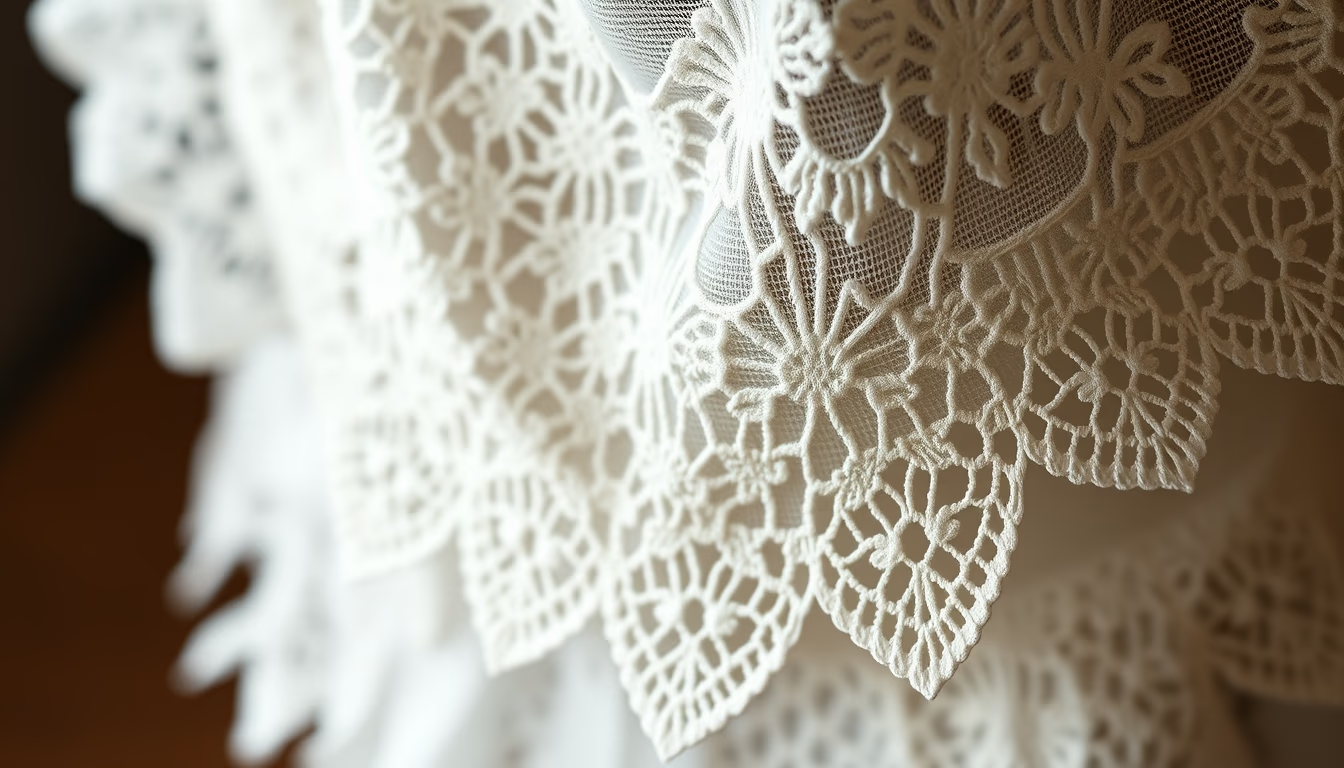
Lacework antique tatting
1344×768 · AVIF · CC BY 4.0

Antique tatting, a lace-making technique using shuttles, creates delicate and intricate pieces dating back to the 19th century.
About this subject
Tatting is a lace-making technique that uses one or more shuttles to form knots and rings, creating geometric and floral patterns. It emerged in early 19th-century Europe, possibly as an evolution of French frivolité. Unlike bobbin lace or needle lace, tatting is characterized by its portability and speed of execution, becoming a popular elegant pastime among Victorian middle-class women.
Antique tatting pieces often adorned clothing, tablecloths, napkins, and home decor items. Cotton or linen thread was most common, but finer examples used silk or metallic threads. Museums such as the Victoria and Albert Museum in London hold significant collections of 19th and 20th-century tatting. The technique nearly fell into disuse in the 20th century but has been revived by contemporary artisans.
In Brazil, tatting arrived with European immigrants and found fertile ground in lace-making communities, especially in the Northeast region. There, the technique blended with local traditions such as labirinto and renascença, producing hybrid pieces. Today, antique tatting is valued by collectors and enthusiasts of historical handicrafts, often found at antique fairs and online auctions.
Frequently Asked Questions
What is the difference between tatting and bobbin lace?
Tatting uses a shuttle to make knots, while bobbin lace uses multiple bobbins on a pillow. Tatting is more portable and produces rings and chains, whereas bobbin lace forms continuous strips.
Is tatting still practiced today?
Yes, tatting has experienced a revival among modern artisans, with online tutorials and dedicated communities. Contemporary techniques include variations with beads and colored threads.
How to identify authentic antique tatting?
Antique tatting usually features fine threads and very regular knots. The absence of machine marks and the presence of small imperfections indicate handmade work. Pieces from the 19th century often use cotton or silk.
Direct URL
https://pub-c7d6a6ea828543ac903a74a341ccb2e1.r2.dev/imagens/lacework-antique-tatting-tilt-shift-miniature-fresh10.avifHow to credit
Include a visible link back to UtilizAí. Copy one of the snippets below:
<a href="https://xn--utiliza-eza.com/en/midia/imagens/lacework-antique-tatting-tilt-shift-miniature-fresh10">Lacework antique tatting</a> by <a href="https://xn--utiliza-eza.com">UtilizAí</a>, licensed under <a href="https://creativecommons.org/licenses/by/4.0/">CC BY 4.0</a>.
[Lacework antique tatting](https://xn--utiliza-eza.com/en/midia/imagens/lacework-antique-tatting-tilt-shift-miniature-fresh10) by [UtilizAí](https://xn--utiliza-eza.com), CC BY 4.0
License: CC-BY-4.0