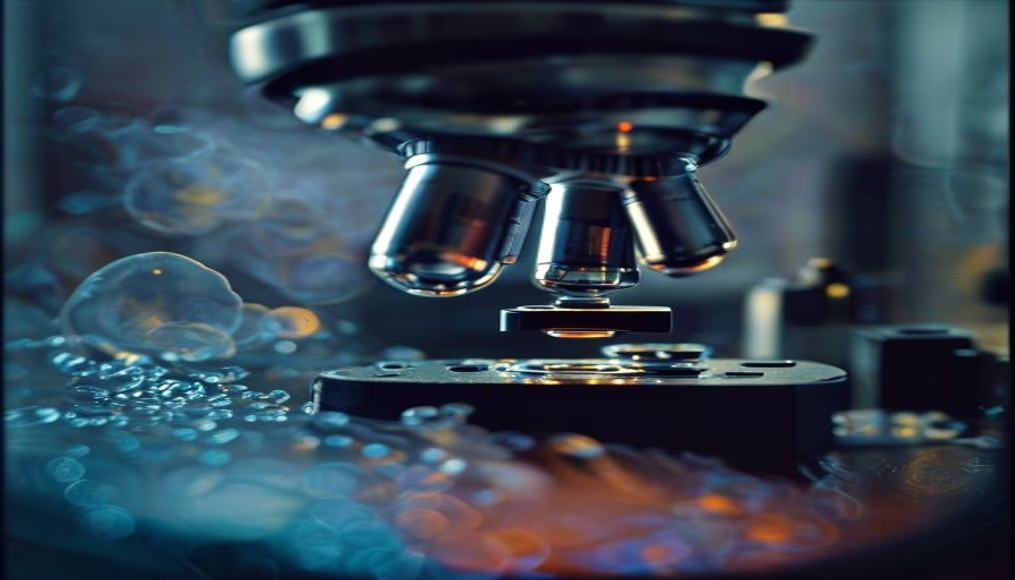
Lab technician looking through microscope
1344×768 · AVIF · CC BY 4.0

Lab technician analyzes a sample using an optical microscope in a clinical research setting.
About this subject
The optical microscope, invented in the late 16th century, is a fundamental tool in health laboratories. It enables the visualization of structures invisible to the naked eye, such as cells, bacteria, and protozoa. In Brazil, laboratories at public universities and research institutes use these instruments to diagnose tropical diseases like malaria and leishmaniasis, as well as for routine hospital analyses.
Lab technicians spend hours adjusting focus and illumination to achieve sharp images. Köhler illumination, a standardized technique from the 19th century, is often employed to ensure optimal contrast and resolution. These professionals follow strict biosafety protocols, such as wearing gloves and lab coats, when handling potentially infectious samples.
The work environment is controlled: temperature around 22°C, relative humidity between 40% and 60%, and easy-to-clean stainless steel countertops. Optical microscopy remains the first line of investigation before more expensive techniques like PCR or genetic sequencing. In 2023, Brazil trained over 15,000 clinical analysis technicians, according to the Ministry of Education.
Trivia: the world's largest optical microscope, located in Japan, weighs 7 tons and can achieve magnifications of up to 10,000 times. Common lab models typically magnify from 40 to 1,000 times.
Frequently Asked Questions
What is the difference between an optical and an electron microscope?
An optical microscope uses visible light and glass lenses, magnifying up to 1,000 times. An electron microscope uses electron beams, reaching magnifications of up to 2 million times, but requires a vacuum and complex sample preparation.
What types of samples does a lab technician analyze under a microscope?
Common samples include blood, urine, stool, secretions, and tissues. For example, in a complete blood count, the technician examines blood smears to count red cells, white cells, and platelets.
What risks does a lab technician face when using a microscope?
Main risks include exposure to biological agents (bacteria, viruses) and eye strain from prolonged use. Using PPE and taking regular breaks helps minimize these hazards.
Direct URL
https://pub-c7d6a6ea828543ac903a74a341ccb2e1.r2.dev/imagens/lab-technician-looking-through-microscope-symmetric-bright-midday-7.avifHow to credit
Include a visible link back to UtilizAí. Copy one of the snippets below:
<a href="https://xn--utiliza-eza.com/en/midia/imagens/lab-technician-looking-through-microscope-symmetric-bright-midday-7">Lab technician looking through microscope</a> by <a href="https://xn--utiliza-eza.com">UtilizAí</a>, licensed under <a href="https://creativecommons.org/licenses/by/4.0/">CC BY 4.0</a>.
[Lab technician looking through microscope](https://xn--utiliza-eza.com/en/midia/imagens/lab-technician-looking-through-microscope-symmetric-bright-midday-7) by [UtilizAí](https://xn--utiliza-eza.com), CC BY 4.0
License: CC-BY-4.0