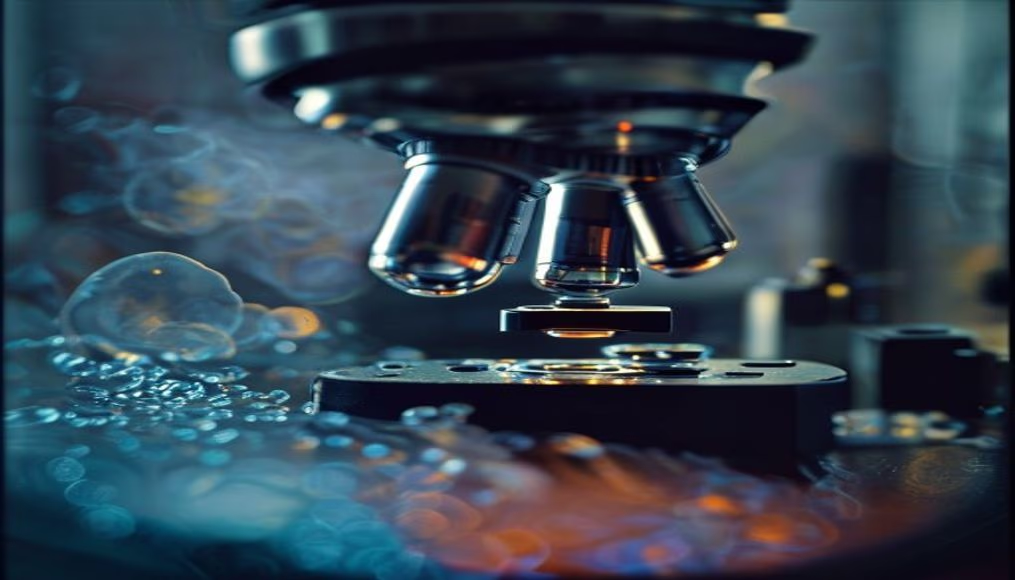
Lab technician looking through microscope
1344×768 · AVIF · CC BY 4.0
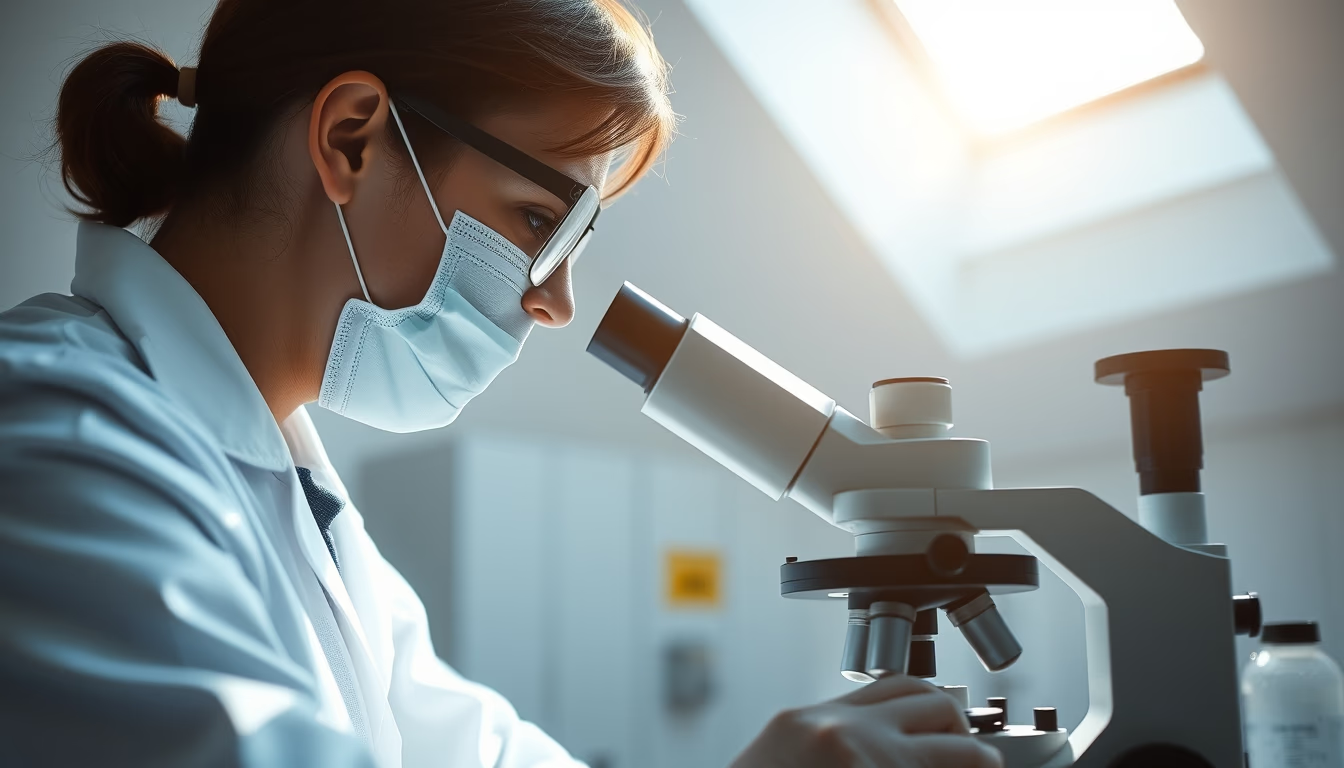
Lab technician examines samples under a microscope during clinical research in a high-tech environment.
About this subject
The work of a lab technician is fundamental to scientific progress, especially in healthcare. These professionals are responsible for preparing and analyzing biological samples, such as blood, tissues, and cell cultures, using equipment like optical or electron microscopes. Microscopy enables the identification of pathogens, evaluation of abnormal cells, and monitoring of treatments, being essential in diagnosing diseases such as cancer, bacterial and viral infections.
In Brazil, the training of lab technicians is regulated by the Federal Council of Biomedicine and the Ministry of Education, requiring a technical or higher education degree in fields like Biomedicine, Pharmacy, or Clinical Analysis. The work environment typically includes laboratories in hospitals, clinics, universities, and research centers, where biosafety is strict, with the use of lab coats, gloves, and protective goggles.
The daily routine of a lab technician involves everything from sample collection and processing to operating sophisticated equipment such as spectrophotometers and centrifuges. Precision is crucial, as errors can compromise diagnoses. Additionally, the field has evolved with automation and artificial intelligence, but microscopy remains an irreplaceable tool for detailed analysis.
Interestingly, the microscope was invented in the 17th century and revolutionized medicine. Today, techniques like fluorescence and confocal microscopy allow visualization of structures at the molecular level. In Brazil, the demand for lab technicians grows with an aging population and the rise of chronic diseases, making the profession essential for the healthcare system.
Frequently Asked Questions
What training is required to become a lab technician in Brazil?
A technical course in Clinical Analysis or a degree in Biomedicine, Pharmacy, or related fields is required, along with registration with the respective professional council.
What are the main activities of a lab technician?
Activities include sample collection and preparation, operation of microscopes and other equipment, performing lab tests, and recording results.
How does microscopy contribute to disease diagnosis?
Microscopy allows visualization of cells, microorganisms, and tissue changes, aiding in the diagnosis of infections, cancer, and other conditions.
Direct URL
https://pub-c7d6a6ea828543ac903a74a341ccb2e1.r2.dev/imagens/lab-technician-looking-through-microscope-symmetric-bright-midday-4.avifHow to credit
Include a visible link back to UtilizAí. Copy one of the snippets below:
<a href="https://xn--utiliza-eza.com/en/midia/imagens/lab-technician-looking-through-microscope-symmetric-bright-midday-4">Lab technician looking through microscope</a> by <a href="https://xn--utiliza-eza.com">UtilizAí</a>, licensed under <a href="https://creativecommons.org/licenses/by/4.0/">CC BY 4.0</a>.
[Lab technician looking through microscope](https://xn--utiliza-eza.com/en/midia/imagens/lab-technician-looking-through-microscope-symmetric-bright-midday-4) by [UtilizAí](https://xn--utiliza-eza.com), CC BY 4.0
License: CC-BY-4.0