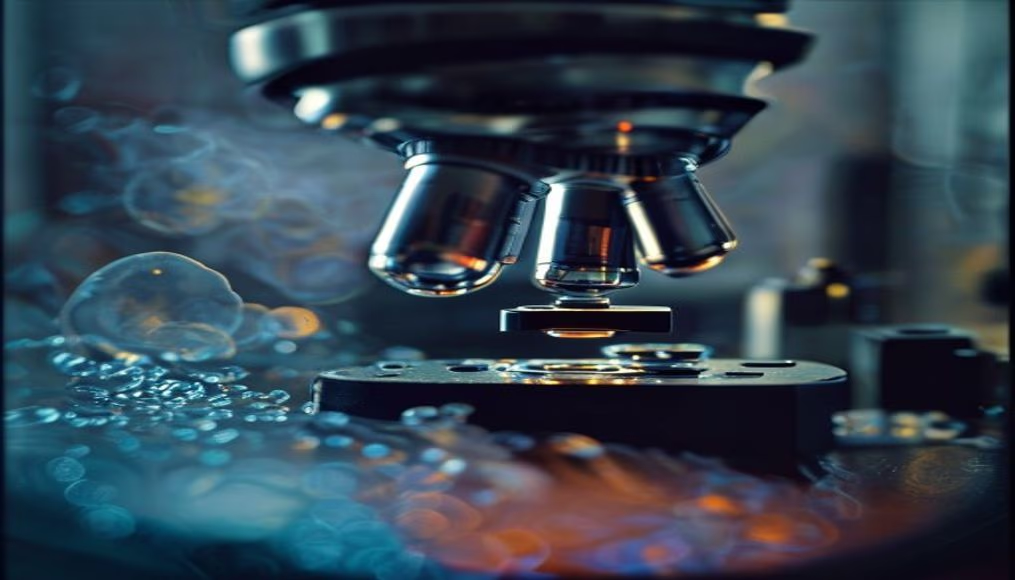
Lab technician looking through microscope
1344×768 · AVIF · CC BY 4.0
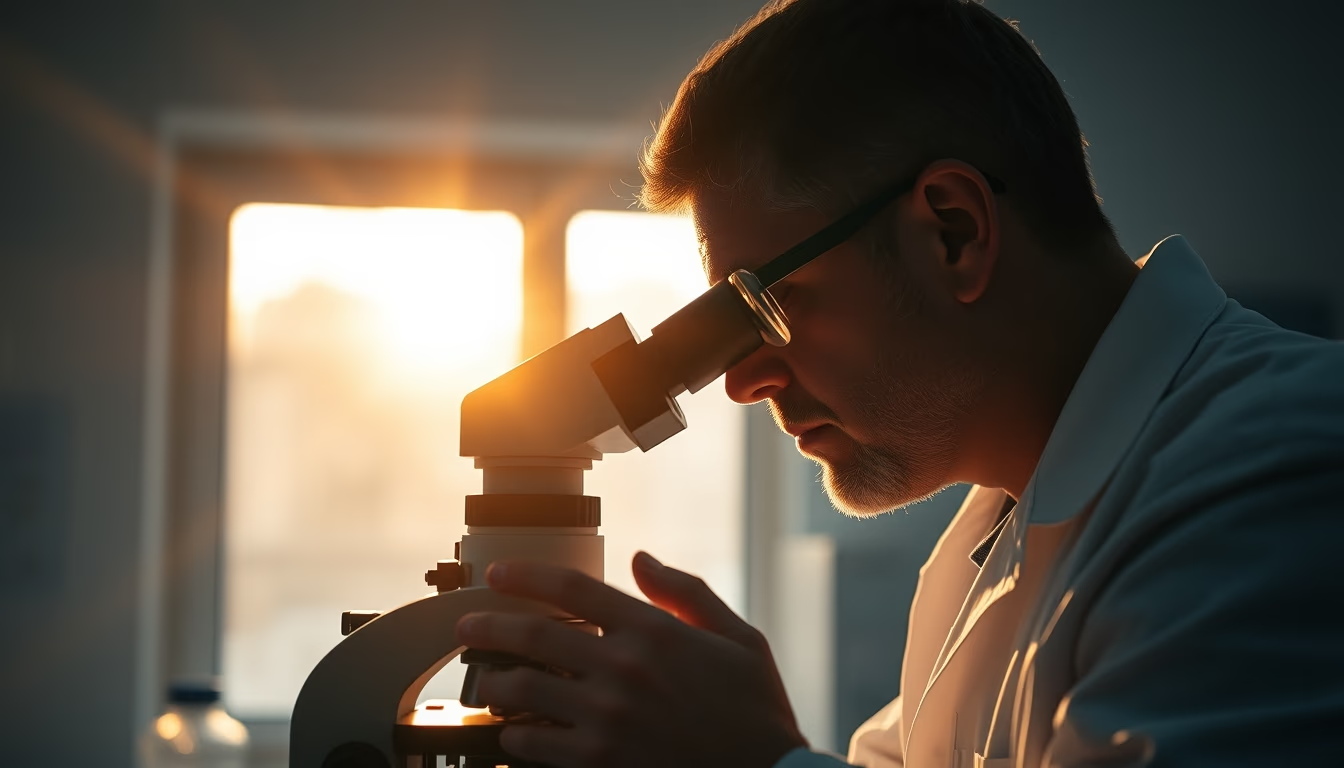
Lab technician analyzes samples under a microscope during scientific research in a controlled environment.
About this subject
The work of a lab technician is crucial for scientific advancement, especially in healthcare. These professionals prepare samples, operate precision equipment like optical and electron microscopes, and record data that support diagnoses and research. In Brazil, technical training in clinical or research laboratories is offered by institutions such as SENAC and federal technical schools, with curricula covering biosafety, microbiology, and hematology.
Microscopy, a central technique, allows visualization of structures invisible to the naked eye, such as cells, bacteria, and viruses. The compound optical microscope, invented in the 16th century, has evolved into digital and confocal versions, expanding analytical capabilities. In a typical lab, the technician adjusts lighting, focuses the sample, and uses specific stains to highlight details, following strict protocols to avoid contamination.
In research settings, technicians collaborate with scientists on projects ranging from vaccine development to studying tropical diseases like dengue and Chagas. The routine demands attention to deadlines and precision, as a single error can compromise months of work. The COVID-19 pandemic underscored their importance, as they processed millions of RT-PCR tests and serological exams.
Interestingly, Brazil holds one of the world's largest databases of microscopic images, maintained by Fiocruz, aiding pathogen identification. Despite increasing automation, human expertise remains irreplaceable for interpreting nuances in complex samples.
Frequently Asked Questions
What training is required to become a lab technician?
Typically, a technical course in clinical analysis, biotechnology, or a related field, lasting 1 to 2 years. Some labs also accept a bachelor's degree in biomedical sciences or pharmacy.
What equipment does a lab technician use besides the microscope?
Common equipment includes centrifuges, autoclaves, spectrophotometers, automatic pipettes, and laminar flow hoods. Usage varies by lab specialty.
Do lab technicians face contamination risks?
Yes, which is why they use personal protective equipment (PPE) like gloves, lab coats, and goggles, and follow biosafety protocols when handling infectious agents.
Direct URL
https://pub-c7d6a6ea828543ac903a74a341ccb2e1.r2.dev/imagens/lab-technician-looking-through-microscope-editorial-overcast-daytime-7.avifHow to credit
Include a visible link back to UtilizAí. Copy one of the snippets below:
<a href="https://xn--utiliza-eza.com/en/midia/imagens/lab-technician-looking-through-microscope-editorial-overcast-daytime-7">Lab technician looking through microscope</a> by <a href="https://xn--utiliza-eza.com">UtilizAí</a>, licensed under <a href="https://creativecommons.org/licenses/by/4.0/">CC BY 4.0</a>.
[Lab technician looking through microscope](https://xn--utiliza-eza.com/en/midia/imagens/lab-technician-looking-through-microscope-editorial-overcast-daytime-7) by [UtilizAí](https://xn--utiliza-eza.com), CC BY 4.0
License: CC-BY-4.0