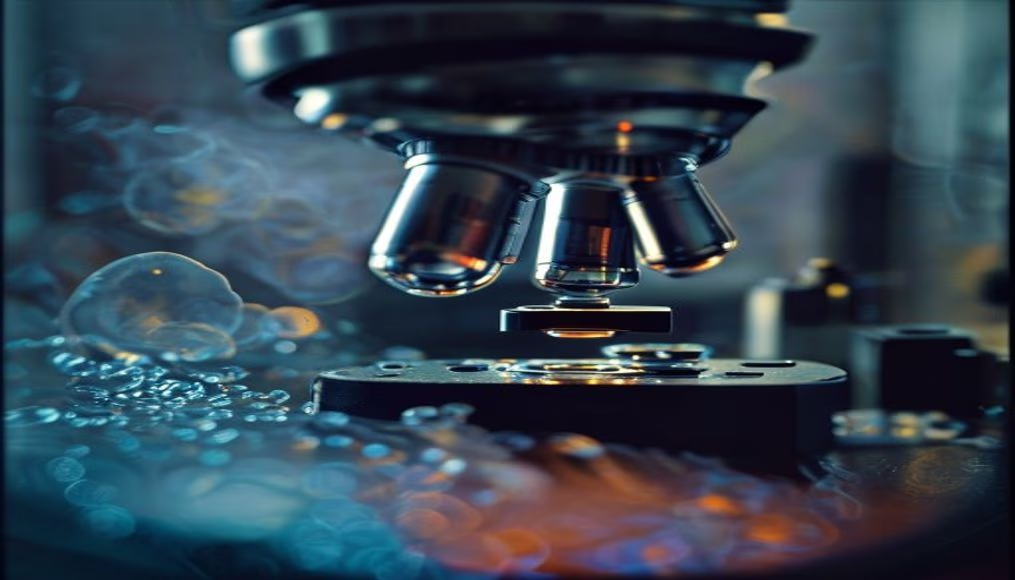
Lab technician looking through microscope
1344×768 · AVIF · CC BY 4.0
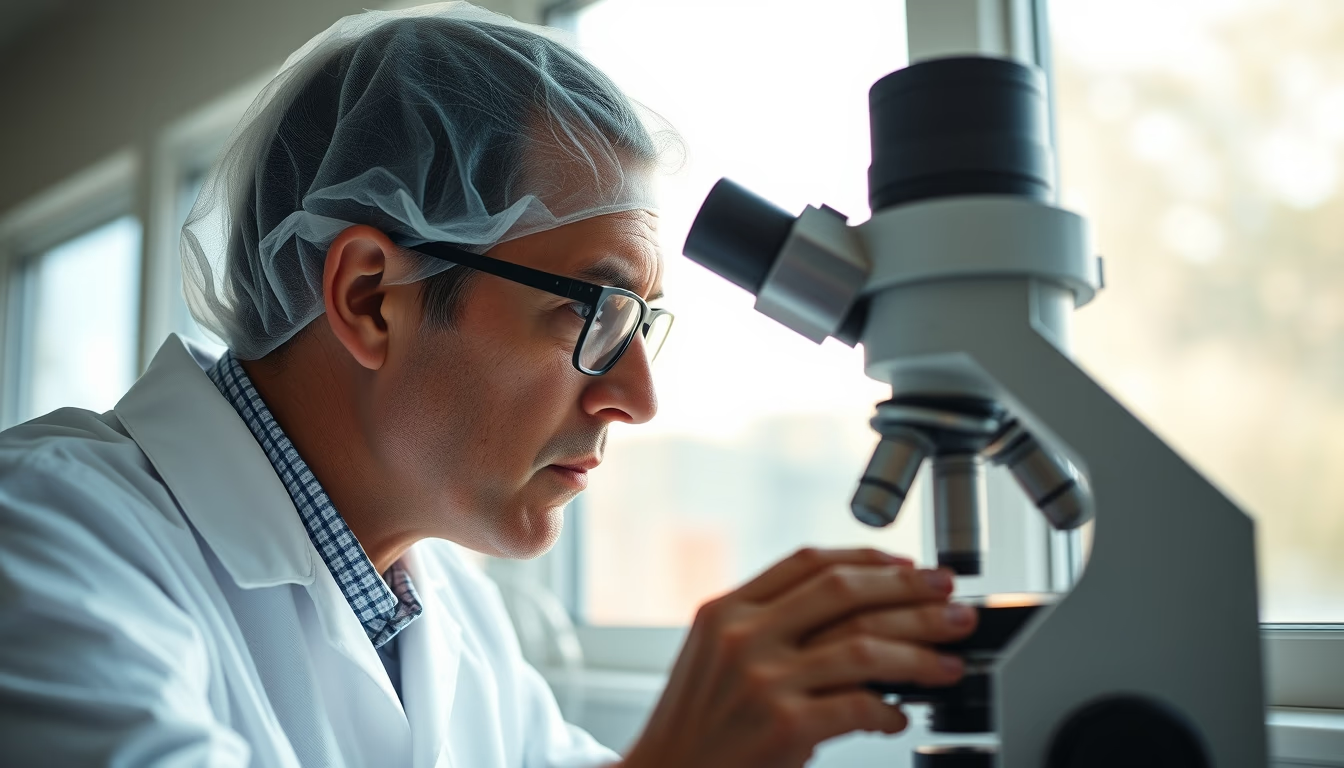
Lab technician examines samples under a microscope during morning routine at a Brazilian research center.
About this subject
In the controlled environment of a clinical analysis or biomedical research laboratory, the lab technician plays an essential role in the chain of diagnoses and scientific discoveries. Using an optical microscope, a fundamental tool since the 17th century, the professional identifies cellular structures, microorganisms, and tissue alterations that may indicate diseases such as infections, anemias, or neoplasms. The work requires precision, technical knowledge, and familiarity with biosafety protocols, especially when handling stained and fixed slides.
In Brazil, lab technician training is offered by technical and higher education institutions, with curricula covering disciplines such as histology, microbiology, biochemistry, and hematology. The morning routine in a large laboratory, such as those linked to the SUS (Brazil's public health system) or research centers like Fiocruz, includes equipment calibration, reagent preparation, and sample organization. Microscope use is often the first step for deeper analyses, such as bacterial cultures or molecular tests.
A historical curiosity: the first compound microscope was developed by Zacharias Janssen in 1590, but it was Antonie van Leeuwenhoek who, in the 17th century, improved lenses and observed bacteria and protozoa for the first time. Today, digital microscopes with attached cameras allow images to be shared in real time with other specialists, facilitating remote diagnoses and telemedicine. The lab technician not only operates the equipment but also interprets and records data that support medical and scientific decisions.
In Brazilian research centers, such as the Butantan Institute and the National Laboratory of Biosciences (LNBio), microscopy is applied in studies of new drugs, vaccines, and biotechnology. The image of a technician focused on the microscope symbolizes the rigor and dedication that drive advances in public health and national science.
Frequently Asked Questions
What training is required to become a lab technician in Brazil?
A technical course in Clinical Analysis or related fields is required, lasting 1 to 2 years, offered by institutions like Senac, ETEC, and federal institutes. Some professionals also pursue higher education in Biomedicine or Pharmacy.
What precautions should a technician take when using a microscope?
Calibrate the equipment, clean lenses with appropriate paper, adjust lighting, and wear gloves when handling slides. After use, cover the microscope to prevent dust accumulation.
How does microscopy aid in disease diagnosis?
It allows visualization of abnormal cells, parasites, bacteria, and tissue changes. For example, in blood tests it identifies anemias and infections; in cervical cytology it detects HPV and cancer; in microbiology it identifies infectious agents.
Direct URL
https://pub-c7d6a6ea828543ac903a74a341ccb2e1.r2.dev/imagens/lab-technician-looking-through-microscope-documentary-morning-6.avifHow to credit
Include a visible link back to UtilizAí. Copy one of the snippets below:
<a href="https://xn--utiliza-eza.com/en/midia/imagens/lab-technician-looking-through-microscope-documentary-morning-6">Lab technician looking through microscope</a> by <a href="https://xn--utiliza-eza.com">UtilizAí</a>, licensed under <a href="https://creativecommons.org/licenses/by/4.0/">CC BY 4.0</a>.
[Lab technician looking through microscope](https://xn--utiliza-eza.com/en/midia/imagens/lab-technician-looking-through-microscope-documentary-morning-6) by [UtilizAí](https://xn--utiliza-eza.com), CC BY 4.0
License: CC-BY-4.0