Lab technician looking through microscope
1344×768 · AVIF · CC BY 4.0
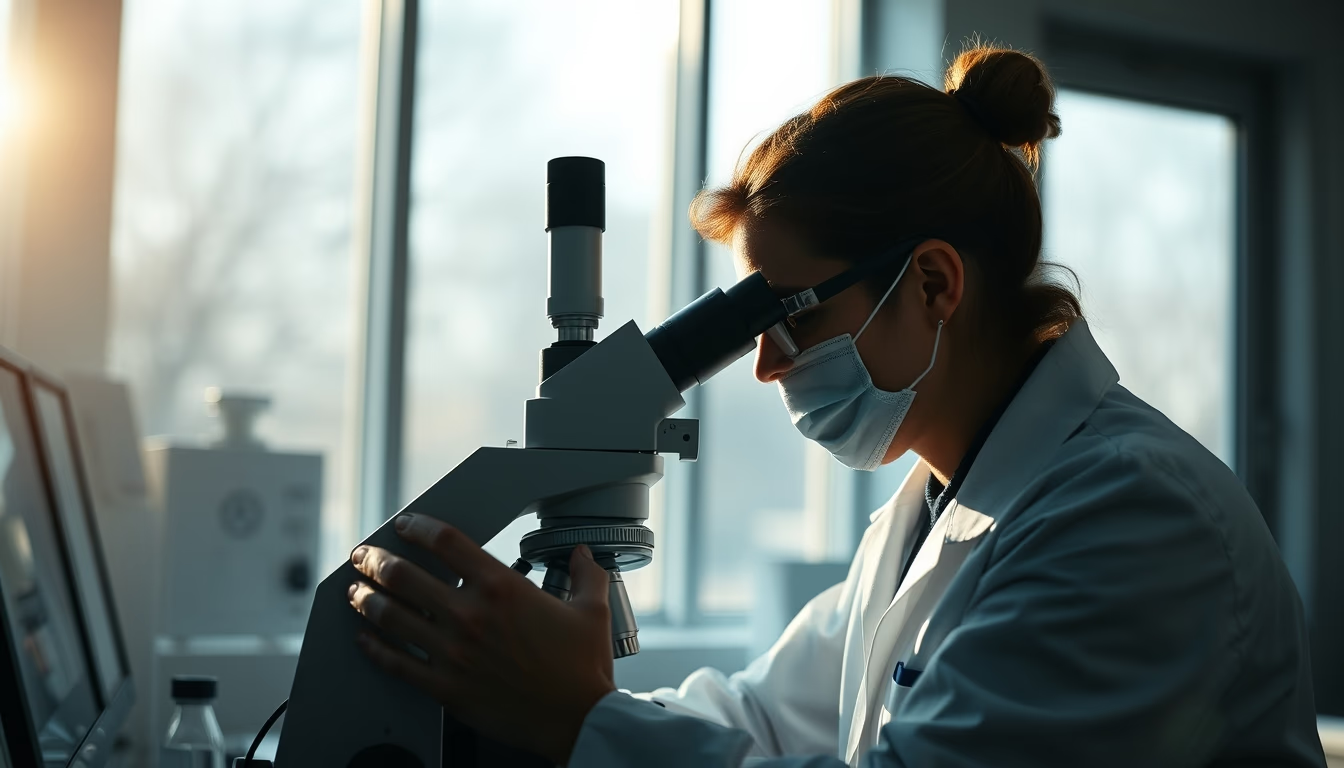
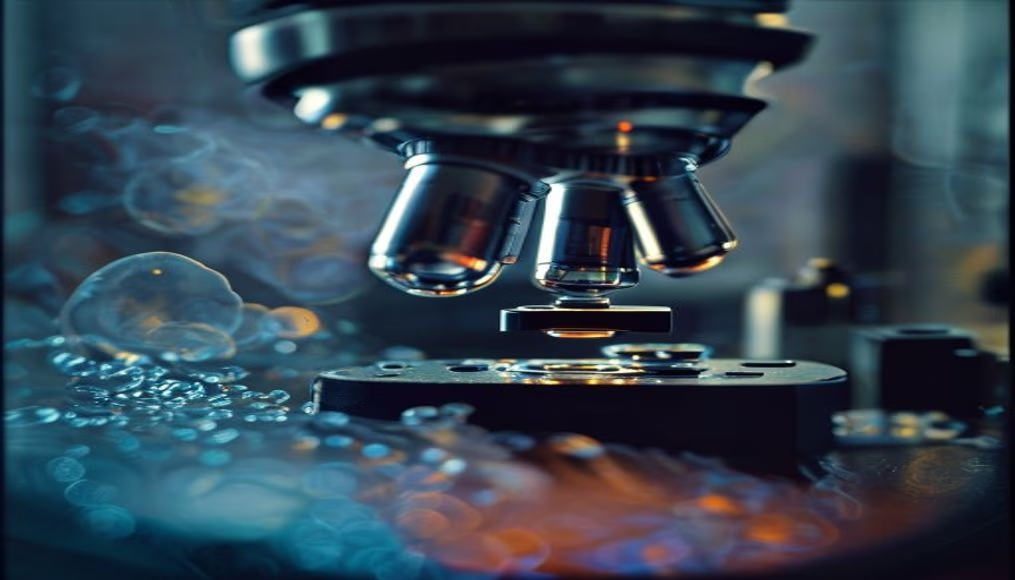
Lab technician examines samples under microscope during morning routine at a Brazilian research center.
About this subject
The work of a lab technician is essential for scientific progress and public health. In Brazil, these professionals work at institutions like Fiocruz, Butantan Institute, and public universities, performing analyses ranging from disease diagnosis to vaccine development. The morning routine often includes calibrating equipment and preparing slides for microscopic observation, a critical step to identify pathogens, abnormal cells, or specific biological structures.
Optical microscopy, the technique used by the technician in the image, magnifies objects up to 1000 times, revealing details invisible to the naked eye. In the Brazilian context, public health labs use this tool to monitor epidemics such as dengue and Zika, and for quality control of medicines. The technician's precision is vital: a mistake in focusing or interpretation can compromise results.
Interestingly, Brazil has one of the largest lab technician training programs in Latin America, with technical courses integrated into the SUS (Unified Health System). Many professionals start as interns in university hospitals, gaining hands-on experience with microscopes and other instruments. The image captures this moment of concentration and dedication, common in hundreds of labs across the country.
Safety is also a priority: the use of lab coats, gloves, and protective eyewear, visible in the image, follows ANVISA standards to prevent cross-contamination. Additionally, the lighting and bench organization reflect good laboratory practices, essential for experiment reproducibility.
Frequently Asked Questions
What training is required to become a lab technician in Brazil?
Typically, a technical course in clinical analysis or biotechnology is required, lasting 1 to 2 years. Many professionals also hold higher education degrees in fields like Biomedicine or Pharmacy.
What types of samples are analyzed in public health labs?
Blood, urine, stool, tissue, and secretion samples are common. They are used to diagnose infectious diseases, monitor outbreaks, and ensure the quality of water and food.
How does microscopy contribute to epidemic control?
Microscopy allows rapid identification of pathogens such as the dengue virus or tuberculosis bacteria in patient samples, aiding public health decision-making.
Direct URL
https://pub-c7d6a6ea828543ac903a74a341ccb2e1.r2.dev/imagens/lab-technician-looking-through-microscope-documentary-morning-5.avifHow to credit
Include a visible link back to UtilizAí. Copy one of the snippets below:
<a href="https://xn--utiliza-eza.com/en/midia/imagens/lab-technician-looking-through-microscope-documentary-morning-5">Lab technician looking through microscope</a> by <a href="https://xn--utiliza-eza.com">UtilizAí</a>, licensed under <a href="https://creativecommons.org/licenses/by/4.0/">CC BY 4.0</a>.
[Lab technician looking through microscope](https://xn--utiliza-eza.com/en/midia/imagens/lab-technician-looking-through-microscope-documentary-morning-5) by [UtilizAí](https://xn--utiliza-eza.com), CC BY 4.0
License: CC-BY-4.0