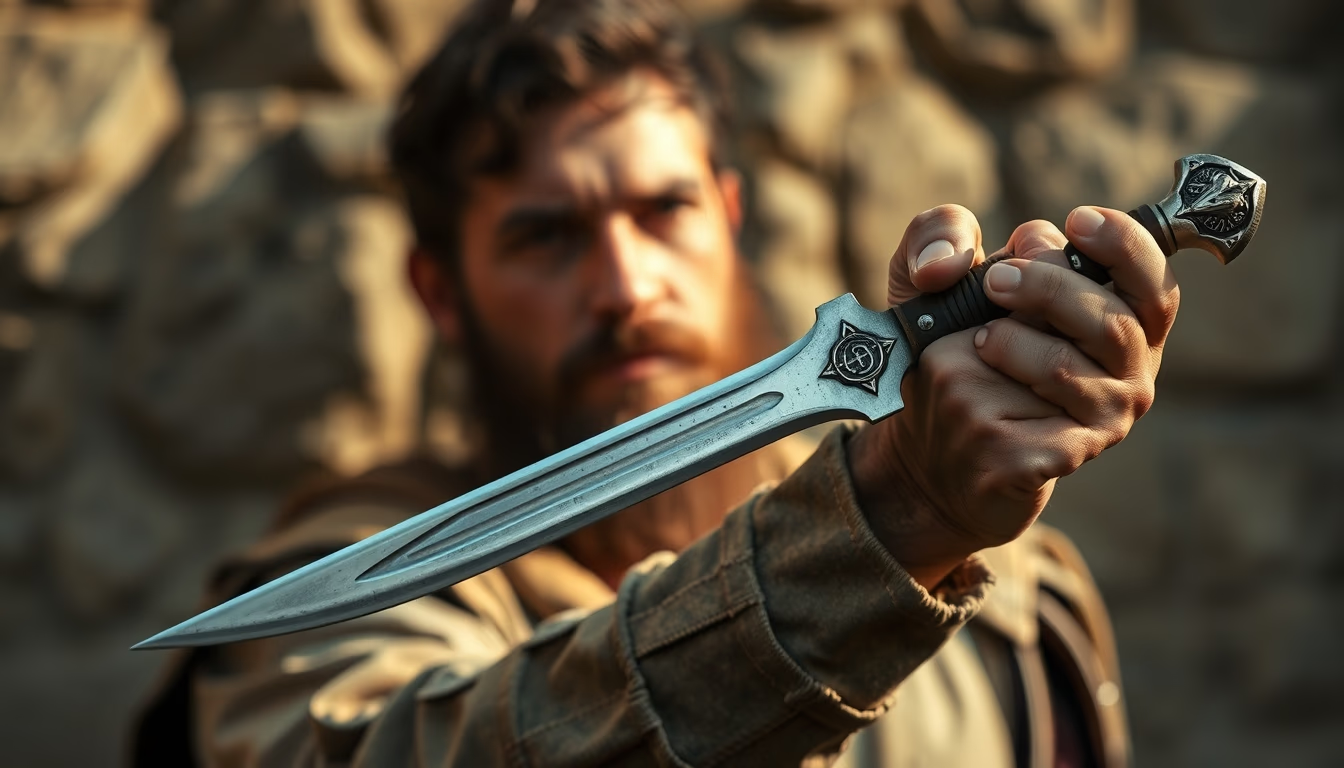
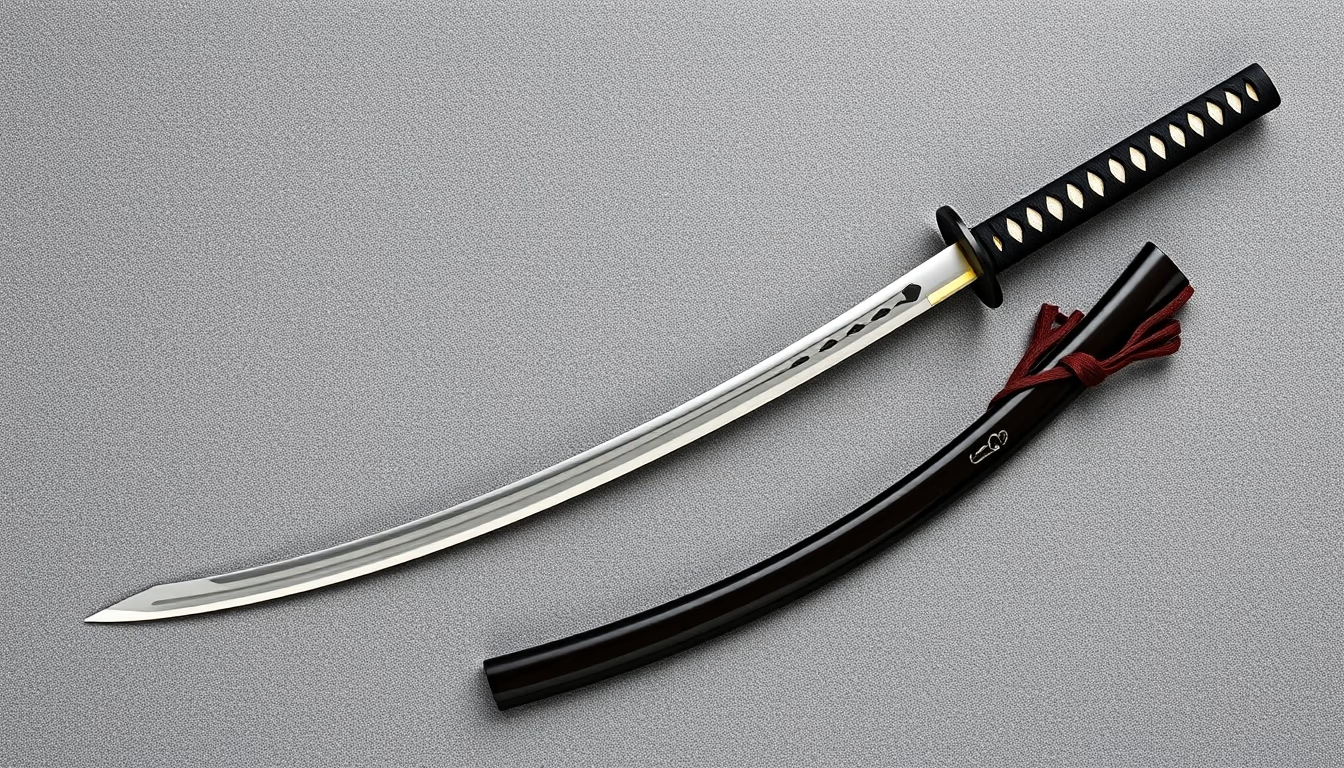
Kris malay wavy
1344×768 · AVIF · CC BY 4.0

The Malay wavy-bladed kris is a ceremonial dagger from the Malay archipelago, symbolizing power and cultural identity.
About this subject
The Malay kris, known for its wavy blade, is an asymmetrical dagger originating from the Malay archipelago, present in countries such as Indonesia, Malaysia, Brunei, Singapore, and southern Thailand. Unlike other edged weapons, the kris is not merely a combat tool but also a spiritual and ceremonial object. Many traditional families regard it as a pusaka, or sacred heirloom, passed down through generations, and believe the weapon possesses mystical powers of protection and luck.
The wavy blade of the kris is not merely decorative. Each wave, known as a luk, carries symbolic meaning. The number of curves can range from three to thirteen, with odd numbers being more common. The sinuous shape represents the movement of a serpent or dragon, important mythological figures in local culture. In 2005, UNESCO recognized the kris as a Masterpiece of the Oral and Intangible Heritage of Humanity, highlighting its cultural importance and the artisanal techniques involved in its manufacture.
The crafting of a kris is a complex process involving forging layers of different metals, resulting in a characteristic damascus pattern. The empu, a specialized smith, uses ancestral techniques to create the blade, often incorporating meteoritic iron or special steel. The hilt and sheath are carved from wood, ivory, or bone, frequently adorned with intricate carvings that reflect the region of origin. Each kris is unique and carries the identity of its creator and owner.
Today, the kris is revered more as an art object and cultural symbol than as a weapon. It is used in traditional ceremonies, weddings, and royal events. However, its artisanal production faces challenges with modernization, and preservation efforts are underway to keep the skills of traditional smiths alive. Exhibitions in museums and private collections help disseminate knowledge about this emblematic piece of Malay culture.
Frequently Asked Questions
Where does the Malay kris originate?
The kris originated in the Malay archipelago, especially in areas now corresponding to Indonesia, Malaysia, Brunei, Singapore, and southern Thailand. Its existence is documented from at least the 9th century, with evidence in Javanese temple reliefs.
What do the wavy blade curves of the kris mean?
The curves, called luk, symbolize the serpent or dragon, mythical creatures associated with power and protection. The number of curves carries spiritual meaning, with odd numbers considered more auspicious.
How is a traditional kris made?
The kris is forged by a specialized smith called empu, who laminates layers of different metals to create a damascus pattern. The blade is forged, tempered, and etched, while the hilt and sheath are carved from fine materials, often with symbolic carvings.
Direct URL
https://pub-c7d6a6ea828543ac903a74a341ccb2e1.r2.dev/imagens/kris-malay-wavy-minimalist-composition-fresh1.avifHow to credit
Include a visible link back to UtilizAí. Copy one of the snippets below:
<a href="https://xn--utiliza-eza.com/en/midia/imagens/kris-malay-wavy-minimalist-composition-fresh1">Kris malay wavy</a> by <a href="https://xn--utiliza-eza.com">UtilizAí</a>, licensed under <a href="https://creativecommons.org/licenses/by/4.0/">CC BY 4.0</a>.
[Kris malay wavy](https://xn--utiliza-eza.com/en/midia/imagens/kris-malay-wavy-minimalist-composition-fresh1) by [UtilizAí](https://xn--utiliza-eza.com), CC BY 4.0
License: CC-BY-4.0