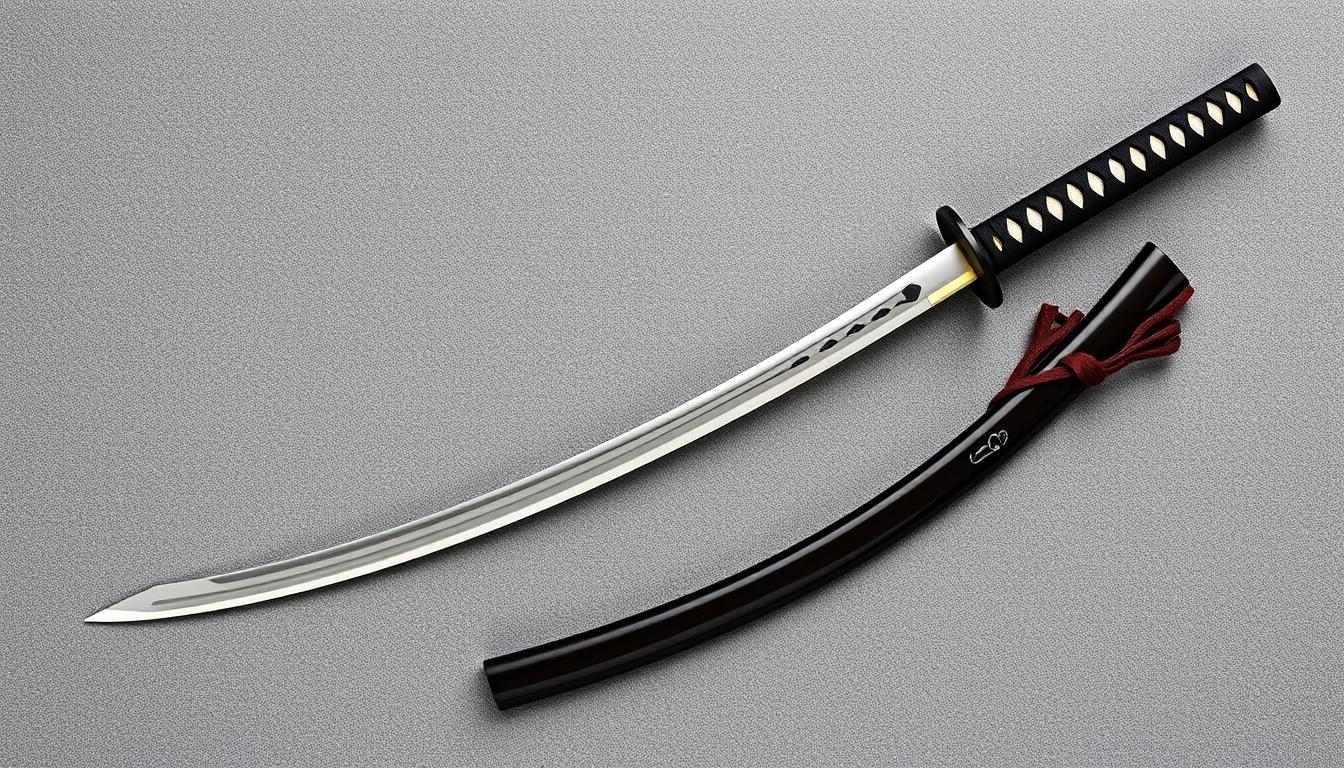
Kris malay wavy
1344×768 · AVIF · CC BY 4.0

The Malay wavy-bladed kris is a ceremonial dagger and traditional weapon of Southeast Asia, imbued with spiritual symbolism and historical significance.
About this subject
The kris, also known as keris, is an asymmetrical dagger originating from the Malay archipelago, prominent in Indonesia, Malaysia, Brunei, the southern Philippines, and Thailand. Its wavy blade, which can have 3 to 13 undulations (luk), is not merely decorative: each wave carries mystical meanings, representing the naga serpent or the movements of fire and water. It is believed that a kris possesses a soul or spiritual force (tuah), and its forging involves complex rituals, often performed by an empu (master smith) who seeks harmony with the elements. Historically, the kris was used as a personal defense weapon, status symbol, and object of power among nobles and warriors. In many cultures, the kris is considered a pusaka (sacred heirloom), passed down through generations. The wavy form is the most renowned, but straight-blade variations (kris lurus) also exist with specific meanings. UNESCO recognized the Indonesian kris as a Masterpiece of the Oral and Intangible Heritage of Humanity in 2005, highlighting its cultural importance. Today, the kris is mostly used in ceremonies, weddings, and as a collector's item, but it is still crafted by artisans who maintain centuries-old techniques.
Frequently Asked Questions
What is the meaning of the waves on the Malay kris?
The waves (luk) symbolize the mythical naga serpent, fire, and water, and are believed to contain spiritual forces. The number of waves can range from 3 to 13, each with specific interpretations of protection and power.
How is the kris traditionally made?
The kris is forged by an empu using lamination techniques of different metals (iron and nickel) to create patterns (pamor). The process includes rituals, prayers, and fasting, as the smith is believed to channel spiritual energy into the blade.
Is the kris still used today?
Yes, mainly in ceremonies such as weddings, royal events, and rituals. It is also a collector's item and studied as intangible heritage recognized by UNESCO. Artisans continue to produce kris for cultural and artistic purposes.
Direct URL
https://pub-c7d6a6ea828543ac903a74a341ccb2e1.r2.dev/imagens/kris-malay-wavy-lo-fi-disposable-camera-fresh9.avifHow to credit
Include a visible link back to UtilizAí. Copy one of the snippets below:
<a href="https://xn--utiliza-eza.com/en/midia/imagens/kris-malay-wavy-lo-fi-disposable-camera-fresh9">Kris malay wavy</a> by <a href="https://xn--utiliza-eza.com">UtilizAí</a>, licensed under <a href="https://creativecommons.org/licenses/by/4.0/">CC BY 4.0</a>.
[Kris malay wavy](https://xn--utiliza-eza.com/en/midia/imagens/kris-malay-wavy-lo-fi-disposable-camera-fresh9) by [UtilizAí](https://xn--utiliza-eza.com), CC BY 4.0
License: CC-BY-4.0