Kris malay wavy
1344×768 · AVIF · CC BY 4.0

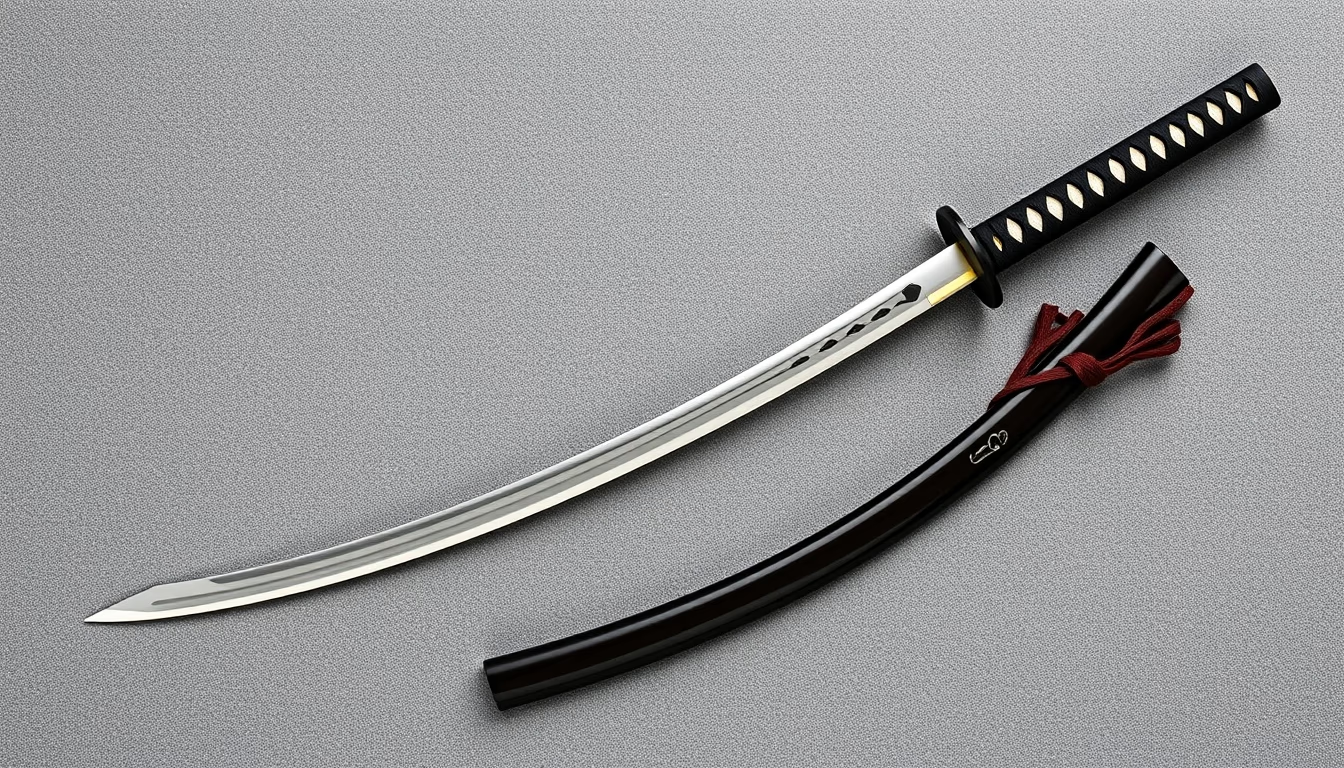
The Malay wavy-bladed kris is a ceremonial dagger and traditional weapon of Southeast Asia, revered as a symbol of power and spirituality.
About this subject
The kris is a distinctive asymmetrical dagger originating from the Malay archipelago, including Indonesia, Malaysia, Brunei, the southern Philippines, and Thailand. Its wavy blade, known as luk, typically features an odd number of waves (between 3 and 13), each carrying symbolic meanings related to natural elements or virtues. The kris is believed to possess mystical properties, treated as a sacred heirloom passed down through generations and often used in traditional ceremonies such as weddings and rites of passage.
Crafting a kris is a complex art performed by an empu (master smith), who layers iron and nickel to create the pamor pattern on the blade. Each kris is unique and may take months to complete. Beyond its ritual role, the kris also served as a personal defense weapon and in battle, effective for thrusting attacks. Its hilt and scabbard are richly decorated, often with floral or geometric motifs, made from wood, ivory, or precious metals.
In 2005, UNESCO recognized the kris as a Masterpiece of the Oral and Intangible Heritage of Humanity, highlighting its cultural importance for Indonesia and other Southeast Asian countries. Despite its ancient origins, the kris continues to be produced and venerated, with regional variations reflecting local influences. The isometric flat-lay perspective emphasizes the sinuous shape and blade details, allowing appreciation of the design's complexity.
Frequently Asked Questions
What does the number of waves on a kris blade mean?
The number of waves (luk) is traditionally odd, ranging from 3 to 13. Each number carries symbolic meaning, such as courage, wisdom, or spiritual protection. For example, 5 waves represent the five natural elements.
Is the kris still used today?
Yes, the kris continues to be crafted and used in traditional ceremonies like weddings and cultural events. It remains a significant artifact in collections and museums, recognized as UNESCO Intangible Cultural Heritage in 2005.
What is the difference between a Javanese and a Malay kris?
Javanese kriss often have straighter blades and longer hilts, while Malay ones tend to feature more wavy blades and shorter hilts. Decorative styles and forging techniques also differ by region.
Direct URL
https://pub-c7d6a6ea828543ac903a74a341ccb2e1.r2.dev/imagens/kris-malay-wavy-isometric-flat-lay-fresh12.avifHow to credit
Include a visible link back to UtilizAí. Copy one of the snippets below:
<a href="https://xn--utiliza-eza.com/en/midia/imagens/kris-malay-wavy-isometric-flat-lay-fresh12">Kris malay wavy</a> by <a href="https://xn--utiliza-eza.com">UtilizAí</a>, licensed under <a href="https://creativecommons.org/licenses/by/4.0/">CC BY 4.0</a>.
[Kris malay wavy](https://xn--utiliza-eza.com/en/midia/imagens/kris-malay-wavy-isometric-flat-lay-fresh12) by [UtilizAí](https://xn--utiliza-eza.com), CC BY 4.0
License: CC-BY-4.0