Kris malay wavy
1344×768 · AVIF · CC BY 4.0

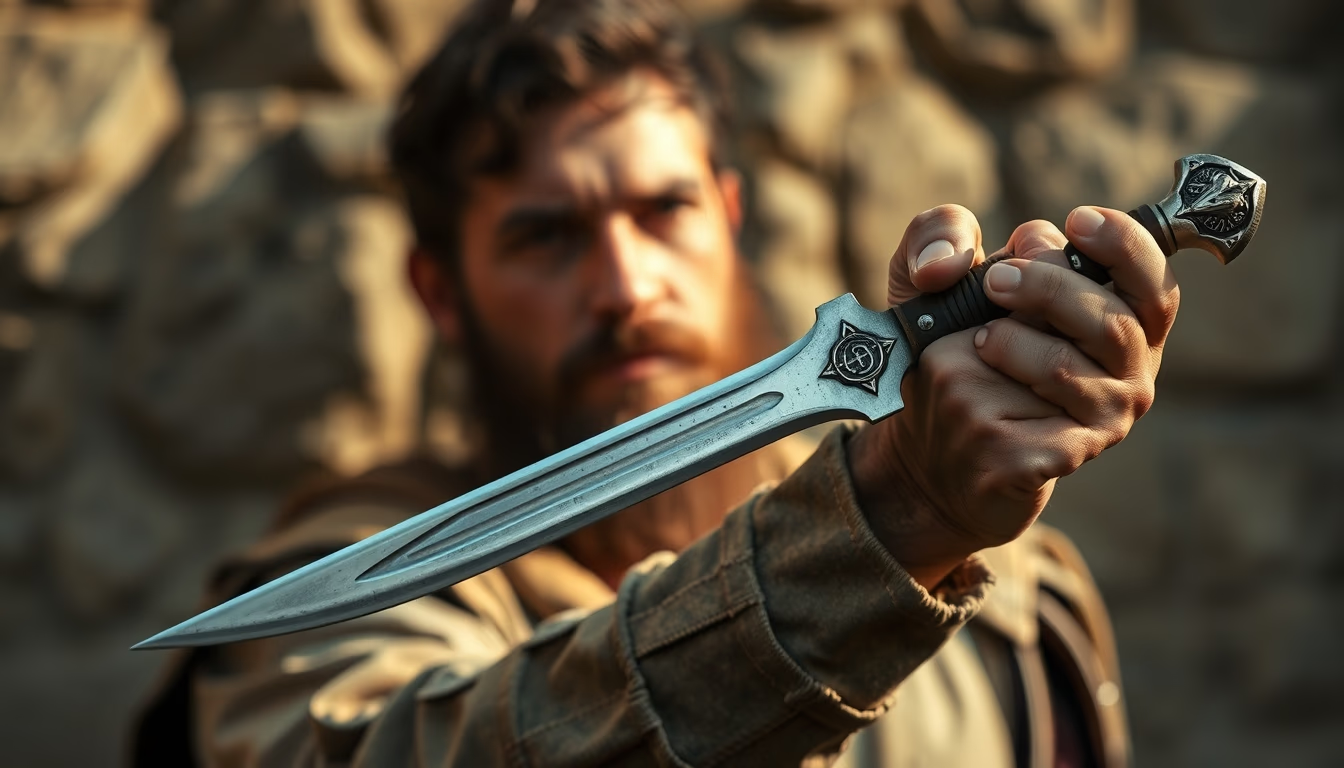
The kris is a traditional dagger from the Malay archipelago, recognized for its wavy blade and deep spiritual and cultural significance.
About this subject
The kris is an asymmetrical dagger originating from Indonesia, Malaysia, Brunei, and the southern Philippines. Its wavy blade is not merely aesthetic; each wave (luk) carries symbolic meaning. Kris with 13 waves are considered especially powerful and imbued with magical properties. The kris is believed to be a pusaka, a family heirloom that protects and brings good fortune.
Crafting a kris is a ritualistic process performed by an empu (master smith). Using layered steel forging techniques similar to Damascus steel, the empu creates distinct pamor patterns. Each region has its own characteristics: Javanese kris typically have shorter, elegant blades, while Sumatran kris are often larger and sturdier. The kris from Yogyakarta and Surakarta are particularly renowned.
More than a weapon, the kris is an object of worship, social status, and spiritual protection. In traditional ceremonies, it is used to bless events or as part of royal attire. UNESCO recognized the kris as a Masterpiece of the Oral and Intangible Heritage of Humanity in 2005. The kris dance (tari keris) is a performing art representing combat and spirituality.
Interestingly, the wavy blade is believed to enhance cutting ability and deflect attacks. Many antique kris were forged from meteorites, giving them even higher status. Today, artisans continue producing kris, preserving centuries-old forging and ritual traditions.
Frequently Asked Questions
What is the origin of the kris?
The kris originates from Indonesia, especially the island of Java, and spread to Malaysia, Brunei, and the Philippines. It is a deeply rooted cultural and spiritual symbol in Malay society.
What does the number of waves on the kris blade mean?
The number of waves (luk) ranges from 3 to 33. Odd numbers like 11 and 13 are common, each with symbolic meaning often associated with magical or protective properties.
How is a kris traditionally made?
The kris is forged by an empu using layered steel to create pamor patterns. The process includes spiritual rituals, and sometimes meteorite iron is used. The blade is then treated with poison or acid to reveal the pattern.
Direct URL
https://pub-c7d6a6ea828543ac903a74a341ccb2e1.r2.dev/imagens/kris-malay-wavy-documentary-nature-style-fresh5.avifHow to credit
Include a visible link back to UtilizAí. Copy one of the snippets below:
<a href="https://xn--utiliza-eza.com/en/midia/imagens/kris-malay-wavy-documentary-nature-style-fresh5">Kris malay wavy</a> by <a href="https://xn--utiliza-eza.com">UtilizAí</a>, licensed under <a href="https://creativecommons.org/licenses/by/4.0/">CC BY 4.0</a>.
[Kris malay wavy](https://xn--utiliza-eza.com/en/midia/imagens/kris-malay-wavy-documentary-nature-style-fresh5) by [UtilizAí](https://xn--utiliza-eza.com), CC BY 4.0
License: CC-BY-4.0