Koto japanese strings
1344×768 · AVIF · CC BY 4.0
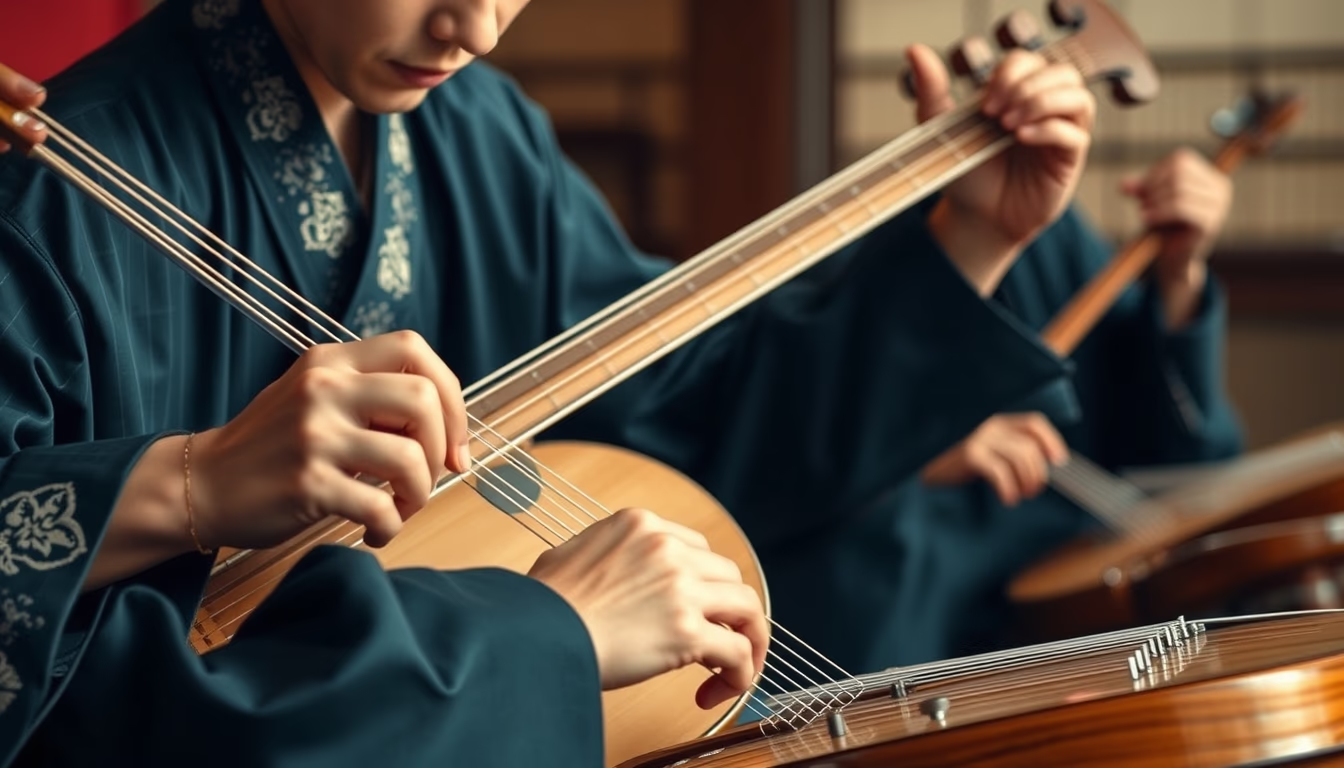
The koto is a Japanese string instrument with over a thousand years of history, used in traditional and contemporary music.
About this subject
The koto is a plucked string instrument originating in Japan, with roots dating back to the Nara period (8th century). It was introduced from China, where similar instruments like the guzheng already existed. The traditional koto has 13 strings stretched over a long, curved wooden body, usually made of paulownia wood (kiri). The strings are tuned by movable bridges (ji), allowing precise pitch adjustments. Playing involves using picks (tsume) attached to the thumb, index, and middle fingers of the right hand, while the left hand presses the strings to create ornaments and pitch variations.
The koto is central to Japanese classical music, especially the gagaku (court music) genre, but is also used in modern compositions and fusions with jazz, pop, and electronic music. Notable composers such as Tadao Sawai and Michio Miyagi have expanded the instrument's possibilities. The koto has a rich, resonant tone, capable of expressing both gentle melodies and energetic rhythms.
Construction of the koto is meticulous: the paulownia wood is chosen for its lightness and resonance. The body is carved from a single piece, with a distinctive curved shape resembling a raft. Each string was traditionally made of silk, though modern versions use nylon or steel. The standard koto is about 180 centimeters long. Variations exist, such as the 17-string koto (jūshichigen), used in contemporary music.
The instrument holds a strong presence in Japanese festivals and ceremonies. Learning the koto requires years of practice and is often transmitted through family lineages or formal schools. In the West, the koto gained popularity after World War II, adopted by classical composers and world music musicians. The koto’s sound evokes imagery of Japanese nature, such as wind in leaves and flowing water.
Frequently Asked Questions
How many strings does a traditional koto have?
The traditional koto has 13 strings, but modern variations with 17, 20, or more strings exist to expand its musical range.
What material is the koto made of?
The koto body is made of paulownia wood (kiri), known for its lightness and resonance. Strings were originally silk, but now nylon or steel are common.
Is the koto only used in traditional Japanese music?
No, the koto is also used in contemporary music, jazz, pop, and fusions with other genres, thanks to innovations by composers like Michio Miyagi.
Direct URL
https://pub-c7d6a6ea828543ac903a74a341ccb2e1.r2.dev/imagens/koto-japanese-strings-national-geographic-style-p7.avifHow to credit
Include a visible link back to UtilizAí. Copy one of the snippets below:
<a href="https://xn--utiliza-eza.com/en/midia/imagens/koto-japanese-strings-national-geographic-style-p7">Koto japanese strings</a> by <a href="https://xn--utiliza-eza.com">UtilizAí</a>, licensed under <a href="https://creativecommons.org/licenses/by/4.0/">CC BY 4.0</a>.
[Koto japanese strings](https://xn--utiliza-eza.com/en/midia/imagens/koto-japanese-strings-national-geographic-style-p7) by [UtilizAí](https://xn--utiliza-eza.com), CC BY 4.0
License: CC-BY-4.0