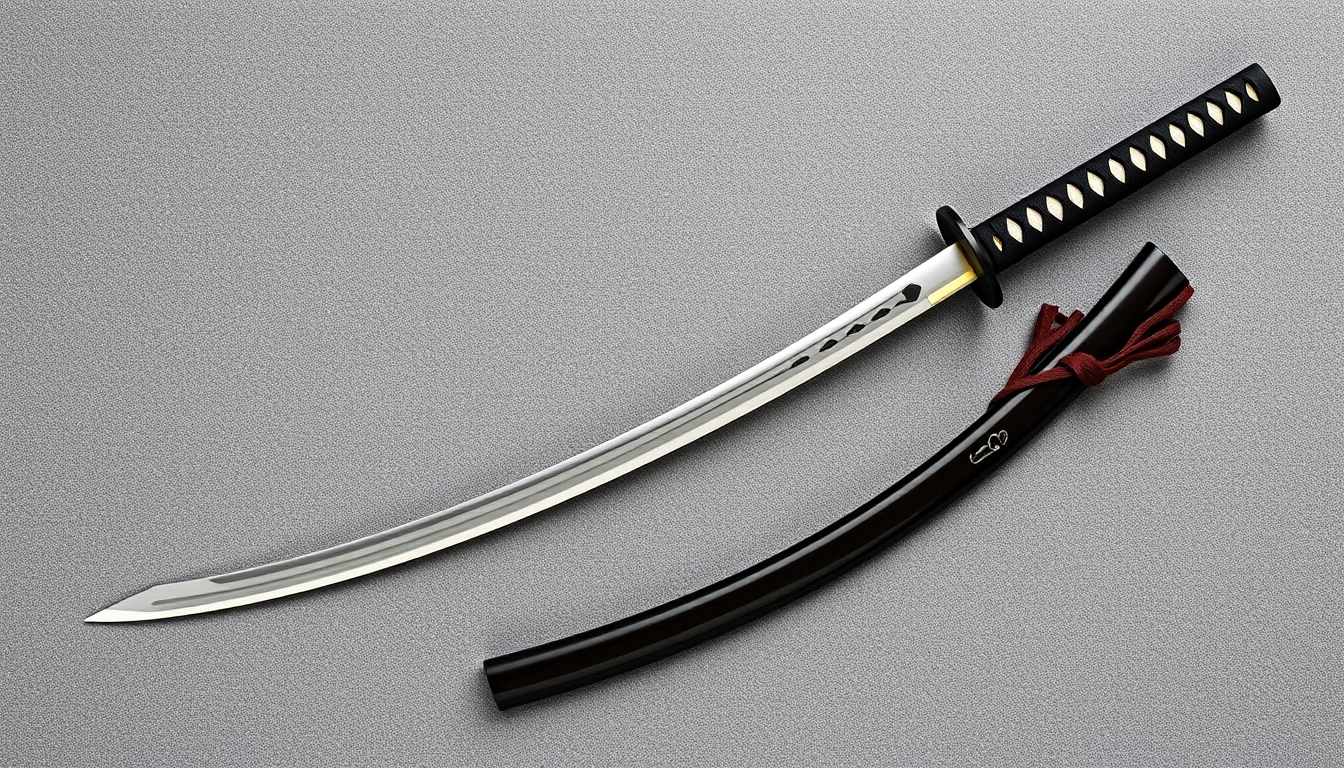
Katana japanese curved
1344×768 · AVIF · CC BY 4.0
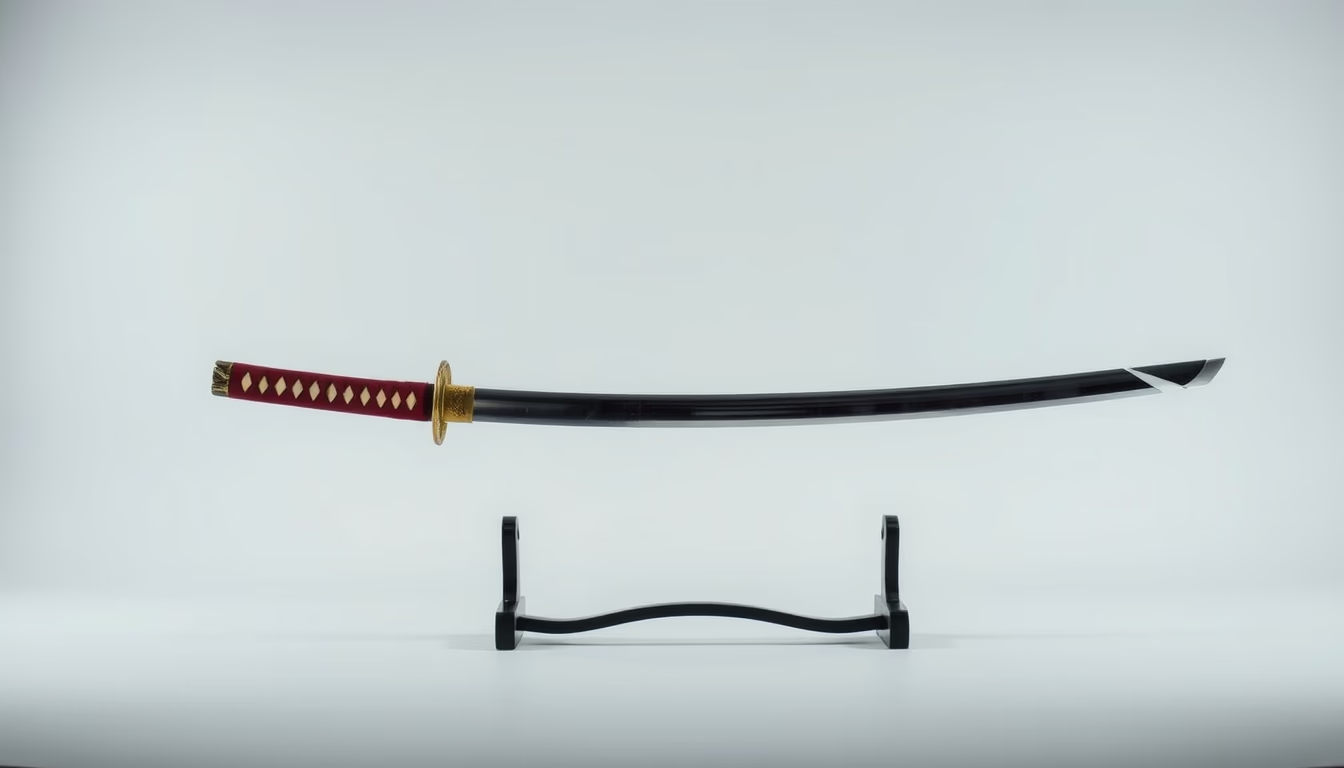
The Japanese katana is a curved single-edged sword, symbol of the samurai, forged with ancient techniques combining hardness and flexibility.
About this subject
The katana is a Japanese sword characterized by its curved, single-edged blade, typically 60 to 80 cm in length. The curvature, known as sori, is not merely aesthetic: it enables more efficient cutting strokes, especially when drawing the sword in a sweeping motion. The blade is traditionally forged from tamahagane steel, produced from iron sand, and undergoes repeated folding to remove impurities and distribute carbon evenly. This results in a laminated structure: a softer core absorbs shocks, while the harder outer steel maintains the cutting edge.
Differential heat treatment is another crucial aspect. A clay slurry is applied to the blade before quenching, with a thin layer on the edge and a thicker layer on the spine. This creates the hamon (temper line), which is both decorative and functional, indicating the transition between hard martensite at the edge and flexible pearlite in the spine. This combination allows the katana to be both sharp and resilient, capable of cutting without breaking.
Historically, the katana was the primary weapon of the samurai class during Japan's feudal period, especially from the Kamakura period (1185-1333). The use of the katana was imbued with spiritual and social significance, considered the soul of the samurai. With the Meiji Restoration (1868), traditional sword production declined, but the art of forging persisted. Today, the katana is prized as an art object, martial arts tool (iaido, kendo), and a Japanese cultural icon.
Forging a katana is a lengthy, ritualistic process, often accompanied by Shinto prayers. Legendary smiths like Masamune and Muramasa are renowned, and their swords are national treasures. The exact curvature, hamon, and smith's signature (mei) determine authenticity and value, with some katanas fetching millions of dollars at auction.
Frequently Asked Questions
What is the typical curvature of a katana?
The curvature (sori) of a katana varies, but is usually between 1.5 and 3 cm for a 70 cm blade. It is measured as the perpendicular distance from a straight line between the base and tip to the deepest point of the spine.
How was the katana used by samurai?
Samurai wore the katana with the edge facing up, tucked into the obi (belt). Quick-draw techniques (iaijutsu) were essential. In battle, they used horizontal and vertical cutting strokes, leveraging the curve for efficiency.
Why is the katana considered a work of art?
Each katana is unique, resulting from a handcrafted process involving steel folding, differential hardening, and meticulous polishing. The beauty of the hamon, the steel's texture (hada), and the smith's signature elevate the sword to art, comparable to paintings or ceramics.
Direct URL
https://pub-c7d6a6ea828543ac903a74a341ccb2e1.r2.dev/imagens/katana-japanese-curved-studio-still-life-fresh15.avifHow to credit
Include a visible link back to UtilizAí. Copy one of the snippets below:
<a href="https://xn--utiliza-eza.com/en/midia/imagens/katana-japanese-curved-studio-still-life-fresh15">Katana japanese curved</a> by <a href="https://xn--utiliza-eza.com">UtilizAí</a>, licensed under <a href="https://creativecommons.org/licenses/by/4.0/">CC BY 4.0</a>.
[Katana japanese curved](https://xn--utiliza-eza.com/en/midia/imagens/katana-japanese-curved-studio-still-life-fresh15) by [UtilizAí](https://xn--utiliza-eza.com), CC BY 4.0
License: CC-BY-4.0