Katana japanese curved
1344×768 · AVIF · CC BY 4.0
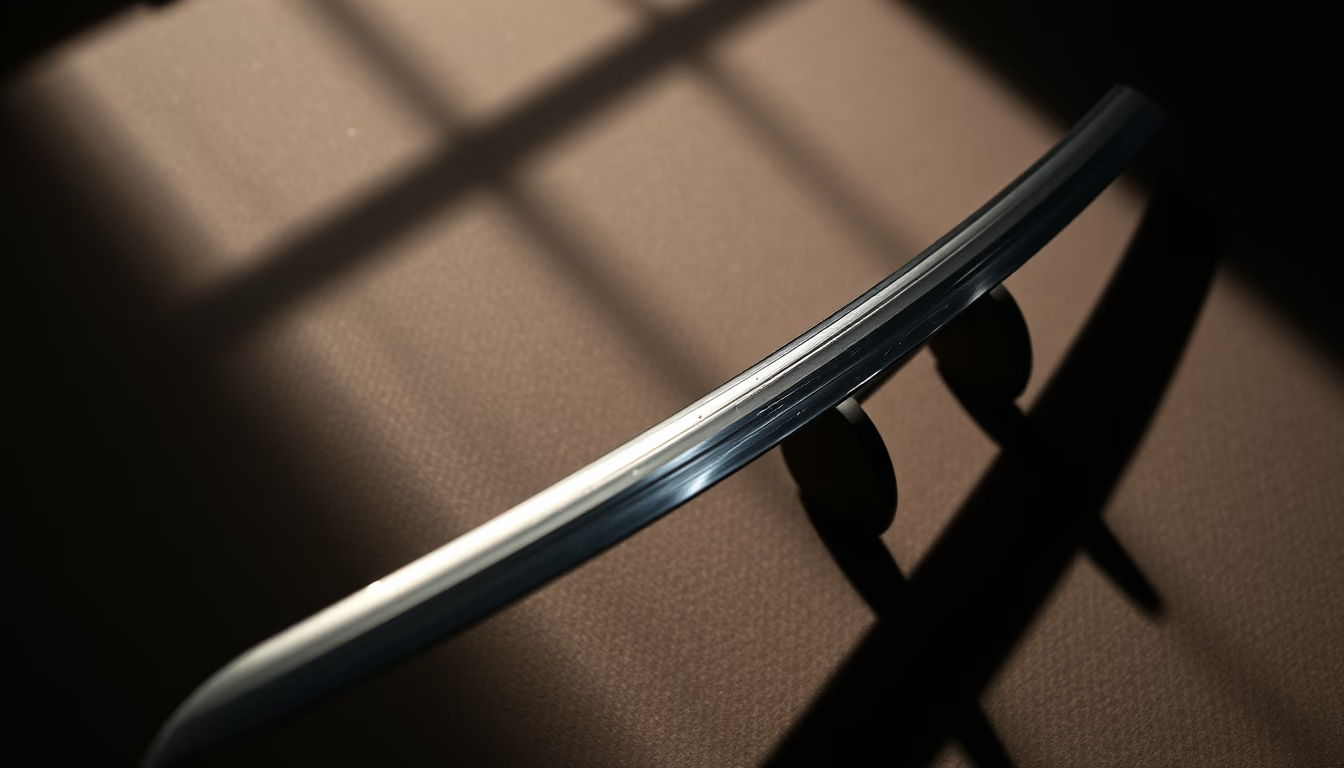
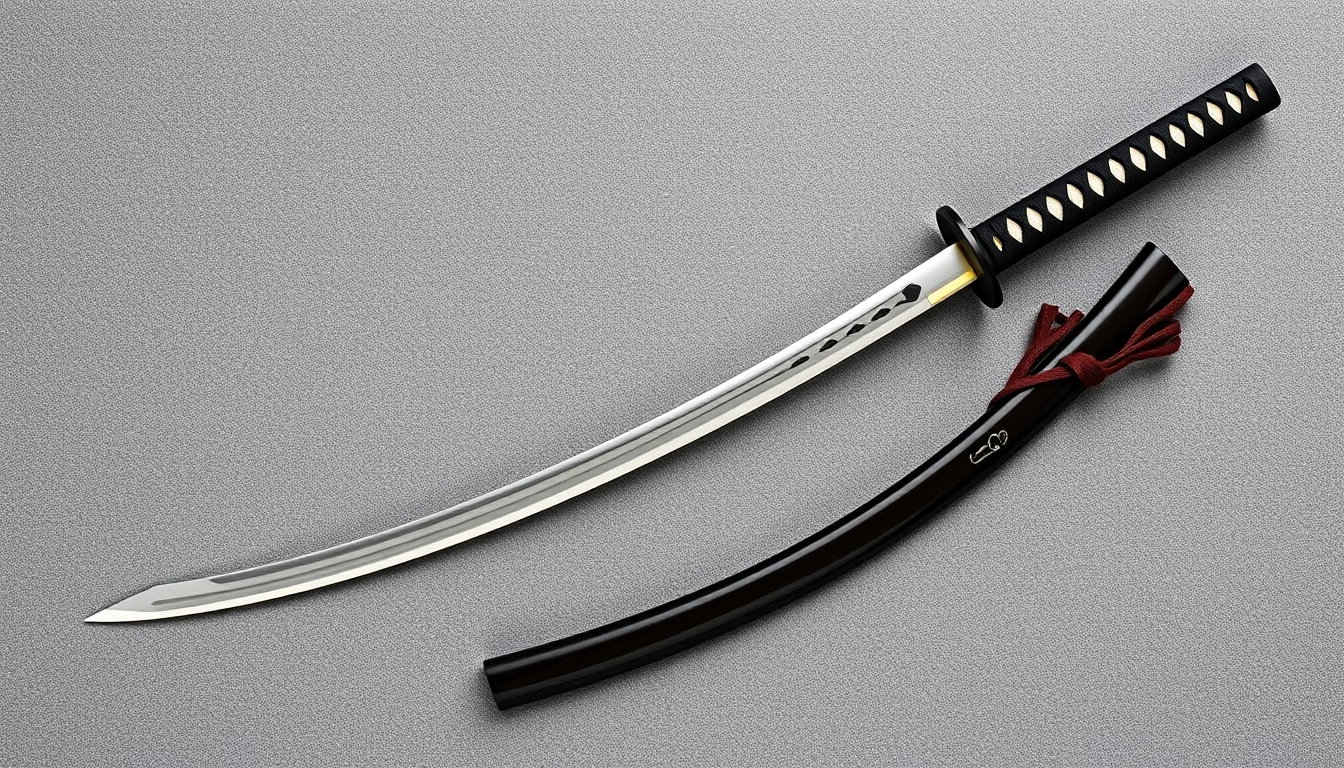
The katana is a Japanese curved longsword, a symbol of samurai culture, forged with ancient techniques that provide exceptional strength and cutting edge.
About this subject
The katana is a Japanese sword characterized by its curved blade, typically 60 to 80 centimeters long, and a long handle allowing a two-handed grip. Originating in the Kamakura period (1185, 1333), it replaced earlier straight swords and became the primary weapon of the samurai. Its curvature is not merely aesthetic: it facilitates a cutting motion while moving, increasing efficiency in mounted or foot combat. The traditional forging process involves repeatedly folding the steel, creating layers that remove impurities and distribute carbon unevenly: the blade edge is hardened (martensite) while the spine remains flexible to prevent breakage. This method, known as differential hardening, produces the hamon, a wavy line visible after polishing. The katana is more than a weapon; it is an object of art and spirituality. Swordsmiths, called toshō, were highly respected, and each sword was given a name. During the Edo period (1603, 1868), the katana became a status symbol and was worn as part of formal samurai attire. After the Meiji Restoration, sword carrying was restricted, but production continued as a martial art and craft. Today, authentic katanas are designated as national treasures in Japan, and forging techniques are preserved by master smiths. Interestingly, the katana's curvature (sori) varies: a deeper sori favors downward cuts, while a shallow sori is better for thrusts. Proper handling requires years of training in iaidō or kenjutsu, arts that focus on drawing and cutting in a fluid motion.
Frequently Asked Questions
What is the difference between a katana and a tachi?
The tachi is an older Japanese sword, usually more curved and worn suspended edge-down, while the katana is worn thrust through the belt edge-up. The katana emerged in the Kamakura period and was designed for foot combat.
How long does it take to forge a traditional katana?
A traditionally forged katana can take from a few weeks to several months, depending on complexity. The process includes forging, hardening, polishing, and mounting, each step performed by specialized artisans.
Is the katana still used in actual combat?
Not in modern military conflicts, but it is practiced in martial arts such as kendo, iaidō, and kenjutsu. Additionally, katanas are used in cutting tests (tameshigiri) to demonstrate skill and blade quality.
Direct URL
https://pub-c7d6a6ea828543ac903a74a341ccb2e1.r2.dev/imagens/katana-japanese-curved-rembrandt-lighting-dramatic-shadows-fresh0.avifHow to credit
Include a visible link back to UtilizAí. Copy one of the snippets below:
<a href="https://xn--utiliza-eza.com/en/midia/imagens/katana-japanese-curved-rembrandt-lighting-dramatic-shadows-fresh0">Katana japanese curved</a> by <a href="https://xn--utiliza-eza.com">UtilizAí</a>, licensed under <a href="https://creativecommons.org/licenses/by/4.0/">CC BY 4.0</a>.
[Katana japanese curved](https://xn--utiliza-eza.com/en/midia/imagens/katana-japanese-curved-rembrandt-lighting-dramatic-shadows-fresh0) by [UtilizAí](https://xn--utiliza-eza.com), CC BY 4.0
License: CC-BY-4.0