Jazz double bass
1344×768 · AVIF · CC BY 4.0
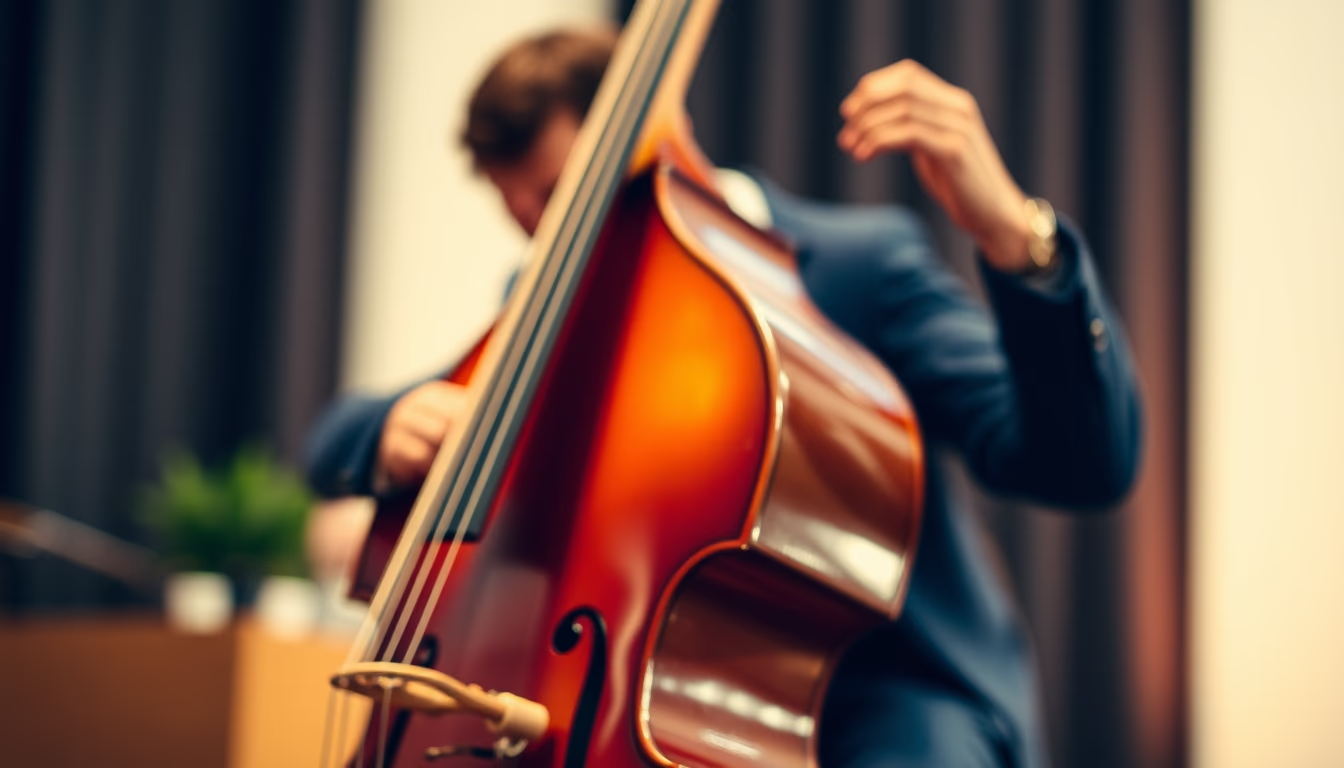
The double bass is the rhythmic and harmonic foundation of jazz, providing groove and depth to ensembles.
About this subject
The double bass, also known as the upright bass, is a string instrument played with a bow or by plucking (pizzicato) and serves as the backbone of jazz bands. Tuned in fourths (E-A-D-G), it produces deep, resonant notes that anchor harmony and rhythm. In early jazz, the double bass replaced the tuba because it offered greater agility and a warmer tone, becoming the standard bass instrument from New Orleans to modern clubs.
In jazz, the double bass is not just a timekeeper; it defines the groove and shapes chord progressions. Legendary players like Charles Mingus, Ray Brown, and Paul Chambers transformed the instrument into a solo voice, using complex scales and arpeggios. The walking bass technique, a steady stream of notes that outlines chords, is a hallmark of jazz and requires both rhythmic precision and harmonic knowledge. The double bass has evolved through bebop, modal jazz, and fusion, always bridging the drums and the melodic instruments.
Handcrafted from woods like maple and spruce, the double bass has a hollow body that naturally amplifies sound, though modern performances may use pickups or microphones. Its range spans over three octaves, from deep low notes to expressive highs. Players typically stand or sit on a tall stool, and the choice of steel or gut strings affects the tone and playability. Jazz bassists often prefer lighter strings and lower action for fast pizzicato, while classical players opt for higher tension for bowing.
Interestingly, the double bass in jazz is sometimes customized with a cutaway for easier access to higher positions. Its ability to mimic the human voice in melancholic or dancing phrases makes it one of the most expressive instruments in the genre.
Frequently Asked Questions
What is the difference between an upright bass and an electric bass in jazz?
The upright bass uses vibrating strings over a hollow body, producing natural acoustic sound. The electric bass has a solid body and requires amplification. In jazz, the upright bass is traditional, offering a warmer, more organic tone, while the electric bass is common in fusion and modern jazz.
What are the main playing styles for jazz double bass?
The two main styles are pizzicato (plucking with fingers or pick), used for walking bass and rhythmic lines, and bowing, employed for solos and lyrical passages. Slap bass is also used in traditional jazz but is less common.
How does the double bass contribute to improvisation in jazz?
The bassist improvises bass lines based on the harmonic progression, creating rhythmic and melodic variations that interact with other soloists. A skilled bassist guides the band, establishing the feel and responding to the soloists.
Direct URL
https://pub-c7d6a6ea828543ac903a74a341ccb2e1.r2.dev/imagens/jazz-double-bass-tilt-shift-miniature-p1.avifHow to credit
Include a visible link back to UtilizAí. Copy one of the snippets below:
<a href="https://xn--utiliza-eza.com/en/midia/imagens/jazz-double-bass-tilt-shift-miniature-p1">Jazz double bass</a> by <a href="https://xn--utiliza-eza.com">UtilizAí</a>, licensed under <a href="https://creativecommons.org/licenses/by/4.0/">CC BY 4.0</a>.
[Jazz double bass](https://xn--utiliza-eza.com/en/midia/imagens/jazz-double-bass-tilt-shift-miniature-p1) by [UtilizAí](https://xn--utiliza-eza.com), CC BY 4.0
License: CC-BY-4.0