Jazz double bass
1344×768 · AVIF · CC BY 4.0
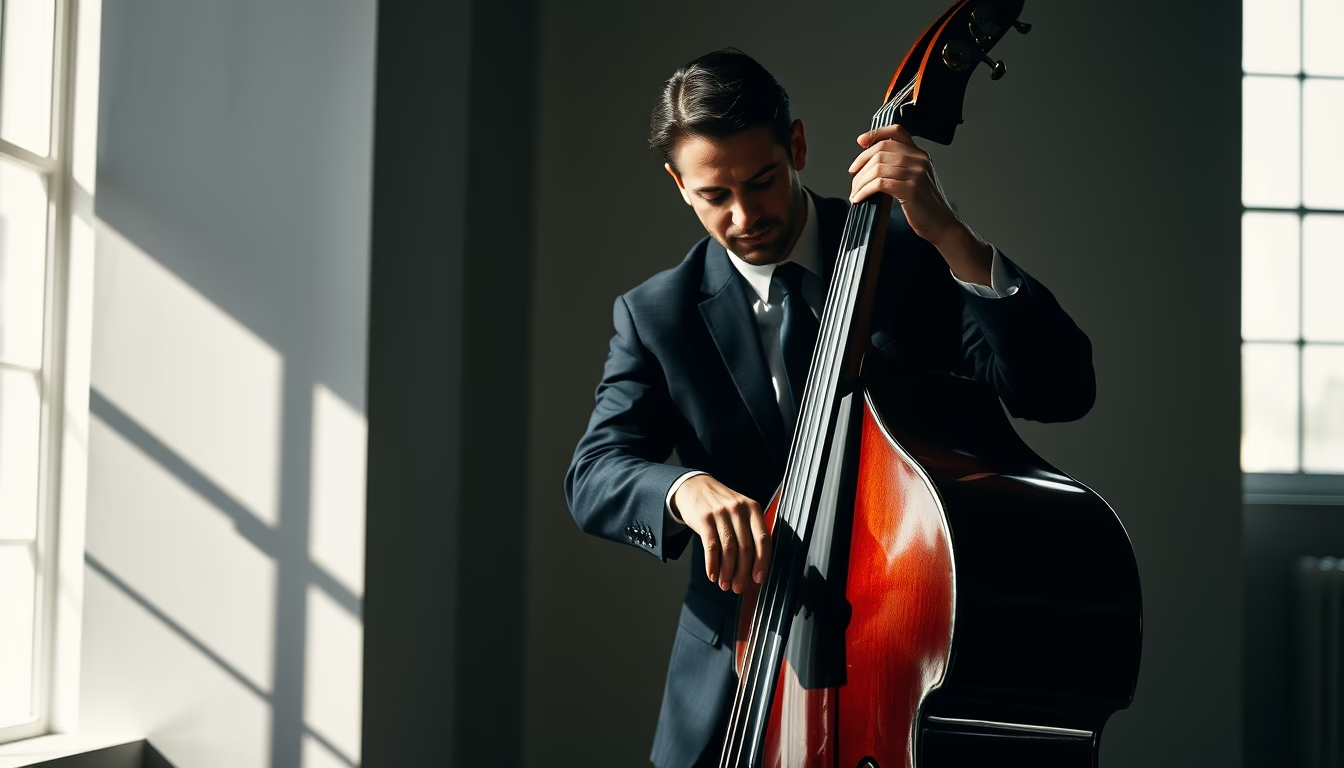
The double bass is a cornerstone of jazz, providing the rhythmic and harmonic foundation that supports improvisation and melody.
About this subject
The double bass emerged as a fundamental instrument in jazz from its origins in New Orleans, early 20th century. Derived from the cello and the baroque violone, it assumes the role of sustaining harmony and marking rhythm, whether in big bands or small combos. Its deep, rich sound is produced by thick strings tuned in fourths (E, A, D, G), played with fingers (pizzicato) or with the bow (arco), a technique known as arco.
The evolution of the double bass in jazz is marked by figures such as Jimmy Blanton, who revolutionized the instrument by introducing melodic lines and solos, and Charles Mingus, who expanded its possibilities as a composer and leader. The walking bass, a rhythmic pattern that traces the chords of a harmonic progression, became the signature of jazz, especially in swing and bebop. Masters like Ray Brown and Paul Chambers elevated the technique to impressive levels, influencing generations.
Minimalist compositions often highlight the double bass in solos or main themes, such as in Miles Davis' "So What," where Paul Chambers creates memorable lines. The instrument is also central in chamber pieces by modern jazzists, blending tradition and innovation. Its versatility allows for everything from subtle accompaniment to virtuosic solos, always maintaining its foundational role in the group.
Interestingly, the double bass can reach over 1.8 meters in height and weigh up to 20 kg, requiring significant physical effort from musicians. Despite the advent of the electric bass, the acoustic double bass remains irreplaceable in traditional and contemporary jazz, valued for its tonal richness and expressive depth.
Frequently Asked Questions
What is the difference between double bass and electric bass in jazz?
The double bass has thick strings and a hollow body, producing sound through natural resonance, while the electric bass is solid and relies on amplification. In jazz, the double bass is more traditional, with a rich timbre and techniques like pizzicato and arco, whereas the electric bass appears in fusion and modern styles.
How is the characteristic sound of the double bass produced in jazz?
The double bass sound is produced by the friction of fingers or bow on strings, vibrating inside the resonating chamber. In jazz, pizzicato with fingertips creates the percussive tone typical of walking bass, and the bow yields sustained, melodic notes used in solos and lyrical passages.
Who are the greatest double bassists in jazz history?
Among the greatest are Charles Mingus, virtuoso and composer; Ray Brown, master of swing; Paul Chambers, essential in bebop; Jimmy Blanton, pioneer in solos; and Ron Carter, record holder for recordings. Each contributed to the technical and musical evolution of the instrument.
Direct URL
https://pub-c7d6a6ea828543ac903a74a341ccb2e1.r2.dev/imagens/jazz-double-bass-minimalist-composition-p7.avifHow to credit
Include a visible link back to UtilizAí. Copy one of the snippets below:
<a href="https://xn--utiliza-eza.com/en/midia/imagens/jazz-double-bass-minimalist-composition-p7">Jazz double bass</a> by <a href="https://xn--utiliza-eza.com">UtilizAí</a>, licensed under <a href="https://creativecommons.org/licenses/by/4.0/">CC BY 4.0</a>.
[Jazz double bass](https://xn--utiliza-eza.com/en/midia/imagens/jazz-double-bass-minimalist-composition-p7) by [UtilizAí](https://xn--utiliza-eza.com), CC BY 4.0
License: CC-BY-4.0