Jazz double bass
1344×768 · AVIF · CC BY 4.0
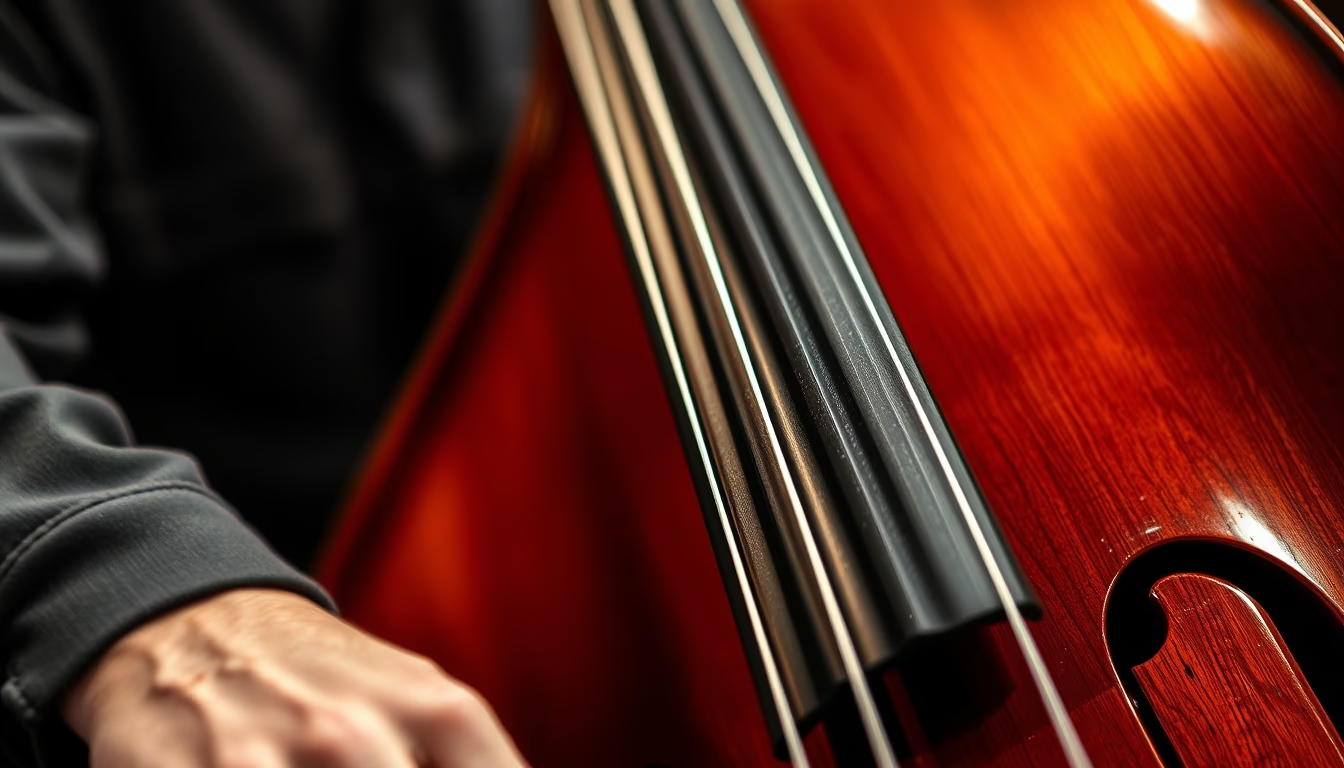
The acoustic double bass is the rhythmic and harmonic foundation of jazz, providing the walking bass that drives swing and improvisation.
About this subject
The acoustic double bass, also known as the upright bass, has been a cornerstone of jazz since its early 20th-century origins. Unlike the electric bass, the double bass produces a full, resonant sound through the vibration of strings over a wooden soundbox. Its standard tuning is in fourths (E, A, D, G), one octave below the cello. In jazz, the double bass is responsible for the walking bass line, a continuous stream of quarter notes that outlines the harmony and maintains rhythmic momentum. This technique, popularized by pioneers like Jimmy Blanton and Ray Brown, demands rhythmic precision and deep harmonic knowledge.
Construction of the double bass varies among luthiers, with typical woods including spruce for the top, maple for the back and sides, and ebony for the fingerboard. The instrument has four or five strings, with the lower strings often metal-wound for greater projection. The bass is played either standing or seated on a high stool. Jazz bassists commonly use pizzicato (plucking the strings with fingers), while the bow is reserved for softer, melodic passages in ballads or classical settings.
In the United States, the double bass is synonymous with jazz history. Legendary players like Charles Mingus, Paul Chambers, and Ron Carter expanded the instrument's role from timekeeping to solo improvisation. Mingus, in particular, used the bass as a compositional tool, blending jazz with classical and gospel influences. The instrument also features prominently in other genres like bluegrass and folk, but its impact on jazz is unparalleled.
Globally, the double bass has been adapted into various musical traditions. In Brazil, it is essential in choro, samba, and bossa nova, with virtuosos like Novelli and Zeca Assumpção bringing its sound to international prominence. The double bass remains a physically demanding instrument, requiring strength and flexibility. Modern innovations include lightweight materials and pickup systems for amplification. Whether in a small combo or a big band, the double bass continues to be the heartbeat of jazz and beyond.
Frequently Asked Questions
What is the difference between an acoustic double bass and an electric bass in jazz?
The acoustic double bass produces sound acoustically through string vibration over a wooden body, while the electric bass uses pickups and amplifiers. The double bass has a fuller, warmer tone and is preferred in traditional jazz, whereas the electric bass is more common in jazz fusion and pop.
What is walking bass in jazz?
Walking bass is a technique where the bassist plays a continuous line of notes, usually quarter notes, following the harmonic progression. This creates a sense of forward motion and drives the rhythm, essential in swing and bebop.
What are the main types of strings for acoustic double bass?
Double bass strings can be gut, steel, or nylon. Gut strings produce a warmer, mellower tone, ideal for classical jazz. Steel strings are brighter and more durable, preferred for modern styles and amplification.
Direct URL
https://pub-c7d6a6ea828543ac903a74a341ccb2e1.r2.dev/imagens/jazz-double-bass-macro-closeup-p6.avifHow to credit
Include a visible link back to UtilizAí. Copy one of the snippets below:
<a href="https://xn--utiliza-eza.com/en/midia/imagens/jazz-double-bass-macro-closeup-p6">Jazz double bass</a> by <a href="https://xn--utiliza-eza.com">UtilizAí</a>, licensed under <a href="https://creativecommons.org/licenses/by/4.0/">CC BY 4.0</a>.
[Jazz double bass](https://xn--utiliza-eza.com/en/midia/imagens/jazz-double-bass-macro-closeup-p6) by [UtilizAí](https://xn--utiliza-eza.com), CC BY 4.0
License: CC-BY-4.0