Jazz double bass
1344×768 · AVIF · CC BY 4.0
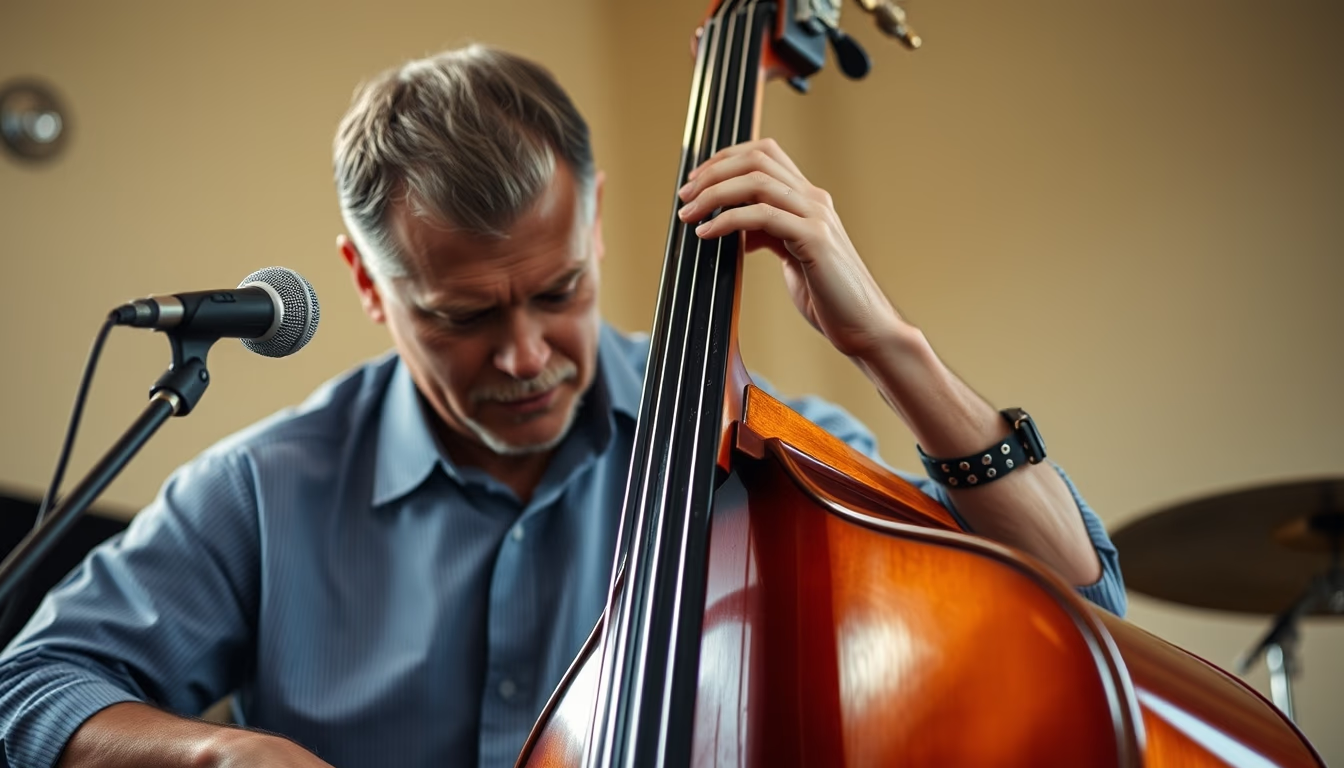
The double bass is the harmonic and rhythmic backbone of jazz, present from the genre's origins to contemporary avant-garde.
About this subject
The double bass, also known as acoustic bass, is a bowed string instrument that plays a central role in jazz. Unlike the electric bass, its sound is produced by string vibration amplified by a hollow wooden body, typically made of spruce and maple. In jazz, the double bass serves both the rhythm section, marking time with walking bass lines, and harmony, supporting chords from piano or guitar.
Its history in jazz dates back to early 20th-century New Orleans bands, where it replaced the tuba as the bass instrument. During the swing era (1930s-40s), bassists like Jimmy Blanton revolutionized technique, elevating the instrument to solo status. Bebop in the 1940s, with Charles Mingus and Paul Chambers, consolidated the walking bass as standard, while cool jazz and free jazz expanded its harmonic and melodic possibilities.
Notable names such as Ron Carter, Ray Brown, and Dave Holland showcased the double bass's versatility across jazz styles from hard bop to fusion. Technique involves pizzicato (plucking) and bowing, the latter more common in classical settings or chamber jazz. The instrument is also essential in Brazilian music, like choro and bossa nova, adapted to samba rhythm.
Interesting fact: the jazz double bass is usually tuned in fourths (E1, A1, D2, G2), but many musicians use alternative tunings. Its handcrafted construction and wood choice directly affect timbre, making each instrument unique. Documentary photography captures not only the instrument but the interaction between musician and their tool of expression.
Frequently Asked Questions
What is the difference between double bass and electric bass in jazz?
The double bass has a richer, more natural sound produced by its resonance chamber, while the electric bass uses pickups and amplification. In traditional jazz, the acoustic bass is preferred for its organic tone and bowing technique.
Who are the main jazz double bassists in history?
Charles Mingus, Paul Chambers, Ron Carter, Ray Brown, Dave Holland, Jimmy Blanton, and Scott LaFaro are among the most influential, each contributing to the instrument's technical and stylistic evolution.
How is the double bass used in bossa nova and choro?
In choro, the double bass plays the characteristic syncopated bass line, while in bossa nova it softens the rhythm with more melodic walking bass, complementing the acoustic guitar and percussion.
Direct URL
https://pub-c7d6a6ea828543ac903a74a341ccb2e1.r2.dev/imagens/jazz-double-bass-documentary-photography-p2.avifHow to credit
Include a visible link back to UtilizAí. Copy one of the snippets below:
<a href="https://xn--utiliza-eza.com/en/midia/imagens/jazz-double-bass-documentary-photography-p2">Jazz double bass</a> by <a href="https://xn--utiliza-eza.com">UtilizAí</a>, licensed under <a href="https://creativecommons.org/licenses/by/4.0/">CC BY 4.0</a>.
[Jazz double bass](https://xn--utiliza-eza.com/en/midia/imagens/jazz-double-bass-documentary-photography-p2) by [UtilizAí](https://xn--utiliza-eza.com), CC BY 4.0
License: CC-BY-4.0