Jadeite imperial ring burmese
1344×768 · AVIF · CC BY 4.0
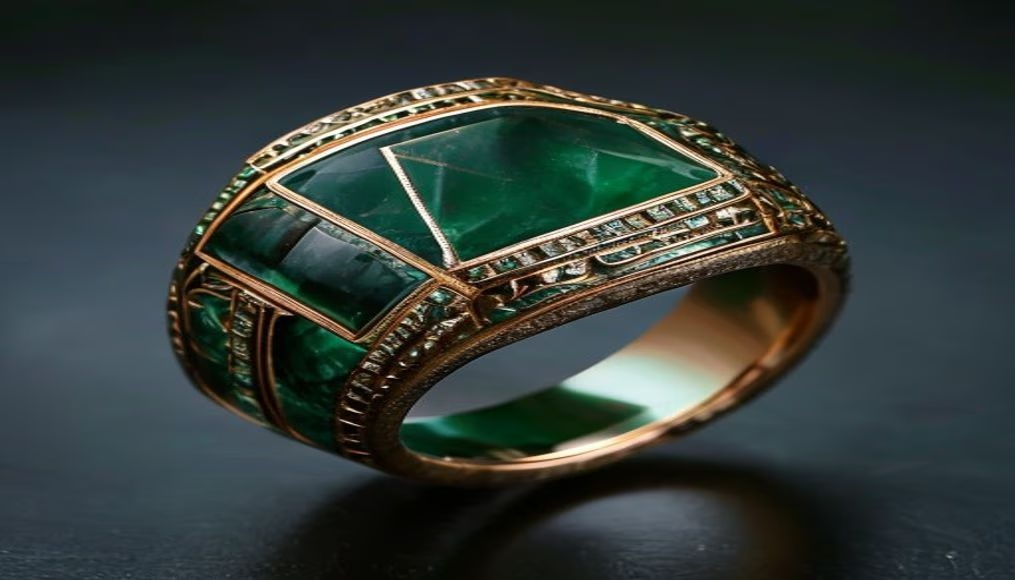
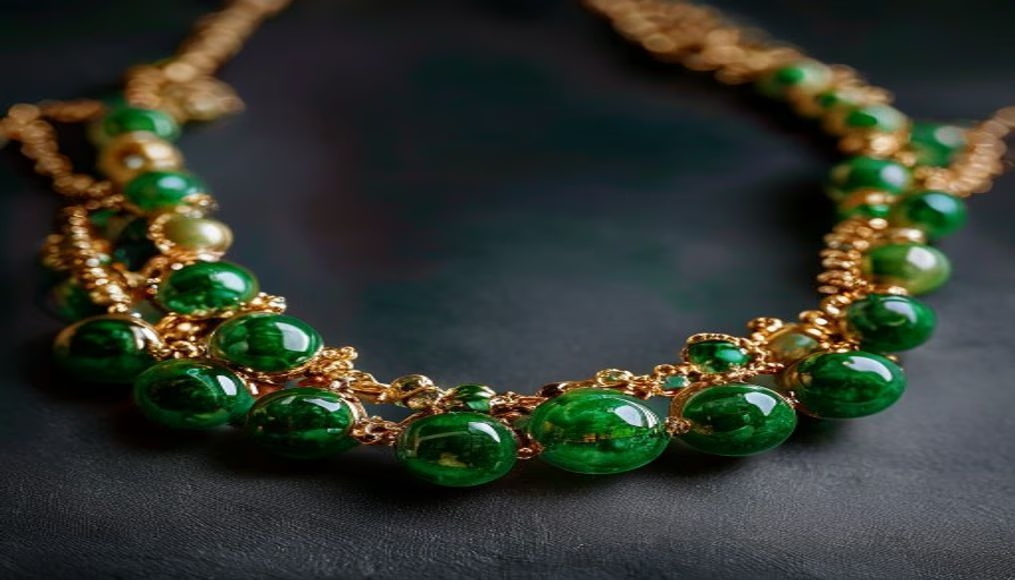
Burmese imperial jadeite ring, a translucent emerald-green gem, symbol of wealth and tradition in high jewelry.
About this subject
Burmese imperial jadeite is the most precious variety of jade, prized for its intense translucent green color. Mined primarily in the Hpakant region of Myanmar (formerly Burma), it accounts for less than 1% of all jadeite extracted, making it a rare and ultra-luxurious gem. The color is often described as "mango green" and when cut as a cabochon, it exhibits a characteristic oily luster. In Chinese culture, jade is considered more valuable than gold, associated with virtues such as purity, wisdom, and longevity. This ring, designed in the Art Deco style, pairs the jadeite with diamonds and platinum, contrasting the vibrant green with the geometric lines typical of the 1920s and 1930s.
The history of imperial jadeite dates back to the 18th century when Burmese mines began supplying the Chinese imperial court, especially during the Qing Dynasty. Emperor Qianlong was a great admirer, driving demand for this gem. The term "imperial" originates from this era, denoting pieces destined for the royal family. Today, imperial jadeite is rarely found in large sizes; most cut gems weigh under 5 carats. A ring like this can fetch millions of dollars at auctions held by houses such as Sotheby's and Christie's.
The Art Deco style, which flourished from 1910 to 1930, influenced jewelry with geometric forms, symmetry, and bold contrasts. In this ring, the smooth cabochon jadeite contrasts with the straight lines and baguette or brilliant-cut diamonds. The style favored exotic materials and strong colors, and imperial green fits perfectly into this aesthetic. Beyond its gemological value, the piece carries cultural and historical significance, representing the meeting of Eastern jade tradition and Western Art Deco modernity.
Interestingly, imperial jadeite should not be confused with nephrite, another type of jade. Jadeite is rarer, harder (6.5-7 on the Mohs scale), and occurs in more vivid colors. Transparency and color purity are the main evaluation criteria. In Myanmar, mining is controlled by the government and large conglomerates, and legitimate trade is strictly regulated to avoid conflict gemstones.
Frequently Asked Questions
What distinguishes imperial jadeite from other types of jade?
Imperial jadeite is the rarest and most valuable variety of jadeite, characterized by its intense translucent green color with no visible inclusions. Only about 1% of mined jadeite meets the criteria for imperial grade, which include color purity, transparency, and uniform texture.
Why is Burma (Myanmar) the primary source of imperial jadeite?
Myanmar has the world's largest deposits of gem-quality jadeite, particularly in the Hpakant region of Kachin State. Unique geological conditions produce jadeite with exceptional color and transparency that define imperial grade. Other deposits, such as in Guatemala, yield lower-quality jadeite.
How does Art Deco style influence ring designs with imperial jadeite?
Art Deco values geometric shapes, symmetry, and contrasts. In rings, the oval or round jadeite cabochon is often surrounded by baguette or brilliant-cut diamonds, creating straight lines and angles. Platinum or white gold enhances the green, and details like filigree or stepped patterns are common.
Direct URL
https://pub-c7d6a6ea828543ac903a74a341ccb2e1.r2.dev/imagens/jadeite-imperial-ring-burmese-art-deco-aesthetic-luxo2.avifHow to credit
Include a visible link back to UtilizAí. Copy one of the snippets below:
<a href="https://xn--utiliza-eza.com/en/midia/imagens/jadeite-imperial-ring-burmese-art-deco-aesthetic-luxo2">Jadeite imperial ring burmese</a> by <a href="https://xn--utiliza-eza.com">UtilizAí</a>, licensed under <a href="https://creativecommons.org/licenses/by/4.0/">CC BY 4.0</a>.
[Jadeite imperial ring burmese](https://xn--utiliza-eza.com/en/midia/imagens/jadeite-imperial-ring-burmese-art-deco-aesthetic-luxo2) by [UtilizAí](https://xn--utiliza-eza.com), CC BY 4.0
License: CC-BY-4.0