Harpsichord baroque
1344×768 · AVIF · CC BY 4.0
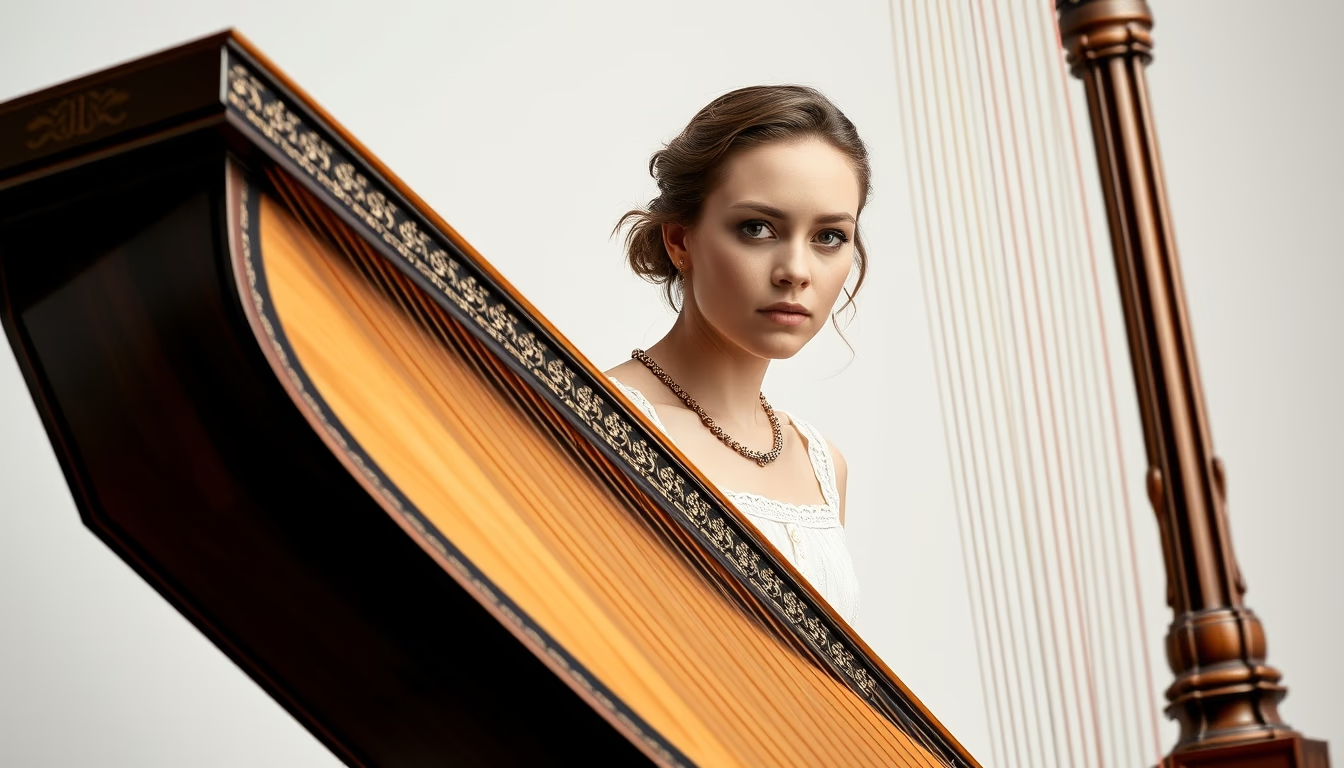
The baroque harpsichord, a keyboard instrument with plucked strings, was essential in 17th and 18th century music, notably in works by Bach and Vivaldi.
About this subject
The baroque harpsichord is a keyboard instrument that produces sound by plucking strings with plectra, a mechanism distinct from the piano, where strings are struck by hammers. This instrument was prevalent during the Baroque period, roughly from 1600 to 1750, and played a central role in the music of the era, both as a solo instrument and in continuo accompaniment. Composers like Johann Sebastian Bach, Domenico Scarlatti, and George Frideric Handel wrote extensive works for harpsichord, exploring its expressive and technical possibilities.
The construction of the harpsichord varied in size and shape: from single or double manual (keyboard) models to instruments with stops that alter the sound, such as the lute stop. The strings are made of metal or gut, and the instrument produces a bright, metallic timbre with little sustain, requiring ornamentation and agility from performers to create musical continuity. During the Baroque period, the harpsichord was frequently used in operas, oratorios, and chamber music, being the dominant keyboard instrument before the emergence of the fortepiano in the late 18th century.
Interestingly, the technique of harpsichord playing influenced the development of other keyboard instruments, and many modern teaching methods still draw on Baroque treatises, such as François Couperin's 'L'Art de toucher le clavecin'. The construction of harpsichords experienced a revival in the 20th century, with builders like the Hubbard family and companies like Zuckermann producing historically accurate replicas. Today, the harpsichord is performed in early music concerts and recordings, keeping the Baroque repertoire alive with original instruments or faithful copies.
Frequently Asked Questions
What is the difference between a harpsichord and a piano?
The main difference is the mechanism: in the harpsichord, strings are plucked by plectra, while in the piano they are struck by hammers. This results in a brighter sound with less sustain in the harpsichord.
Which composers wrote for the harpsichord?
Major Baroque composers such as Johann Sebastian Bach (The Well-Tempered Clavier), Domenico Scarlatti (over 500 sonatas), and George Frideric Handel wrote significant works for the harpsichord.
Is the harpsichord still used in modern music?
Yes, the harpsichord is widely used in historically informed performances of Baroque music. It also appears in early music recordings and occasionally in contemporary compositions seeking specific timbres.
Direct URL
https://pub-c7d6a6ea828543ac903a74a341ccb2e1.r2.dev/imagens/harpsichord-baroque-studio-editorial-portrait-p12.avifHow to credit
Include a visible link back to UtilizAí. Copy one of the snippets below:
<a href="https://xn--utiliza-eza.com/en/midia/imagens/harpsichord-baroque-studio-editorial-portrait-p12">Harpsichord baroque</a> by <a href="https://xn--utiliza-eza.com">UtilizAí</a>, licensed under <a href="https://creativecommons.org/licenses/by/4.0/">CC BY 4.0</a>.
[Harpsichord baroque](https://xn--utiliza-eza.com/en/midia/imagens/harpsichord-baroque-studio-editorial-portrait-p12) by [UtilizAí](https://xn--utiliza-eza.com), CC BY 4.0
License: CC-BY-4.0