Hanging plants vertical garden
1344×768 · AVIF · CC BY 4.0
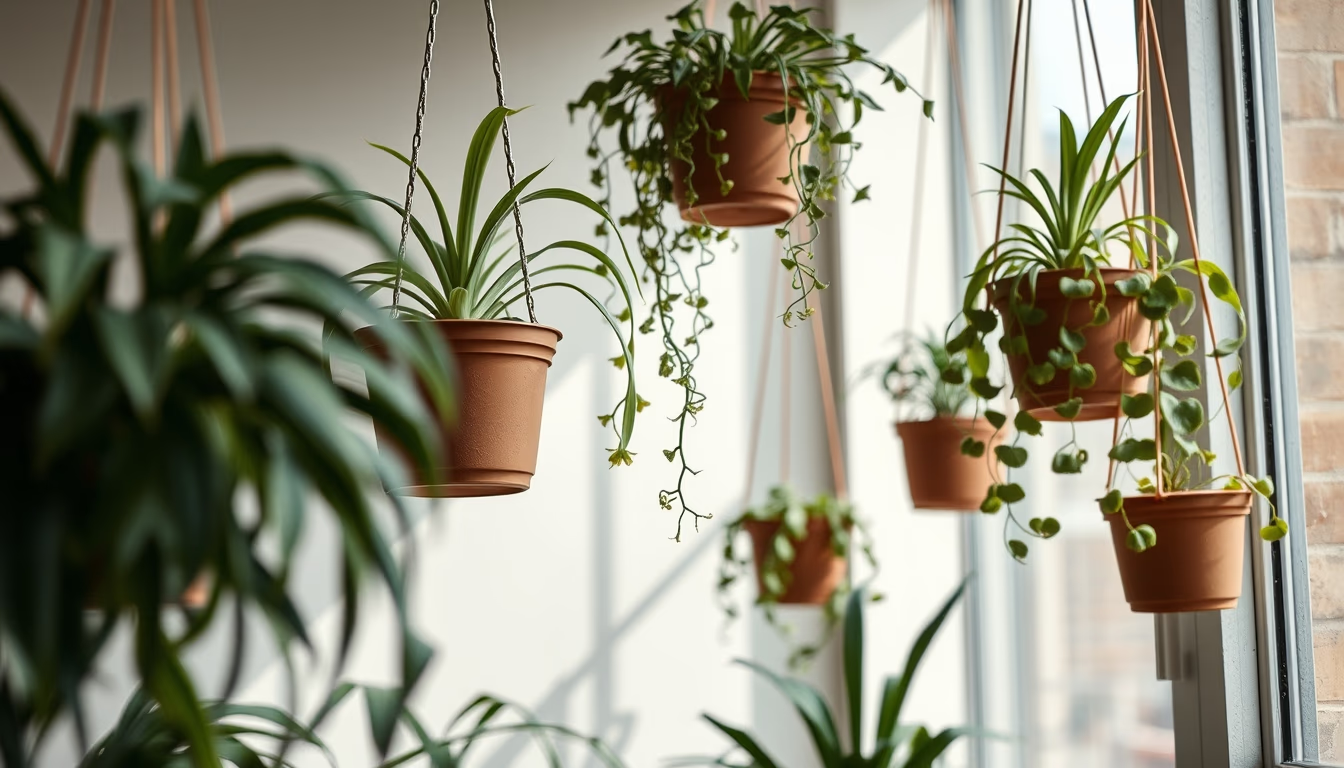
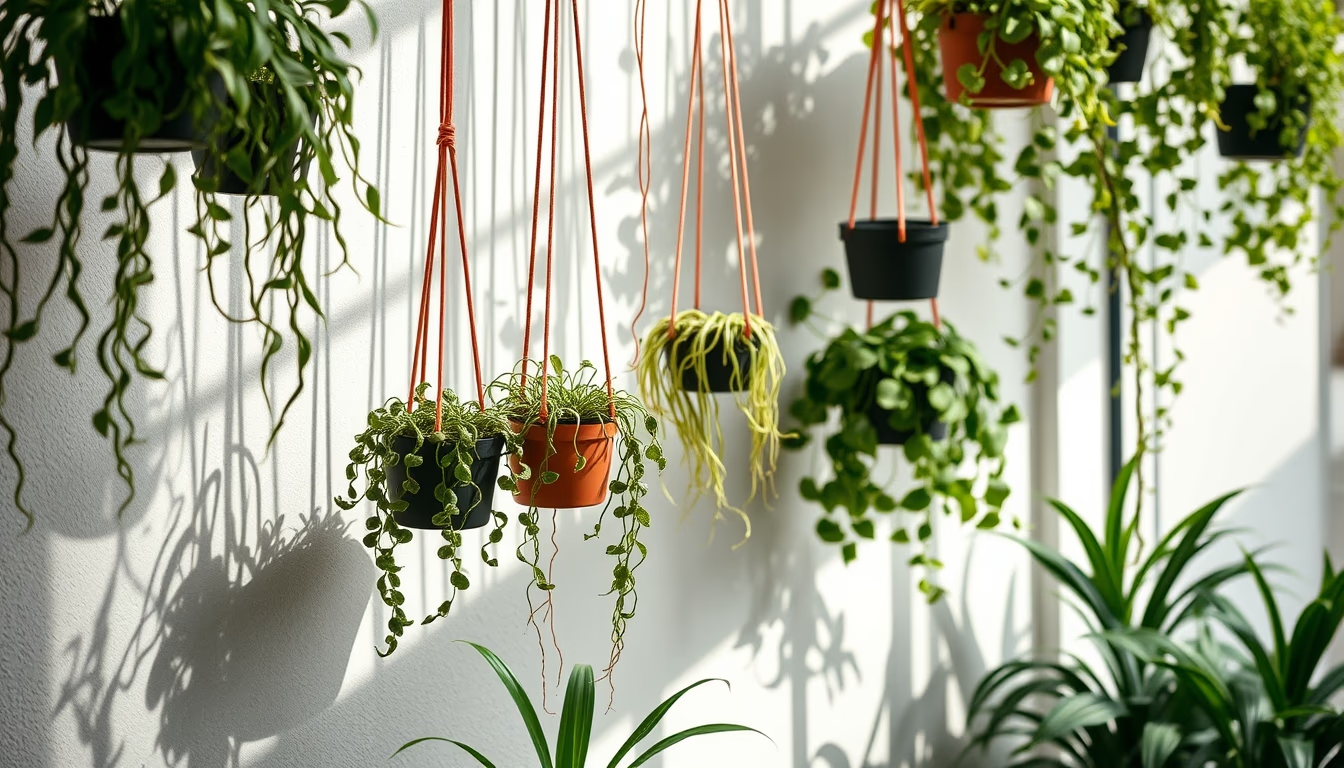
Vertical gardens with hanging plants offer compact and elegant solutions to bring nature into urban spaces, optimizing small areas.
About this subject
Vertical gardens with hanging plants, also known as suspended living walls, are structures that allow planting on vertical surfaces using pots, modular panels, or felt systems. This technique is especially valued in urban centers where horizontal space is limited. Hanging plants such as pothos (Epipremnum aureum), Boston fern (Nephrolepis exaltata), and peperomia (Peperomia scandens) are chosen for their cascading growth, creating a green curtain visual effect.
The history of vertical gardens dates back to the Hanging Gardens of Babylon, one of the Seven Wonders of the Ancient World, but the modern concept was popularized by French botanist Patrick Blanc, who developed felt systems for living walls. In Brazil, the technique gained momentum from the 2000s onward, with residential and corporate projects aiming to improve air quality, reduce ambient temperature, and increase urban biodiversity. Data from the World Health Organization indicate that green areas in cities can reduce air pollution by up to 25%.
For successful cultivation, it is essential to choose species that tolerate partial shade or indirect light, as many indoor vertical walls receive little direct sunlight. Automated drip irrigation is common, ensuring uniform hydration without excess water. Maintenance involves regular pruning to control growth and prevent plants from invading windows or electrical systems. Interestingly, some species like string of pearls (Senecio rowleyanus) and mistletoe cactus (Rhipsalis baccifera) are succulents that require less watering, ideal for beginners.
In minimalist design, compositions with hanging plants emphasize simplicity and functionality. The trailing leaves create movement without obstructing passage, making them perfect for room dividers or narrow balconies. Studies from the Journal of Environmental Psychology show that the presence of plants in offices increases productivity by up to 15% and reduces stress. For those with limited space, a vertical panel with ceramic or natural fiber pots can be installed on a free wall, transforming an ordinary corner into a standout feature.
Frequently Asked Questions
Which hanging plants are best for indoor vertical gardens?
Species like pothos, Boston fern, peperomia, and string of pearls thrive indoors because they tolerate indirect light and have cascading growth.
How do you irrigate a vertical garden with hanging plants?
An automated drip irrigation system is most efficient, delivering water evenly and preventing overwatering. For small setups, hand watering with a narrow-spout can work.
Do hanging vertical gardens help reduce room temperature?
Yes, plants lower temperature through evapotranspiration. Studies show that green walls can reduce indoor temperatures by up to 4°C in summer.
Direct URL
https://pub-c7d6a6ea828543ac903a74a341ccb2e1.r2.dev/imagens/hanging-plants-vertical-garden-minimalist-composition-fresh16.avifHow to credit
Include a visible link back to UtilizAí. Copy one of the snippets below:
<a href="https://xn--utiliza-eza.com/en/midia/imagens/hanging-plants-vertical-garden-minimalist-composition-fresh16">Hanging plants vertical garden</a> by <a href="https://xn--utiliza-eza.com">UtilizAí</a>, licensed under <a href="https://creativecommons.org/licenses/by/4.0/">CC BY 4.0</a>.
[Hanging plants vertical garden](https://xn--utiliza-eza.com/en/midia/imagens/hanging-plants-vertical-garden-minimalist-composition-fresh16) by [UtilizAí](https://xn--utiliza-eza.com), CC BY 4.0
License: CC-BY-4.0