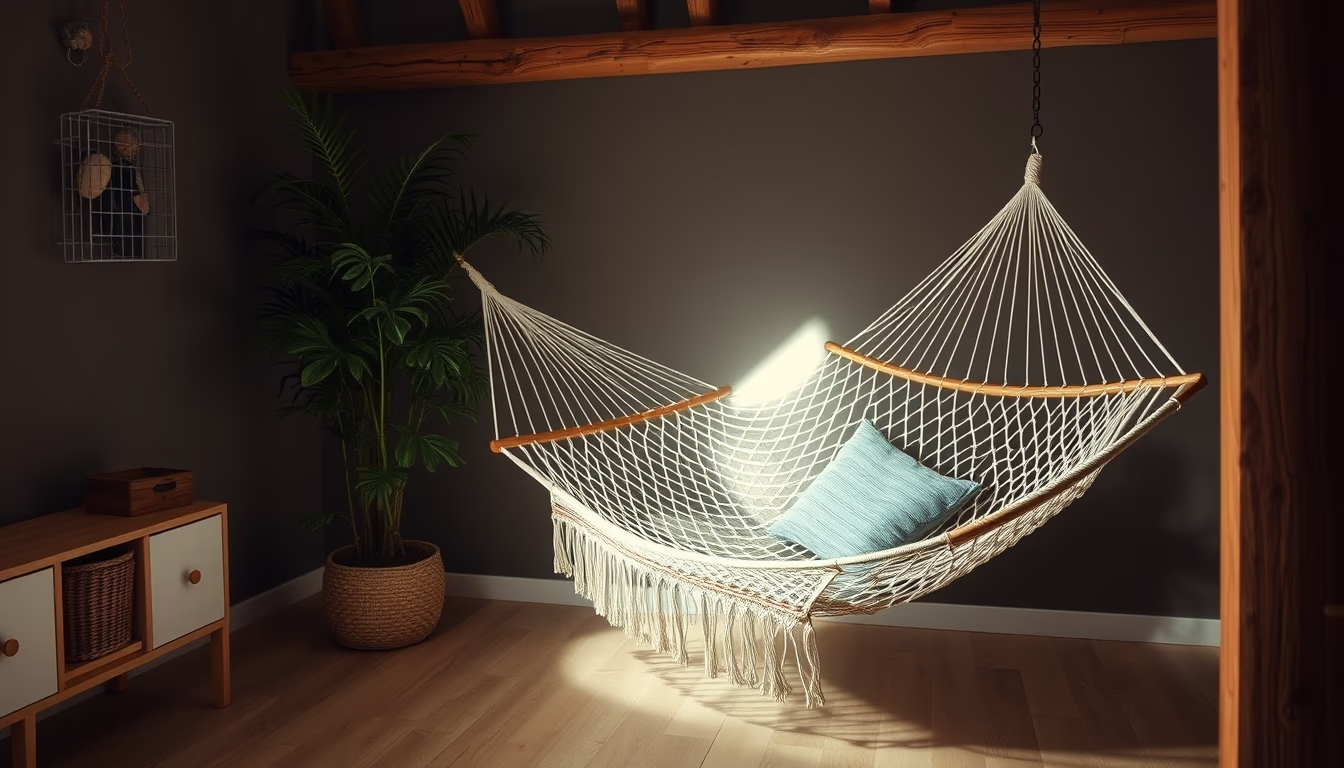
Hammock between palm trees
1344×768 · AVIF · CC BY 4.0

A hammock stretched between palm trees evokes the quintessential rest of Brazilian beaches, blending natural shade and sea breeze.
About this subject
The hammock is a deeply rooted cultural element in Brazil, especially in coastal and northeastern regions. Unlike common hammocks, traditional Brazilian hammocks are handwoven on looms, usually of cotton or nylon, and feature fringes called “renda” at the ends. They are so emblematic that in 2020 the National Institute of Historic and Artistic Heritage (IPHAN) recognized the “Craft of Lacemakers” as intangible cultural heritage.
Coconut palms (Cocos nucifera) were introduced to Brazil by the Portuguese in the 16th century. Today, Brazil is the world’s fourth largest coconut producer, with major output from Bahia, Ceará, and Pernambuco states. The combination of hammock and palm tree is more than aesthetic: palm fronds filter intense sunlight while allowing breeze to pass through, creating a cool microclimate ideal for seaside naps.
In Brazilian tourism, the image of a hammock between palm trees is a top icon of leisure and relaxation. Destinations like Porto de Galinhas (PE), Jericoacoara (CE), and Costa do Sauípe (BA) use this imagery in resorts and inns. Anthropological studies of leisure indicate that resting in a hammock reduces cortisol and enhances well-being, known as “creative idleness” in tropical cultures.
Interestingly, hammock design influenced modern architecture. Architect Oscar Niemeyer created armchairs inspired by the concave shape of hammocks, and tensioned fabric on balconies is common in vacation homes. Additionally, the indigenous tradition of sleeping in hammocks, adopted by colonizers, was key to spreading this furniture across Brazil.
Frequently Asked Questions
What is the origin of the hammock in Brazil?
Hammocks were introduced by indigenous peoples, who used them as suspended beds. Portuguese colonizers adopted the custom, and over time hammocks spread throughout the country, developing regional variations in weaving and design.
Why are hammocks so common on beaches in Northeast Brazil?
The hot, humid climate of the Northeast makes hammocks ideal for resting with ventilation, avoiding ground heat. Moreover, the artisanal weaving tradition is strong there, and combining hammocks with palm trees is natural as these trees are abundant along the coast.
Do Brazilian hammocks have any specific cultural significance?
Yes, they symbolize hospitality and relaxation. In many communities, offering a hammock to a visitor is a sign of welcome. Additionally, the lacemakers who produce the fringes are valued as keepers of traditional knowledge recognized by IPHAN.
Direct URL
https://pub-c7d6a6ea828543ac903a74a341ccb2e1.r2.dev/imagens/hammock-between-palm-trees-lo-fi-disposable-camera-fresh0.avifHow to credit
Include a visible link back to UtilizAí. Copy one of the snippets below:
<a href="https://xn--utiliza-eza.com/en/midia/imagens/hammock-between-palm-trees-lo-fi-disposable-camera-fresh0">Hammock between palm trees</a> by <a href="https://xn--utiliza-eza.com">UtilizAí</a>, licensed under <a href="https://creativecommons.org/licenses/by/4.0/">CC BY 4.0</a>.
[Hammock between palm trees](https://xn--utiliza-eza.com/en/midia/imagens/hammock-between-palm-trees-lo-fi-disposable-camera-fresh0) by [UtilizAí](https://xn--utiliza-eza.com), CC BY 4.0
License: CC-BY-4.0