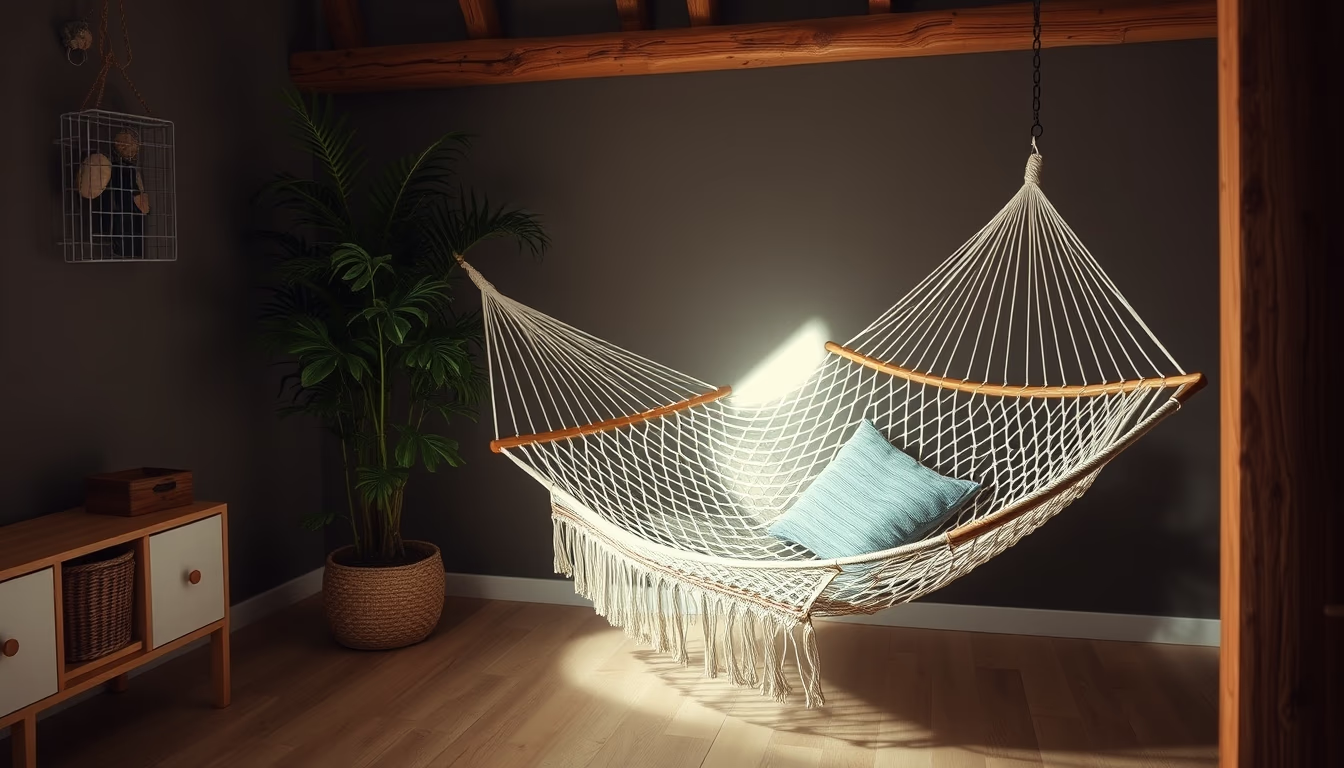
Hammock between palm trees
1344×768 · AVIF · CC BY 4.0

A hammock stretched between palm trees, a combination that evokes the typical rest of Brazilian beaches and the design of tropical resorts worldwide.
About this subject
The hammock is an object deeply rooted in Brazilian culture, especially in the Amazon region, where indigenous Tupi-Guarani people used it as a bed and seat. With colonization, the weaving technique was improved and the hammock spread throughout the country, becoming a symbol of hospitality and leisure. Today, it is common to see them on verandas, backyards, and of course between coconut palms on the beaches of the Northeast.
Coconut palms (Cocos nucifera) are typical tropical coastal palms, introduced to Brazil by the Portuguese. Their resistant and flexible wood makes them suitable as hammock supports, provided the trees are healthy with a straight trunk. The ideal distance between two palm trees for hanging a hammock is about 3 to 4 meters, ensuring a comfortable sway.
In the context of tropical tourism, the combination of hammock and palm trees is a common landscape architectural element in resorts. The idea is to integrate guests with nature, offering an outdoor relaxation space. This practice refers to the concept of “veranda life,” highly valued in warm climate regions.
Interestingly, the hammock was once used as a means of transportation in some cultures, but in Brazil it is almost synonymous with rest. Studies indicate that sleeping in a hammock can improve sleep quality due to the gentle motion and semi-inclined body position. When choosing a spot to hang it, ensure the palm trees are firm and away from possible falling fruits.
Frequently Asked Questions
What is the origin of the hammock in Brazil?
The hammock was inherited from indigenous peoples, mainly the Tupi-Guarani, who used it as a bed and seat. Its use spread throughout Brazil after colonization.
How to choose palm trees for hanging a hammock?
Choose palm trees with a straight, healthy trunk, spaced 3 to 4 meters apart. Ensure there is no risk of falling coconuts or damage to the tree.
In which regions of Brazil is it common to see hammocks between palm trees?
It is most common in the Northeast and North, especially on beaches and resorts, but also appears in rural and urban areas nationwide as a symbol of rest.
Direct URL
https://pub-c7d6a6ea828543ac903a74a341ccb2e1.r2.dev/imagens/hammock-between-palm-trees-architectural-photography-fresh18.avifHow to credit
Include a visible link back to UtilizAí. Copy one of the snippets below:
<a href="https://xn--utiliza-eza.com/en/midia/imagens/hammock-between-palm-trees-architectural-photography-fresh18">Hammock between palm trees</a> by <a href="https://xn--utiliza-eza.com">UtilizAí</a>, licensed under <a href="https://creativecommons.org/licenses/by/4.0/">CC BY 4.0</a>.
[Hammock between palm trees](https://xn--utiliza-eza.com/en/midia/imagens/hammock-between-palm-trees-architectural-photography-fresh18) by [UtilizAí](https://xn--utiliza-eza.com), CC BY 4.0
License: CC-BY-4.0