Hammock between palm trees
1344×768 · AVIF · CC BY 4.0
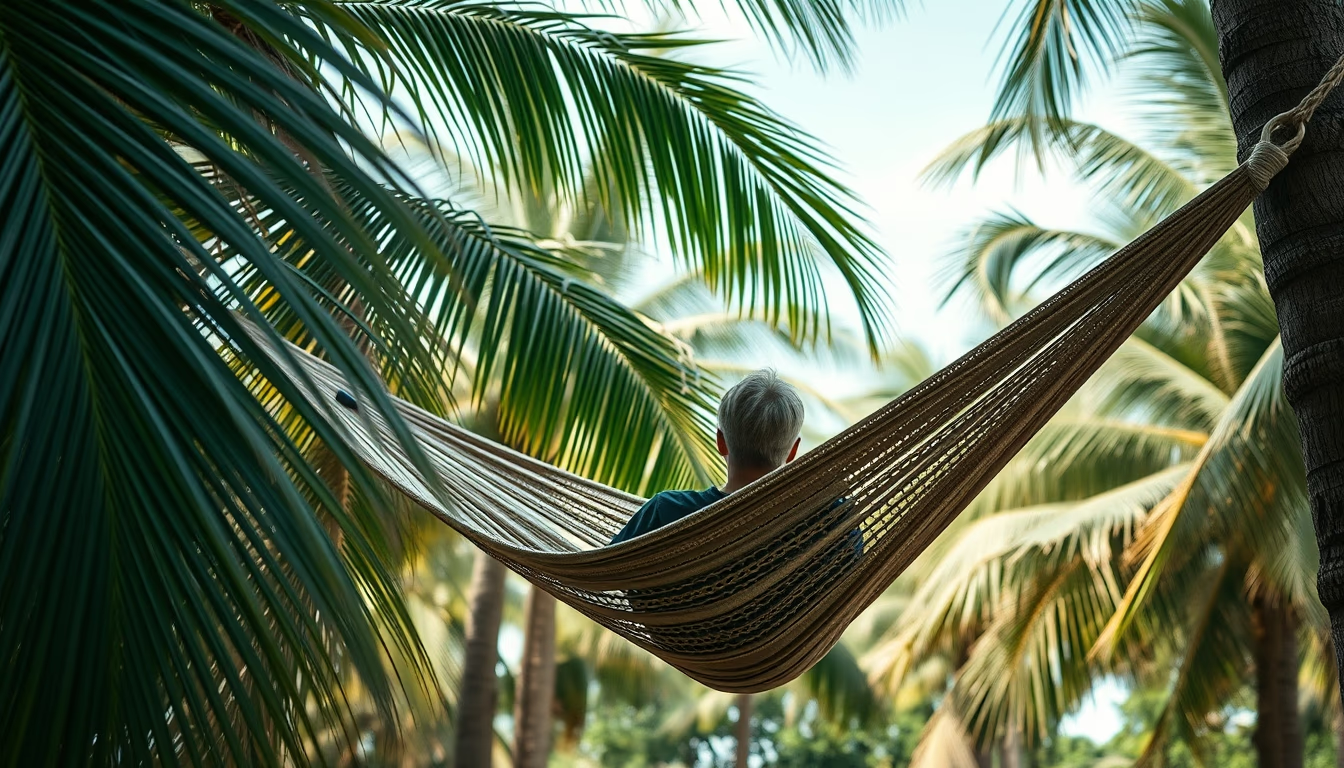
Hammock between palm trees is a symbol of rest in tropical regions, especially along the Brazilian coast.
About this subject
The hammock is one of the most recognizable symbols of tropical relaxation, with origins dating back to the indigenous peoples of Central and South America. In Brazil, it was adopted by colonizers and quickly spread throughout the territory, becoming an essential item in beach houses, country retreats, and verandas. Unlike a traditional bed, the hammock allows the body to lie in a semi-fetal position, reducing pressure points and improving blood circulation. Weaving techniques vary by region: in the Northeast, colorful cotton hammocks are common, while in the North, natural fibers like tucum predominate.
Coconut palms, on the other hand, are trees of the genus Cocos nucifera, native to the Indo-Pacific, but perfectly adapted to the Brazilian climate. They are abundant along the northeastern coast, where sandy soil and heat favor their growth. A mature coconut palm can produce up to 150 coconuts per year, each taking about 12 months to ripen. The shade cast by their leaves is ideal for hanging hammocks, creating a cooler microclimate under the intense sun. Moreover, the breeze passing through the fronds helps cool those resting in the hammock.
The combination of hammock and coconut palm represents a slow lifestyle valued in tourist destinations like Porto de Galinhas, Jericoacoara, and Fernando de Noronha. There, the rhythm is set by the tide and the palm shade. Studies show that the gentle rocking of a hammock induces deep relaxation, similar to the movements felt in the womb. It's no wonder many resorts offer specific areas with hammocks between palm trees for meditation and napping.
To set up a hammock between two coconut palms, it's important to maintain an ideal distance of 2.5 to 3 meters between the trees. The ropes should be tied at least 1.5 meters above the ground, ensuring safety. A curiosity: in Brazil, the hammock was once so indispensable that in the 19th century, foreign travelers recorded in their diaries that it was common to find hammocks even inside churches, for the faithful to rest during long sermons.
Frequently Asked Questions
What is the best way to hang a hammock between coconut palms?
The ideal distance between the palms is 2.5 to 3 meters. Tie the ropes at least 1.5 meters above the ground, using strong knots like the figure-eight or clove hitch. Ensure the hammock does not touch the ground and that the palms are healthy and firmly rooted.
Why are hammocks so popular in Brazil?
Hammocks were inherited from indigenous people and integrated into Brazilian culture because they are practical in hot, humid climates. They allow ventilation on all sides, avoid ground insects, and are easy to transport and set up.
Are coconut palms native to Brazil?
No. The coconut palm (Cocos nucifera) is native to the Indo-Pacific region, but it was introduced to Brazil by the Portuguese and has become naturalized, especially along the northeastern coast. It is now one of the most common palm trees in the country.
Direct URL
https://pub-c7d6a6ea828543ac903a74a341ccb2e1.r2.dev/imagens/hammock-between-palm-trees-documentary-nature-style-fresh16.avifHow to credit
Include a visible link back to UtilizAí. Copy one of the snippets below:
<a href="https://xn--utiliza-eza.com/en/midia/imagens/hammock-between-palm-trees-documentary-nature-style-fresh16">Hammock between palm trees</a> by <a href="https://xn--utiliza-eza.com">UtilizAí</a>, licensed under <a href="https://creativecommons.org/licenses/by/4.0/">CC BY 4.0</a>.
[Hammock between palm trees](https://xn--utiliza-eza.com/en/midia/imagens/hammock-between-palm-trees-documentary-nature-style-fresh16) by [UtilizAí](https://xn--utiliza-eza.com), CC BY 4.0
License: CC-BY-4.0