Gyrocopter autogyro
1344×768 · AVIF · CC BY 4.0
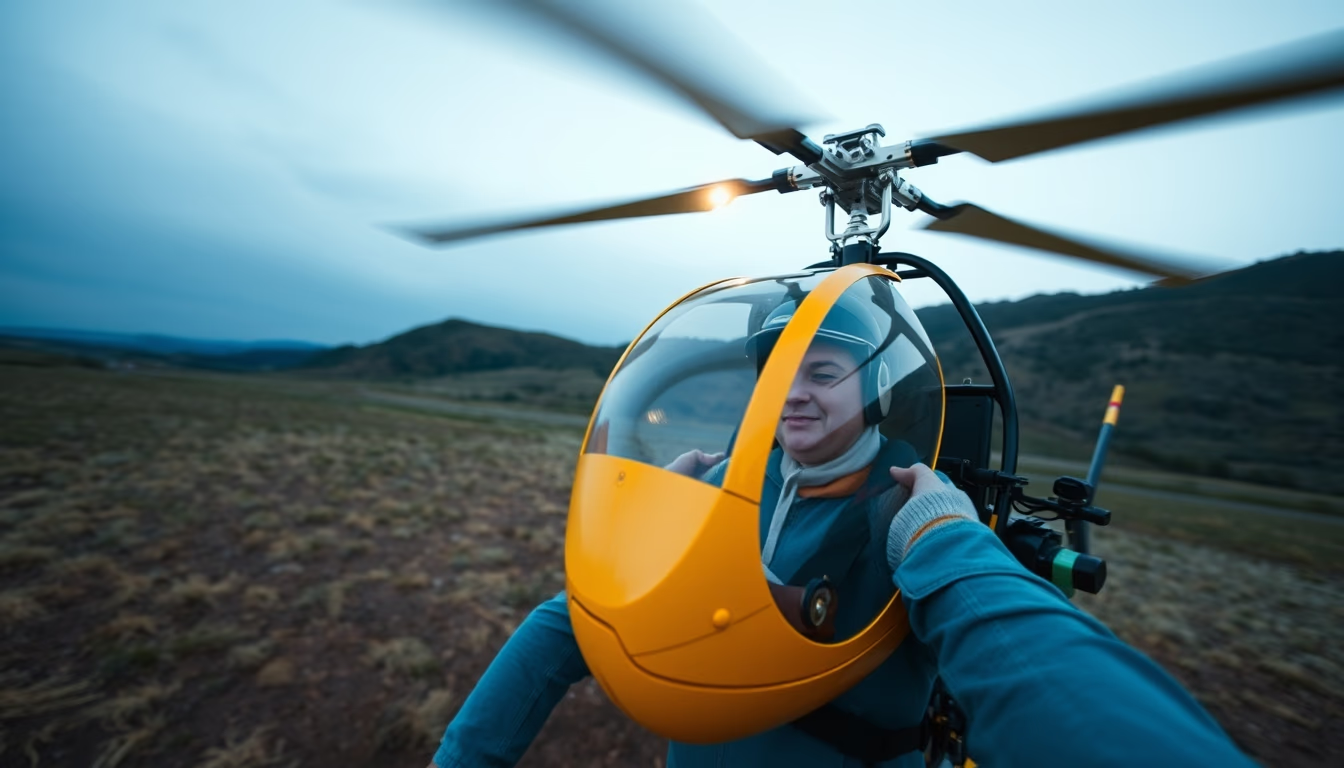
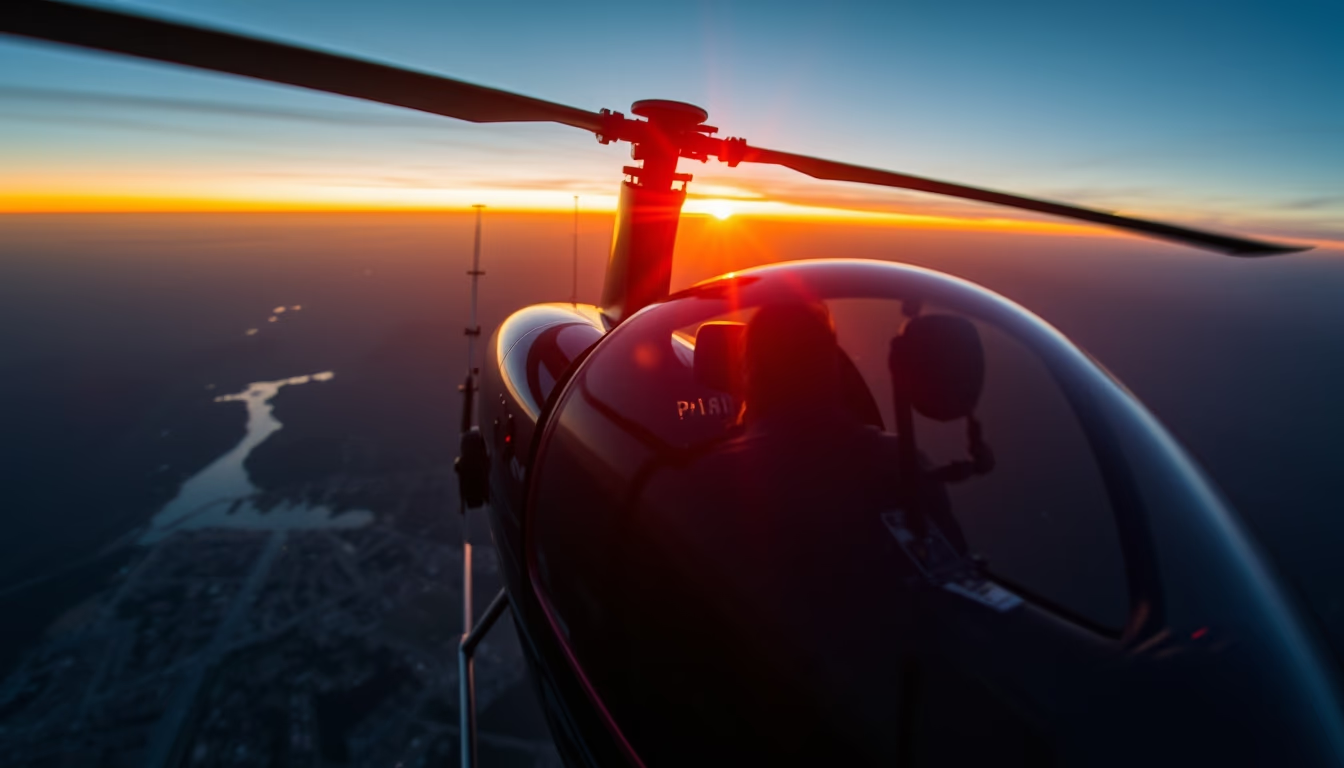
The autogyro, also known as a gyrocopter, is a rotary-wing aircraft that combines features of helicopters and airplanes, using unpowered rotors for lift.
About this subject
The autogyro, also known as a gyrocopter, is a rotary-wing aircraft that differs from a helicopter in that its main rotors are not powered. While a helicopter uses engine power to spin its blades and generate lift, an autogyro relies on forward motion to spin the rotor freely in a phenomenon called autorotation. This makes the autogyro simpler, lighter, and safer in some respects, as there is no risk of rotor failure due to power loss.
Invented by Spanish engineer Juan de la Cierva in 1923, the autogyro was a precursor to technologies later used in helicopters. De la Cierva sought an aircraft that avoided stalling, a common problem with airplanes of the time. His first successful model, the Cierva C.4, flew in 1923. In the following years, autogyros were produced by several companies, including the British Cierva Autogiro Company and the American Pitcairn. During World War II, they were used for observation and training.
Today, autogyros are popular among recreational and ultralight aviation enthusiasts. Modern models, such as the Autogyro GmbH Cavalon and the Magni M16, feature enclosed cockpits, side-by-side seating, and dual controls. They are known for their stability, low operating costs, and ability to operate from short runways. Unlike a helicopter, an autogyro cannot hover, but it can fly at very low speeds and land in short distances.
A curiosity: the term "gyrocopter" is often used synonymously with autogyro, especially in the United States. However, technically, "gyrocopter" may refer to a specific class of light autogyros with simplified controls. The autogyro's safety is highlighted by its ability to continue flying even with the engine off, as long as there is sufficient forward speed to maintain autorotation.
Frequently Asked Questions
What is the main difference between an autogyro and a helicopter?
In a helicopter, the main rotor is powered by the engine, allowing hovering and lift generation even when stationary. In an autogyro, the rotor is unpowered and only spins due to forward motion (autorotation), so it cannot hover.
Is an autogyro safe if the engine fails?
Yes, because the engine does not drive the rotor. If the engine fails, the pilot can reduce speed and the rotor continues to spin via autorotation, allowing a controlled descent similar to a parachute.
Where are autogyros most commonly used today?
They are popular in recreational and ultralight aviation, also used for patrol, aerial photography, and agriculture. Modern models like the Cavalon and Magni are common in flight schools for beginner pilots.
Direct URL
https://pub-c7d6a6ea828543ac903a74a341ccb2e1.r2.dev/imagens/gyrocopter-autogyro-lo-fi-disposable-camera-fresh1.avifHow to credit
Include a visible link back to UtilizAí. Copy one of the snippets below:
<a href="https://xn--utiliza-eza.com/en/midia/imagens/gyrocopter-autogyro-lo-fi-disposable-camera-fresh1">Gyrocopter autogyro</a> by <a href="https://xn--utiliza-eza.com">UtilizAí</a>, licensed under <a href="https://creativecommons.org/licenses/by/4.0/">CC BY 4.0</a>.
[Gyrocopter autogyro](https://xn--utiliza-eza.com/en/midia/imagens/gyrocopter-autogyro-lo-fi-disposable-camera-fresh1) by [UtilizAí](https://xn--utiliza-eza.com), CC BY 4.0
License: CC-BY-4.0