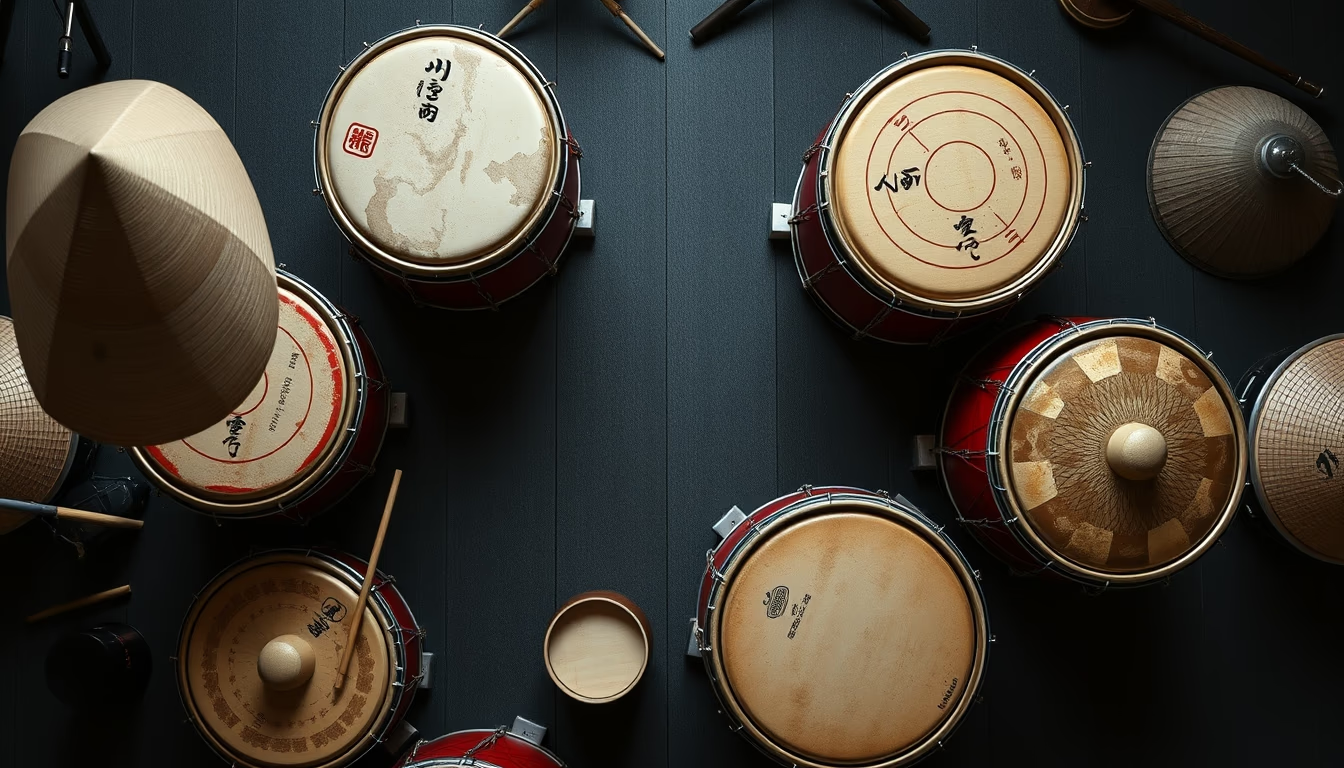
Guzheng chinese
1344×768 · AVIF · CC BY 4.0

The guzheng is a traditional Chinese plucked string instrument with over 2,500 years of history, known for its ethereal sound and musical versatility.
About this subject
The guzheng, also known as the Chinese zither, is one of China's oldest and most iconic instruments. Its origins date back to the Warring States period (475, 221 BCE), with archaeological evidence of similar instruments found in tombs in Hubei province. Traditionally, the guzheng has 21 strings made of steel or silk, tuned by movable bridges over a resonance box carved from paulownia wood. The characteristic sound is produced by plucking the strings with fingers or picks, allowing techniques such as vibrato and glissando for expressiveness.
In Chinese culture, the guzheng holds a central place in classical and folk music, often associated with the imperial court and literati. It is a featured instrument in traditional orchestras, and its practice was considered one of the four essential arts for the nobility, alongside chess, calligraphy, and painting. The repertoire includes pieces like 'High Mountains and Flowing Water,' which symbolize friendship and the contemplation of nature.
Nowadays, the guzheng remains popular in China and worldwide, with adaptations to contemporary genres such as jazz, pop, and electronic music. Modern manufacturers experiment with new materials and tuning systems to expand its sonic possibilities. Playing techniques have also evolved, with the use of artificial nails for greater precision and volume. Learning the guzheng has become accessible through online and in-person lessons, attracting students of all ages.
Interestingly, the guzheng influenced neighboring instruments like the Japanese koto and Korean gayageum, which share structural and idiomatic features. Subtle differences in string count, wood type, and performance style reflect the distinct musical traditions of each country.
Frequently Asked Questions
What is the difference between the guzheng and the Japanese koto?
Both are plucked zithers, but the guzheng typically has 21 strings while the koto has 13. The resonance box wood differs: guzheng uses paulownia, while koto uses kiri (paulownia tomentosa) with different construction methods. Playing posture also varies: guzheng is placed on the floor or on legs, while koto is played on the floor with the musician kneeling.
Is it difficult to learn the guzheng?
Like any instrument, it requires practice, but the guzheng is considered accessible for beginners due to its intuitive tuning and simple basic techniques. Notation is usually in tablature (numbers indicating strings), making it easy to read. Online courses and apps also support self-learning.
What are the most famous guzheng pieces?
Two iconic pieces are 'High Mountains and Flowing Water' (Gaoshan Liushui), symbolizing friendship, and 'Dance of Fire' (Huo Biao), a modern composition exploring rhythm and virtuosic techniques. Classical repertoire also includes 'Mist on the Mountain' (Shan Mei) and 'Moon over the River' (Jiang Yue).
Direct URL
https://pub-c7d6a6ea828543ac903a74a341ccb2e1.r2.dev/imagens/guzheng-chinese-fine-art-photography-p2.avifHow to credit
Include a visible link back to UtilizAí. Copy one of the snippets below:
<a href="https://xn--utiliza-eza.com/en/midia/imagens/guzheng-chinese-fine-art-photography-p2">Guzheng chinese</a> by <a href="https://xn--utiliza-eza.com">UtilizAí</a>, licensed under <a href="https://creativecommons.org/licenses/by/4.0/">CC BY 4.0</a>.
[Guzheng chinese](https://xn--utiliza-eza.com/en/midia/imagens/guzheng-chinese-fine-art-photography-p2) by [UtilizAí](https://xn--utiliza-eza.com), CC BY 4.0
License: CC-BY-4.0