GPU cluster in cooling data center
1344×768 · AVIF · CC BY 4.0
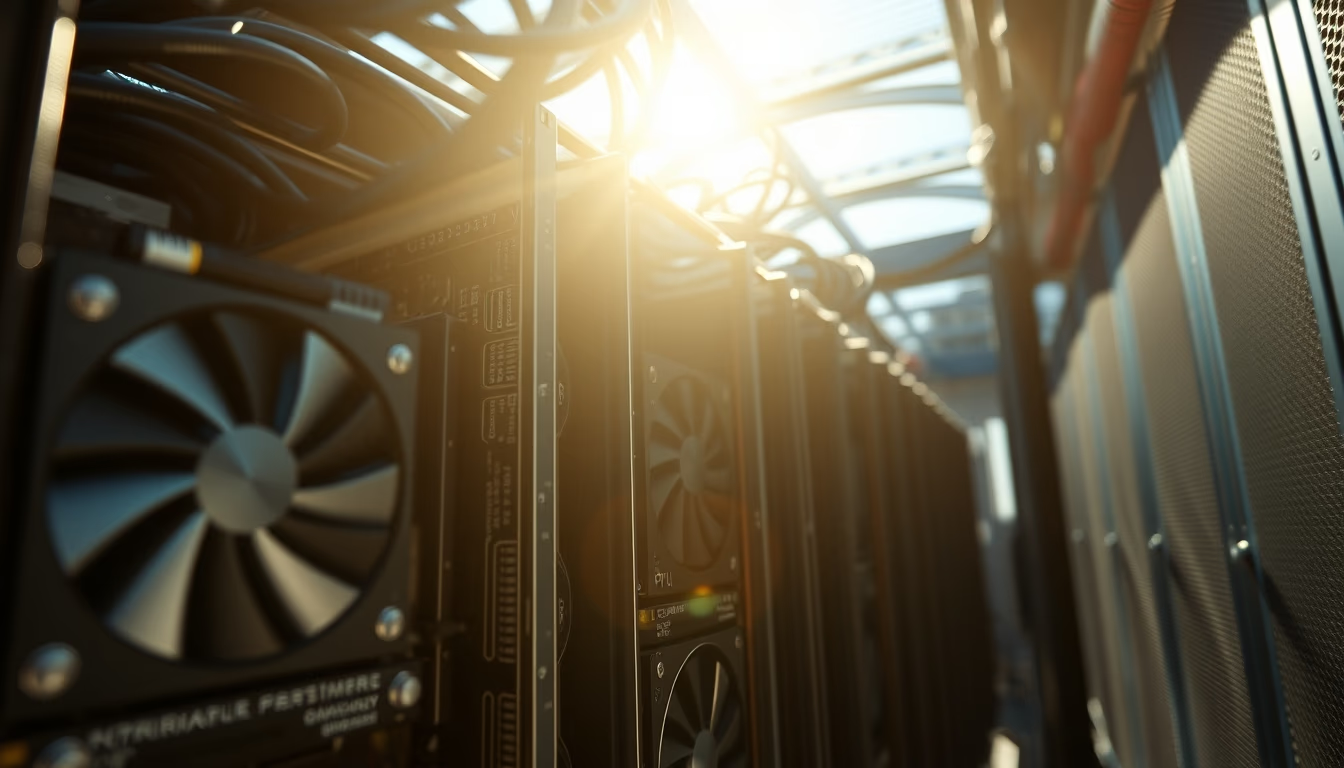
GPU cluster in a cooling data center: critical infrastructure for large-scale artificial intelligence model training.
About this subject
GPU clusters form the backbone of modern artificial intelligence model training. In liquid or air-cooled data centers, dozens to thousands of GPUs work in parallel to process massive datasets. Companies like NVIDIA, AMD, and Intel dominate the GPU market for AI, with cards such as the A100 and H100 being widely used. Cooling is crucial: GPUs can consume up to 700W each, generating intense heat. Hyperscale data centers, like those from Google, AWS, and Microsoft Azure, employ advanced cooling techniques, including immersion in dielectric liquid, to maintain optimal temperatures and prevent thermal throttling. Energy efficiency is measured by PUE (Power Usage Effectiveness), with values close to 1.0 being ideal. Training models like GPT-4 or LLaMA requires clusters with thousands of GPUs operating for weeks, consuming megawatts of power. The data center location also matters: cold regions, such as the Nordic countries, reduce cooling costs. Additionally, high-speed network connectivity, like InfiniBand or NVLink, is essential to minimize latency in GPU-to-GPU communication. Maintaining these clusters is complex, involving constant monitoring of temperature, voltage, and performance. Hardware failures are common, requiring redundancy and failover systems. The total cost of ownership (TCO) includes energy, cooling, hardware, and specialized labor. With the advancement of AI, demand for GPU clusters is only increasing, driving innovations in cooling and energy efficiency.
Frequently Asked Questions
How many GPUs are needed to train a model like GPT-4?
Training GPT-4 is estimated to have used thousands of NVIDIA A100 GPUs, possibly over 10,000, running for weeks. The exact number has not been officially disclosed by OpenAI.
What is the difference between air and liquid cooling in data centers?
Air cooling is simpler and cheaper but less efficient for high power densities. Liquid cooling, including immersion, dissipates heat more effectively, allowing higher GPU density and lower energy consumption.
What is PUE and why is it important?
PUE (Power Usage Effectiveness) is the ratio of total energy consumed by the data center to energy used by IT equipment. A PUE close to 1.0 indicates high energy efficiency, reducing operational costs and environmental impact.
Direct URL
https://pub-c7d6a6ea828543ac903a74a341ccb2e1.r2.dev/imagens/gpu-cluster-in-cooling-data-center-closeup-macro-shot-bright-midday-sun.avifHow to credit
Include a visible link back to UtilizAí. Copy one of the snippets below:
<a href="https://xn--utiliza-eza.com/en/midia/imagens/gpu-cluster-in-cooling-data-center-closeup-macro-shot-bright-midday-sun">GPU cluster in cooling data center</a> by <a href="https://xn--utiliza-eza.com">UtilizAí</a>, licensed under <a href="https://creativecommons.org/licenses/by/4.0/">CC BY 4.0</a>.
[GPU cluster in cooling data center](https://xn--utiliza-eza.com/en/midia/imagens/gpu-cluster-in-cooling-data-center-closeup-macro-shot-bright-midday-sun) by [UtilizAí](https://xn--utiliza-eza.com), CC BY 4.0
License: CC-BY-4.0