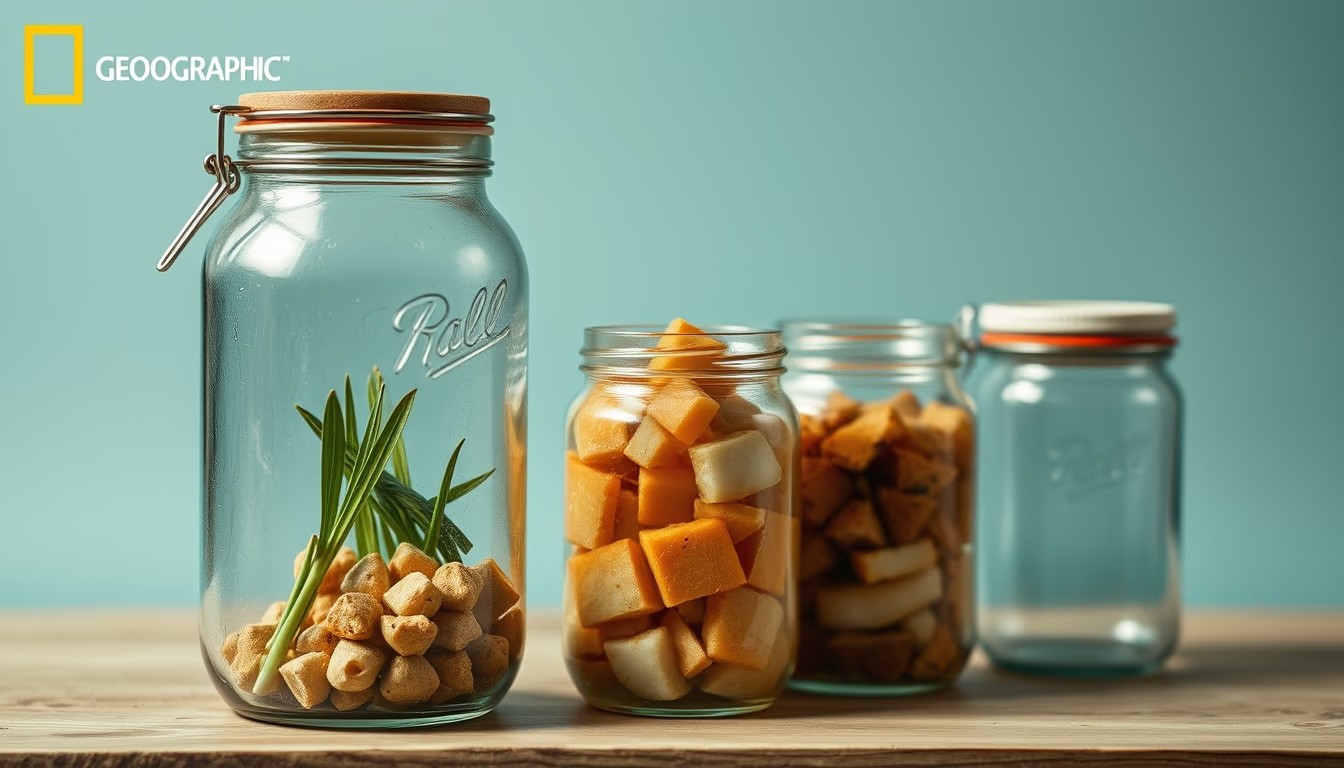
Glass jars zero waste
1344×768 · AVIF · CC BY 4.0
Reusable glass jars are essential for a zero waste lifestyle, replacing disposable plastics in kitchens and travels.
About this subject
Glass jars are one of the most versatile tools in the zero waste movement. Unlike plastic, glass does not leach harmful chemicals into food, even when heated, and can be reused hundreds of times without losing quality. Its non-porous surface prevents absorption of odors and stains, making it ideal for storing everything from grains and cereals to sauces and homemade preserves. Moreover, glass is 100% recyclable infinitely without degradation, truly closing the loop in a circular economy.
In the context of travel, glass jars become even more useful. They can carry homemade food portions, avoid disposable airport packaging, and serve as containers for solid hygiene items like shampoo bars. Many conscious travelers carry an empty jar to buy bulk goods at local markets, reducing waste generated along the way. With airtight lids, they prevent leaks and keep food fresh longer.
The adoption of glass jars to replace single-use plastics has grown globally, driven by initiatives such as bulk stores and apps that map package-free sales points. In Brazil, the culture of preserves and jams in glass is traditional, but daily use for dry storage is still underutilized. Small changes, like bringing your jar to the market or fair, can avoid generating more than 50 kg of plastic waste per person per year.
Interestingly, glass is made from abundant raw materials: sand, soda ash, and limestone. Its production, though energy-intensive, has become cleaner with the use of electric furnaces and high recycled content (cullet). Each ton of recycled glass saves about 1.2 tons of virgin raw materials and reduces CO₂ emissions by 300 kg. Therefore, choosing reusable glass jars is a decision aligned with the principles of the circular economy.
Frequently Asked Questions
Why use glass jars instead of plastic?
Glass does not leach toxic chemicals like BPA or phthalates, even with heat or acidity. It is more durable, does not retain odors, and can be recycled infinitely without quality loss. Moreover, it keeps food fresh longer.
How to clean glass jars for reuse?
Wash with hot water and detergent, using a brush to remove residues. For persistent odors, soak with baking soda or vinegar. Dry completely before storing to prevent mold.
Are glass jars safe for freezing or baking?
It depends on the type. Tempered glass (e.g., Pyrex) can withstand oven and freezer. Regular jars may crack from thermal shock. Always check if the glass is suitable and avoid abrupt temperature changes.
Direct URL
https://pub-c7d6a6ea828543ac903a74a341ccb2e1.r2.dev/imagens/glass-jars-zero-waste-travel-photography-p4.avifHow to credit
Include a visible link back to UtilizAí. Copy one of the snippets below:
<a href="https://xn--utiliza-eza.com/en/midia/imagens/glass-jars-zero-waste-travel-photography-p4">Glass jars zero waste</a> by <a href="https://xn--utiliza-eza.com">UtilizAí</a>, licensed under <a href="https://creativecommons.org/licenses/by/4.0/">CC BY 4.0</a>.
[Glass jars zero waste](https://xn--utiliza-eza.com/en/midia/imagens/glass-jars-zero-waste-travel-photography-p4) by [UtilizAí](https://xn--utiliza-eza.com), CC BY 4.0
License: CC-BY-4.0