Electric bike commuter
1344×768 · AVIF · CC BY 4.0
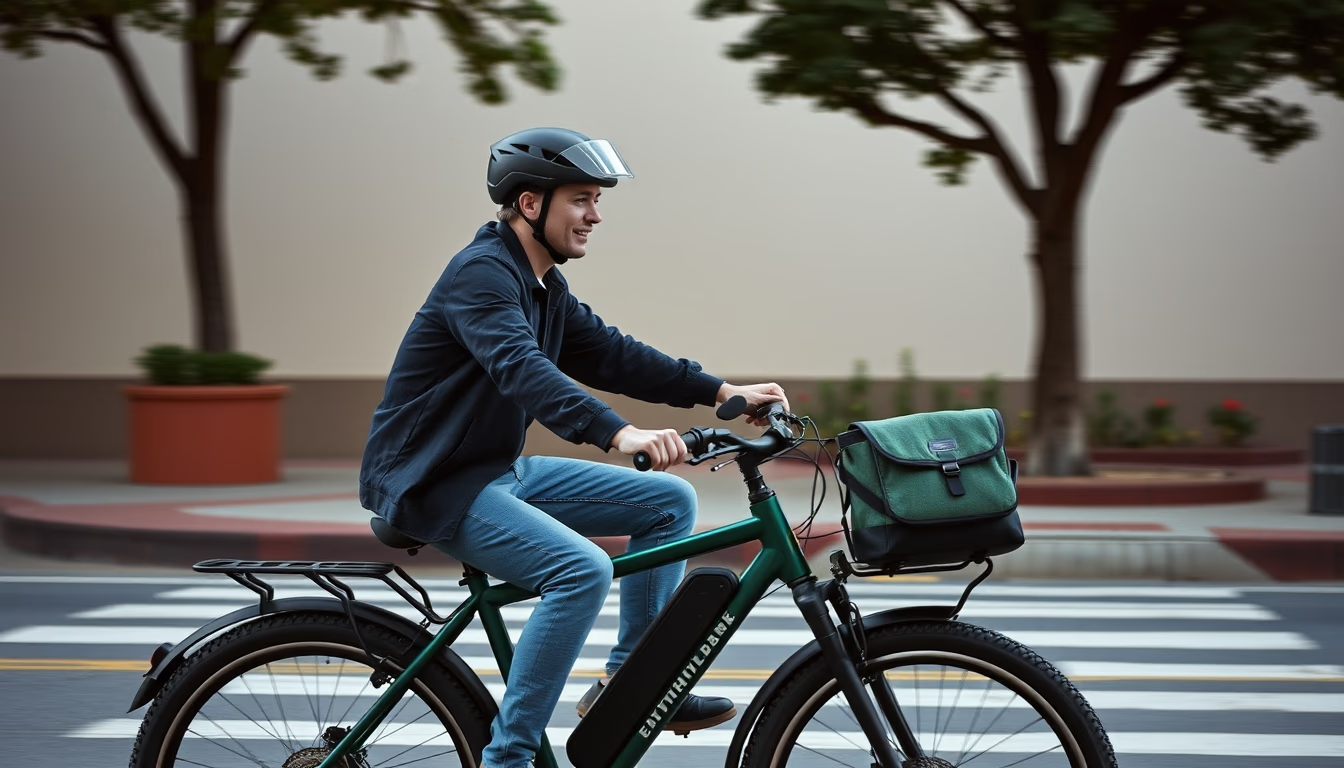
Electric bikes are transforming urban mobility with efficiency and low environmental impact, becoming the preferred choice for millions of commuters.
About this subject
The daily commute by electric bike, known as e-bike commuting, has grown exponentially in cities worldwide. In Brazil, the electric bicycle fleet jumped from about 200,000 units in 2020 to over 1.5 million in 2025, driven by tax incentives and expansion of bike lanes. This mode combines the benefits of a traditional bicycle with electric assistance, allowing longer distances without excessive effort, maintaining speeds between 25 and 32 km/h (within legal limits).
The popularity of e-bikes is directly linked to the search for alternatives to motorized individual transport. Studies from the U.S. Department of Energy indicate that an e-bike consumes, on average, 10 to 20 times less energy per kilometer than an electric car, and emits virtually no pollutants at the point of use. Cities like São Paulo, Rio de Janeiro, and Belo Horizonte recorded a 300% increase in e-bike users between 2022 and 2025, especially among professionals facing heavy traffic.
Culturally, the electric bike represents a paradigm shift in personal transportation. Unlike motorcycles or cars, it requires less parking space, lower maintenance costs, and does not rely on fossil fuels. Moreover, lithium battery technology has evolved rapidly: current models offer a range of 60 to 120 km per charge, depending on assistance level and terrain. This advancement makes e-bike commuting viable even in hilly regions or for interurban trips up to 30 km.
Interestingly, the adoption of electric bikes also positively impacts public health. A study from the University of Bristol revealed that e-bike users engage in consistent moderate physical activity, contrasting with the sedentary nature of car and motorcycle use. In the Brazilian context, initiatives like the “Bike PE” program in Pernambuco and municipal subsidies in Florianópolis have encouraged e-bike purchase and use, solidifying them as a key component of future sustainable mobility.
Frequently Asked Questions
How far can I travel on an electric bike in an urban area?
Average range varies from 60 to 120 km per charge, depending on assistance level, rider weight, and terrain. In flat cities with moderate motor use, you can reach the upper limit.
Do electric bikes require registration or a license in Brazil?
No, as long as the motor has a maximum power of 350 W and assisted speed does not exceed 25 km/h. Beyond that, the vehicle is classified as a moped and requires registration and a driver's license.
How does the maintenance cost of an e-bike compare to a motorcycle or car?
E-bike maintenance is much lower, around $40 to $80 per year (brake pads, lubrication, tires). A motorcycle can cost $300 to $600 annually, and a car $600 to $1,200.
Direct URL
https://pub-c7d6a6ea828543ac903a74a341ccb2e1.r2.dev/imagens/electric-bike-commuter-film-grain-authentic-p5.avifHow to credit
Include a visible link back to UtilizAí. Copy one of the snippets below:
<a href="https://xn--utiliza-eza.com/en/midia/imagens/electric-bike-commuter-film-grain-authentic-p5">Electric bike commuter</a> by <a href="https://xn--utiliza-eza.com">UtilizAí</a>, licensed under <a href="https://creativecommons.org/licenses/by/4.0/">CC BY 4.0</a>.
[Electric bike commuter](https://xn--utiliza-eza.com/en/midia/imagens/electric-bike-commuter-film-grain-authentic-p5) by [UtilizAí](https://xn--utiliza-eza.com), CC BY 4.0
License: CC-BY-4.0