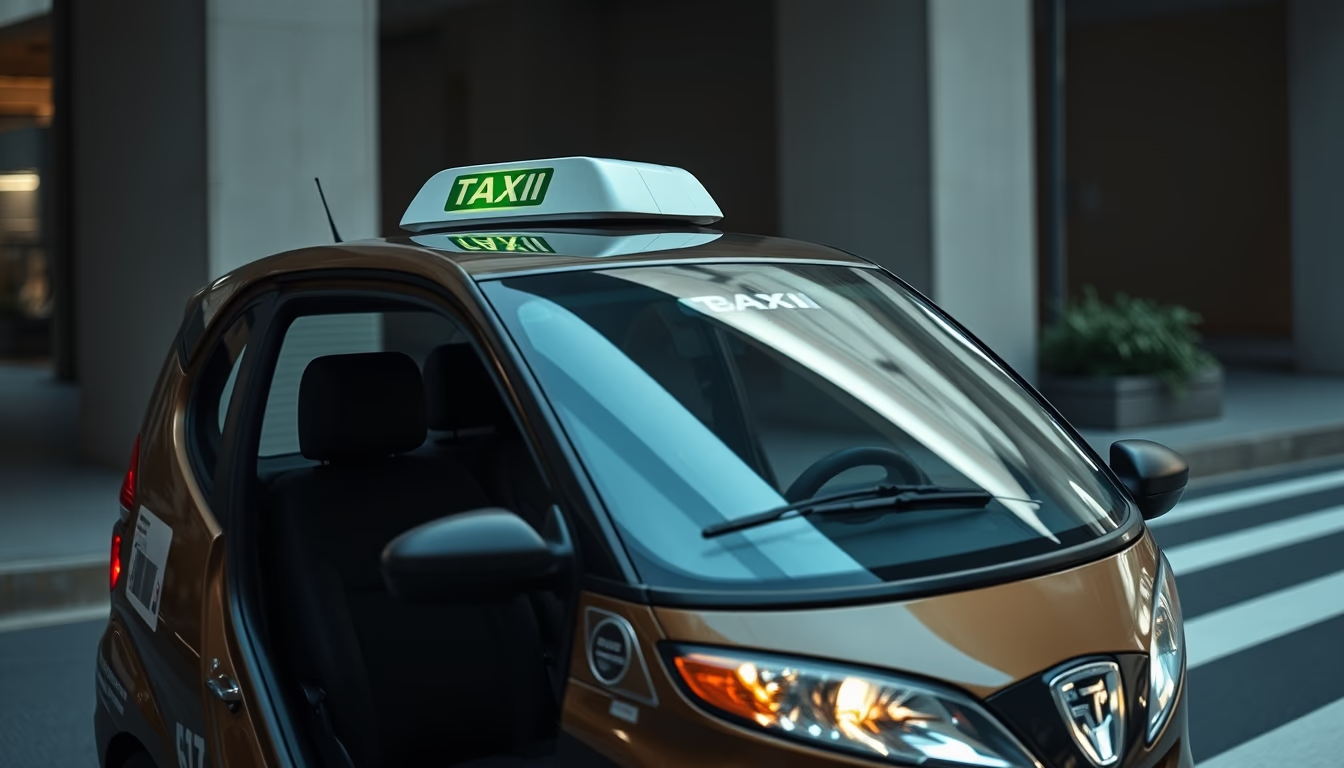
Flying taxi concept urban
1344×768 · AVIF · CC BY 4.0

Autonomous flying vehicles promise to revolutionize urban transport with electric air taxis, reducing congestion and emissions in major cities.
About this subject
The concept of urban flying taxis, once a staple of futuristic visions, is becoming reality with the development of electric vertical takeoff and landing aircraft, or eVTOLs. Companies like Joby Aviation, Volocopter, and Lilium have already tested prototypes that can carry one to five passengers on short routes, flying at low altitudes above traffic. Unlike helicopters, these vehicles are quieter, fully electric, and designed for low operating costs, making them viable for regular urban trips.
Necessary infrastructure includes vertiports, adapted helipads, or rooftop platforms where passengers board and alight. Cities such as Paris, São Paulo, and Dubai are planning air corridors and integrating these services with mobility apps. The global urban air mobility market is estimated to reach $1.5 trillion by 2040, with hundreds of thousands of aircraft in operation.
However, regulatory challenges remain. Agencies like the FAA and EASA are working on safety certifications, air traffic control, and noise management. Public acceptance is also crucial, as many people worry about privacy and safety. In Brazil, ANAC has started discussions to adapt regulations, and the São Paulo metropolitan area, with its notorious congestion, is seen as a promising market. Flying taxis could soon connect airports to financial centers in minutes, offering an alternative to cars and public transport.
Frequently Asked Questions
How do urban flying taxis work?
They are electric aircraft that take off and land vertically, like helicopters, but with less noise and lower costs. They use rechargeable batteries and fly autonomously or with a pilot on predefined routes between vertiports.
When will they be available to the public?
Companies such as Joby Aviation expect to launch commercial services as early as 2025 in selected cities, but large-scale adoption will depend on regulation and infrastructure. Some cities, like Dubai and Paris, plan experimental operations before 2030.
What are the main challenges for implementation?
The biggest hurdles are safety certification, low-altitude air traffic management, public acceptance, and battery cost. Vertiport infrastructure and integration with existing transport systems also require significant investment.
Direct URL
https://pub-c7d6a6ea828543ac903a74a341ccb2e1.r2.dev/imagens/flying-taxi-concept-urban-minimalist-composition-p0.avifHow to credit
Include a visible link back to UtilizAí. Copy one of the snippets below:
<a href="https://xn--utiliza-eza.com/en/midia/imagens/flying-taxi-concept-urban-minimalist-composition-p0">Flying taxi concept urban</a> by <a href="https://xn--utiliza-eza.com">UtilizAí</a>, licensed under <a href="https://creativecommons.org/licenses/by/4.0/">CC BY 4.0</a>.
[Flying taxi concept urban](https://xn--utiliza-eza.com/en/midia/imagens/flying-taxi-concept-urban-minimalist-composition-p0) by [UtilizAí](https://xn--utiliza-eza.com), CC BY 4.0
License: CC-BY-4.0