Flying boat catalina
1344×768 · AVIF · CC BY 4.0
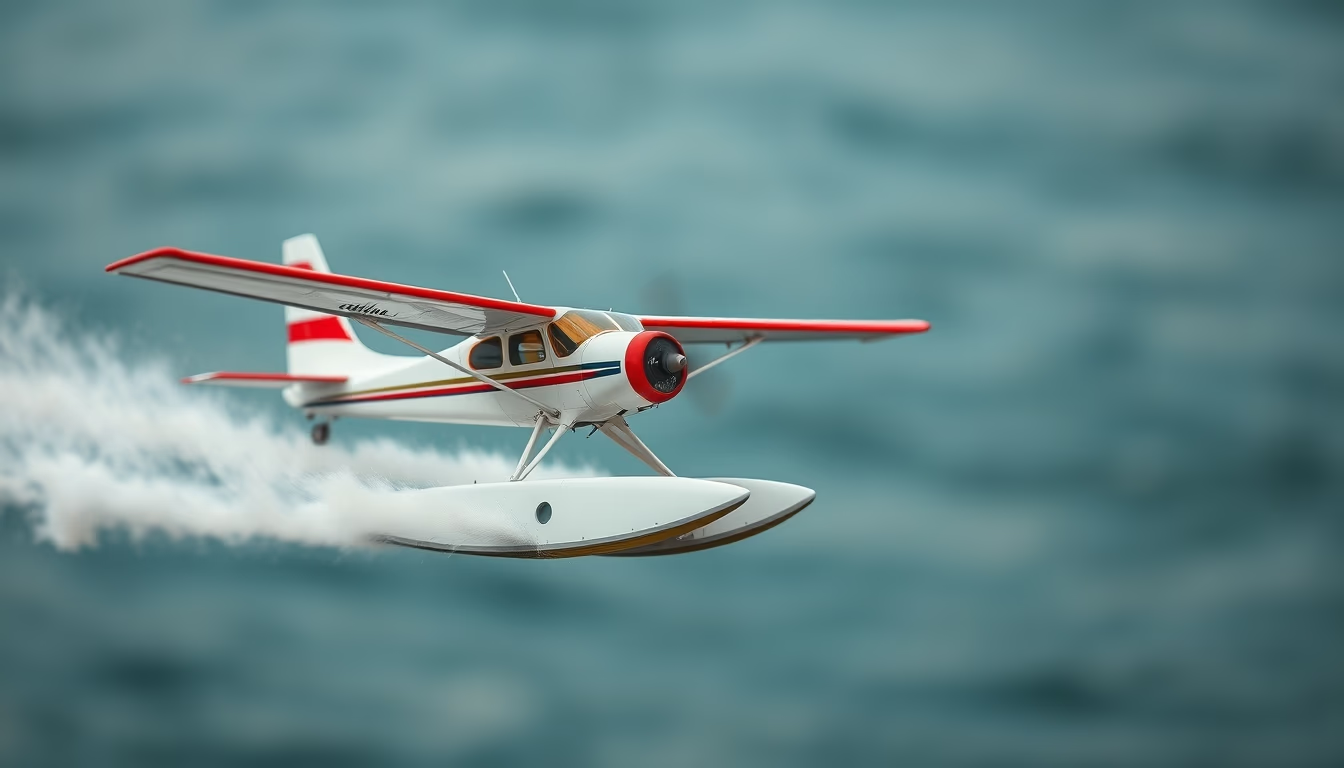
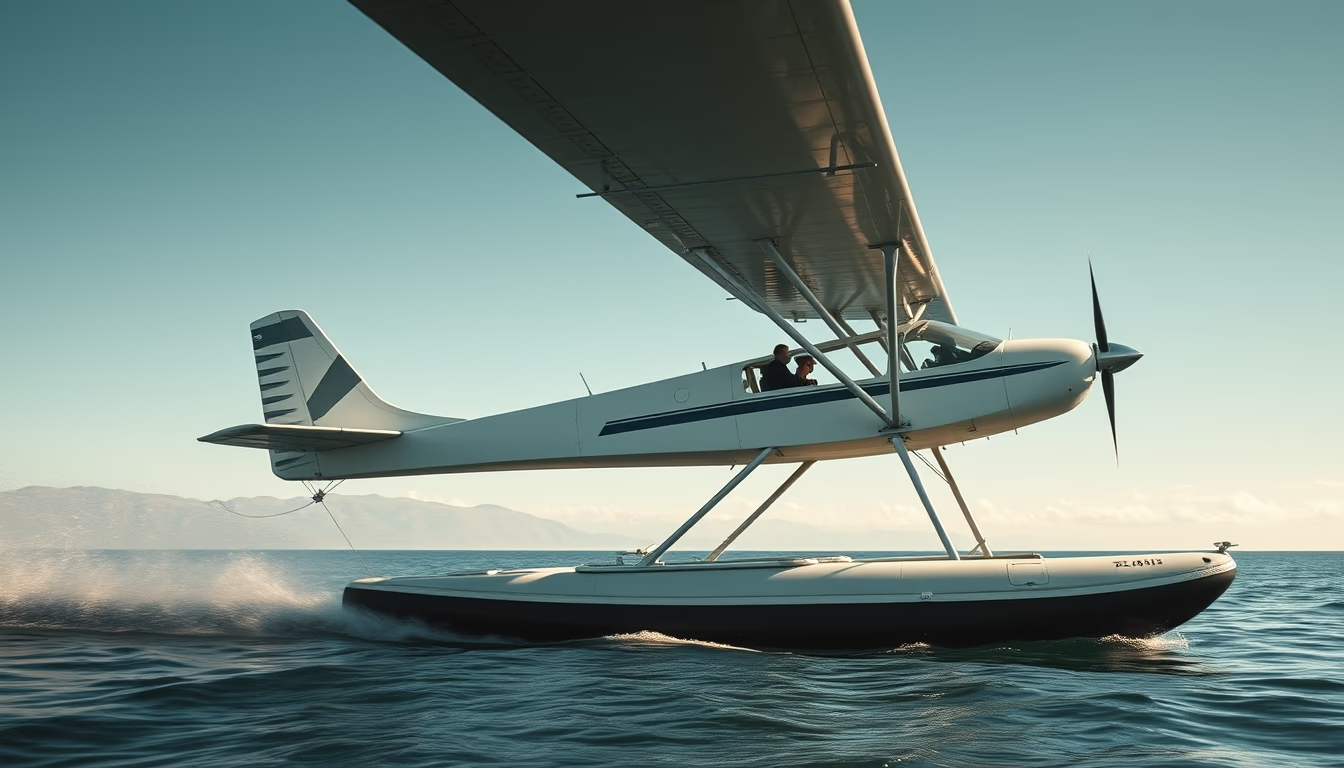
The Consolidated PBY Catalina was a maritime patrol flying boat widely used in World War II, renowned for its long range and rescue capabilities.
About this subject
The Consolidated PBY Catalina, designed by Isaac Laddon and manufactured by Consolidated Aircraft, made its first flight on March 28, 1935. Conceived as a long-range patrol bomber, it quickly became one of the most iconic flying boats in history. With a wingspan of 31.7 meters and a crew capacity of up to nine, the Catalina could stay aloft for up to 18 hours, covering distances of up to 4,000 kilometers. Its rugged construction and retractable wing floats allowed operations in rough seas.
During World War II, the Catalina served on multiple fronts, from the South Atlantic to the Pacific. It excelled in anti-submarine warfare, ship attacks, and especially air-sea rescue missions. It was one of the first aircraft equipped with radar, enhancing its nighttime effectiveness. The PBY-5A variant, introduced in 1939, was amphibious, with retractable landing gear enabling operations from both water and airfields. Over 3,300 units were built, including license production in Canada (as the Canso) and the Soviet Union.
Beyond military use, the Catalina had a significant civilian career, serving in forest firefighting, cargo and passenger transport in remote areas, and scientific exploration. In commercial aviation, it operated as a scheduled flying boat in South America and the Caribbean. Today, preserved examples still fly in air shows and firefighting operations, especially in Canada and the United States, where they have been re-engined with more powerful turboprops. Its unmistakable silhouette and resilience have made the Catalina a symbol of versatility and endurance in aviation history.
Frequently Asked Questions
How many PBY Catalinas were built in total?
Over 3,300 units were produced, including license-built versions in Canada (as the Canso) and the Soviet Union.
What was the flight endurance of the Catalina?
The Catalina could fly up to 18 hours without refueling, covering roughly 4,000 kilometers with its typical bomb and fuel load.
Is the PBY Catalina still in operation today?
Yes, some preserved and modernized examples remain active, especially in forest firefighting in Canada and the United States, as well as participating in air shows.
Direct URL
https://pub-c7d6a6ea828543ac903a74a341ccb2e1.r2.dev/imagens/flying-boat-catalina-tilt-shift-miniature-fresh7.avifHow to credit
Include a visible link back to UtilizAí. Copy one of the snippets below:
<a href="https://xn--utiliza-eza.com/en/midia/imagens/flying-boat-catalina-tilt-shift-miniature-fresh7">Flying boat catalina</a> by <a href="https://xn--utiliza-eza.com">UtilizAí</a>, licensed under <a href="https://creativecommons.org/licenses/by/4.0/">CC BY 4.0</a>.
[Flying boat catalina](https://xn--utiliza-eza.com/en/midia/imagens/flying-boat-catalina-tilt-shift-miniature-fresh7) by [UtilizAí](https://xn--utiliza-eza.com), CC BY 4.0
License: CC-BY-4.0