Flying boat catalina
1344×768 · AVIF · CC BY 4.0
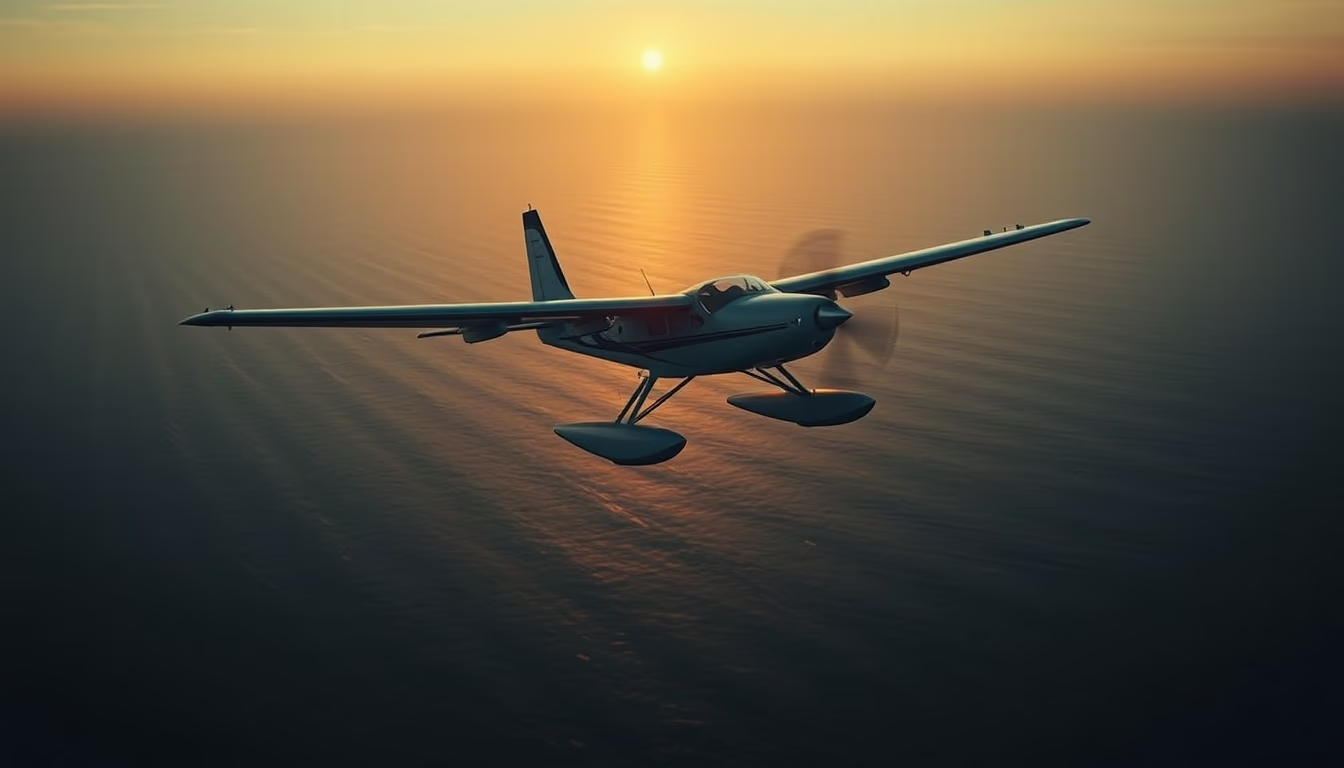
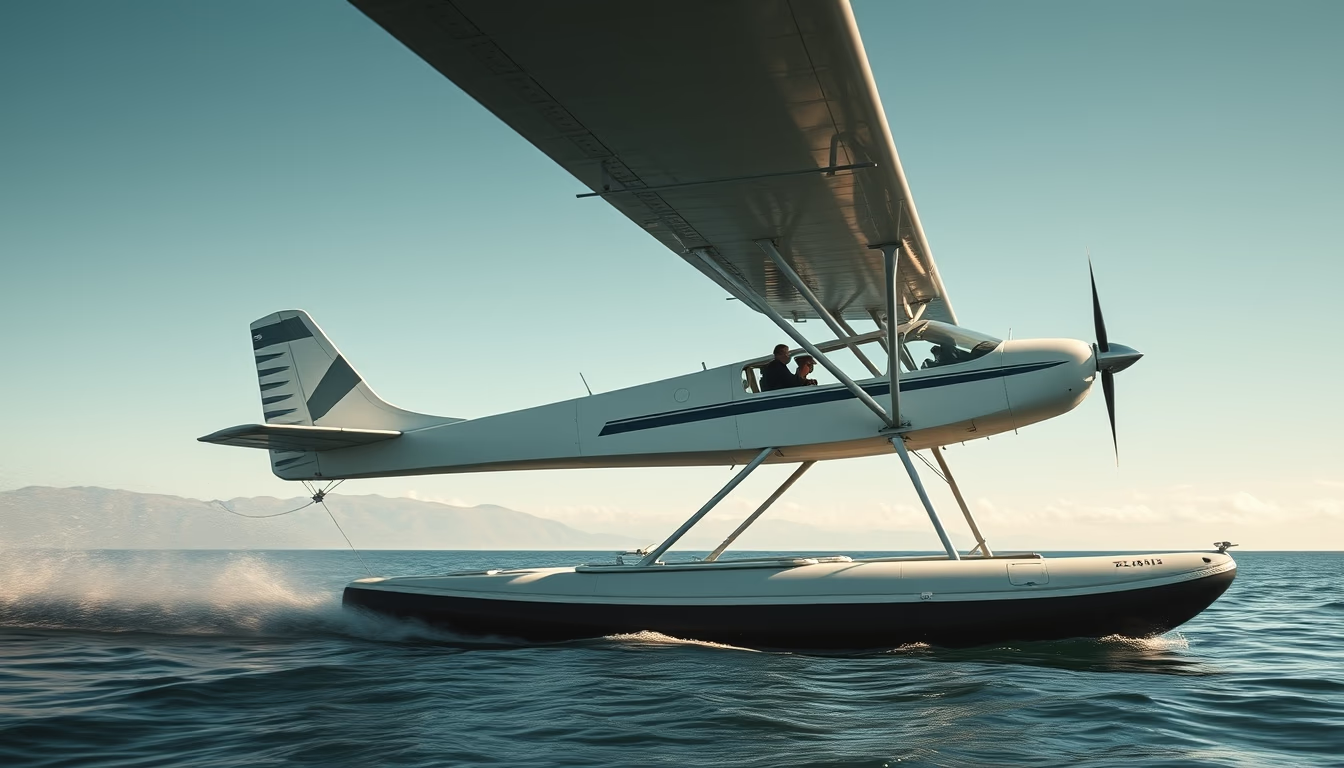
The Consolidated PBY Catalina was a legendary military flying boat, extensively used in World War II for maritime patrol, rescue, and bombing missions.
About this subject
The Consolidated PBY Catalina, often simply called Catalina, is one of the most iconic flying boats in aviation history. Designed by Consolidated Aircraft Corporation in the 1930s, it entered service in 1936 and quickly became the backbone of Allied maritime air patrol. Its ability to operate from water, long range, and versatile payload made it ideal for reconnaissance, anti-submarine warfare, search and rescue (SAR), and even troop transport.
During World War II, the Catalina was crucial in the Battle of the Atlantic, hunting German U-boats and escorting convoys. It was also the first aircraft to detect the Japanese fleet before the attack on Midway and participated in epic rescues, such as that of Philippine president Manuel Quezón and downed pilots in the Pacific. Interestingly, the Catalina was nicknamed after Santa Catalina Island in California, and also "Black Cat" when painted black for night missions.
Technically, the Catalina had Pratt & Whitney R-1830 radial engines of 1,200 hp each, a top speed of 314 km/h, and a range of over 4,000 km. It could carry up to 1,800 kg of bombs or depth charges. Its rugged structure and hydrodynamic design allowed landings in rough seas, though low speed and light armor made it vulnerable to enemy fighters. After the war, many Catalinas were converted for civilian use as firefighting aircraft, cargo transporters, and even oceanographic research planes, flying into the 1980s in some countries.
The Catalina's legacy endures: it was one of the first aircraft to demonstrate the importance of amphibious operations and naval air power. Today, about 20 examples still fly at air shows and museums, such as the PBY-5A at the Museu Aeroespacial in São Paulo. Its distinct high-wing silhouette and lateral floats are instantly recognizable to aviation enthusiasts worldwide.
Frequently Asked Questions
How many Catalinas were produced?
Approximately 4,051 PBY Catalinas were built between 1936 and 1945, including variants licensed to Canada (Boeing Canada) and the Soviet Union (as GST).
What was the main role of the Catalina in World War II?
The Catalina was primarily used for long-range maritime patrol, anti-submarine warfare, and search and rescue missions. It also conducted night bombing and personnel transport.
Does the Catalina still fly today?
Yes, about 20 Catalinas remain airworthy, many in museums or private collections, participating in air shows and historical events. Some operate as firefighting aircraft.
Direct URL
https://pub-c7d6a6ea828543ac903a74a341ccb2e1.r2.dev/imagens/flying-boat-catalina-cinematic-wide-shot-fresh10.avifHow to credit
Include a visible link back to UtilizAí. Copy one of the snippets below:
<a href="https://xn--utiliza-eza.com/en/midia/imagens/flying-boat-catalina-cinematic-wide-shot-fresh10">Flying boat catalina</a> by <a href="https://xn--utiliza-eza.com">UtilizAí</a>, licensed under <a href="https://creativecommons.org/licenses/by/4.0/">CC BY 4.0</a>.
[Flying boat catalina](https://xn--utiliza-eza.com/en/midia/imagens/flying-boat-catalina-cinematic-wide-shot-fresh10) by [UtilizAí](https://xn--utiliza-eza.com), CC BY 4.0
License: CC-BY-4.0