Flute silver elegant
1344×768 · AVIF · CC BY 4.0
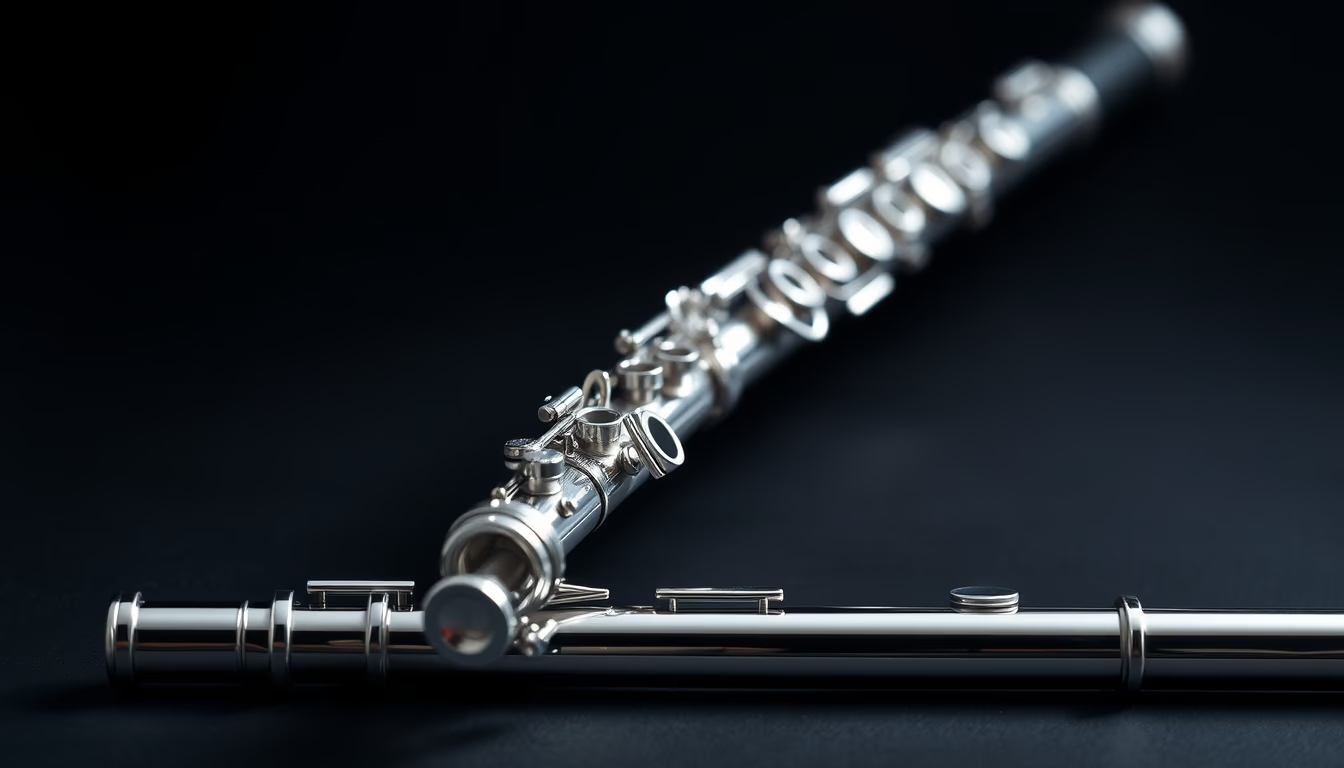
Elegant silver transverse flute, a woodwind instrument with a bright and versatile timbre, widely used in orchestras and bands.
About this subject
The transverse flute is one of the oldest instruments in human history, with origins dating back to prehistoric bone and wood flutes. The modern metal version was developed in the 19th century by German Theobald Böhm, who revolutionized design by introducing a key system that allows greater precision and agility in performance. Today, the silver flute is highly valued for its clear, projecting tone, being standard in symphony orchestras, jazz bands, and even popular music.
Made of sterling silver (usually 925) or silver alloys, the flute combines visual elegance with superior acoustic properties. The metal gives a bright, penetrating sound, while solid silver offers greater resonance compared to plated models. Professional flutists often choose silver instruments for their dynamic response and capacity for subtle expression.
The flute repertoire is vast, ranging from Baroque pieces by Bach and Vivaldi to contemporary works and film scores. Great names such as Jean‑Pierre Rampal, James Galway, and Emmanuel Pahud elevated the instrument to soloist status. Moreover, the flute is one of the most accessible instruments for beginners, with study options in conservatories and music schools worldwide.
Interestingly, the transverse flute is one of the few wind instruments where sound is produced by the player blowing against a sharp edge (the embouchure hole), without the need for a reed. This feature makes it unique within the woodwind family, even though it is now mostly made of metal. Careful maintenance, with regular cleaning and lubrication, ensures durability and preserves the timbre for decades.
Frequently Asked Questions
What is the difference between a silver flute and a nickel flute?
Silver flutes (sterling silver) produce a brighter, richer tone with more harmonics and greater projection. Nickel‑silver flutes are more affordable and have a more metallic, less full sound. Silver is also more corrosion‑resistant and preferred by professionals.
Is it difficult to learn to play the flute?
The flute is considered one of the most accessible wind instruments for beginners. Sound production requires practice of embouchure control, but with regular lessons and dedication, simple melodies can be played within a few weeks.
How do I care for a silver flute?
After playing, dry the interior with a soft cloth and clean the exterior with a polishing cloth. Avoid exposure to perfumes or chemicals. Every 6 to 12 months, a professional overhaul is recommended to lubricate keys and check adjustments.
Direct URL
https://pub-c7d6a6ea828543ac903a74a341ccb2e1.r2.dev/imagens/flute-silver-elegant-studio-still-life-p4.avifHow to credit
Include a visible link back to UtilizAí. Copy one of the snippets below:
<a href="https://xn--utiliza-eza.com/en/midia/imagens/flute-silver-elegant-studio-still-life-p4">Flute silver elegant</a> by <a href="https://xn--utiliza-eza.com">UtilizAí</a>, licensed under <a href="https://creativecommons.org/licenses/by/4.0/">CC BY 4.0</a>.
[Flute silver elegant](https://xn--utiliza-eza.com/en/midia/imagens/flute-silver-elegant-studio-still-life-p4) by [UtilizAí](https://xn--utiliza-eza.com), CC BY 4.0
License: CC-BY-4.0