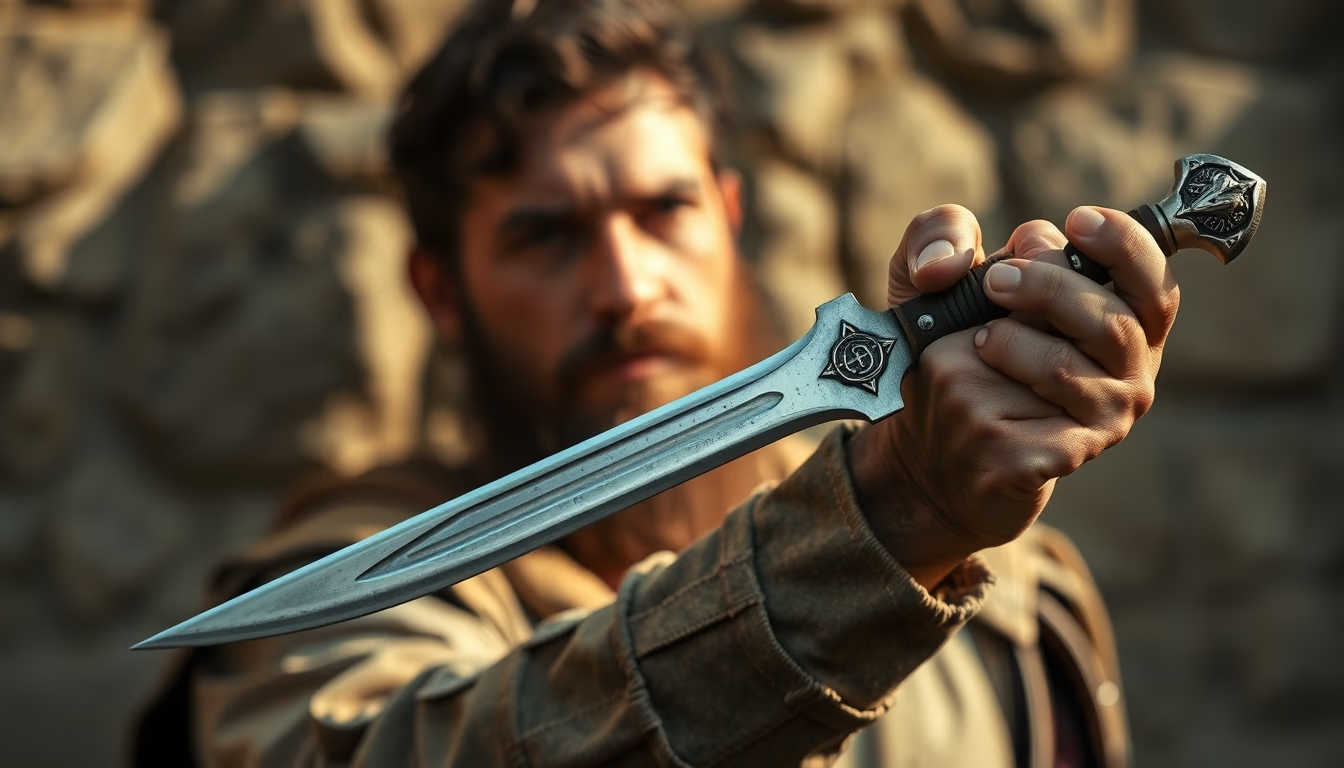
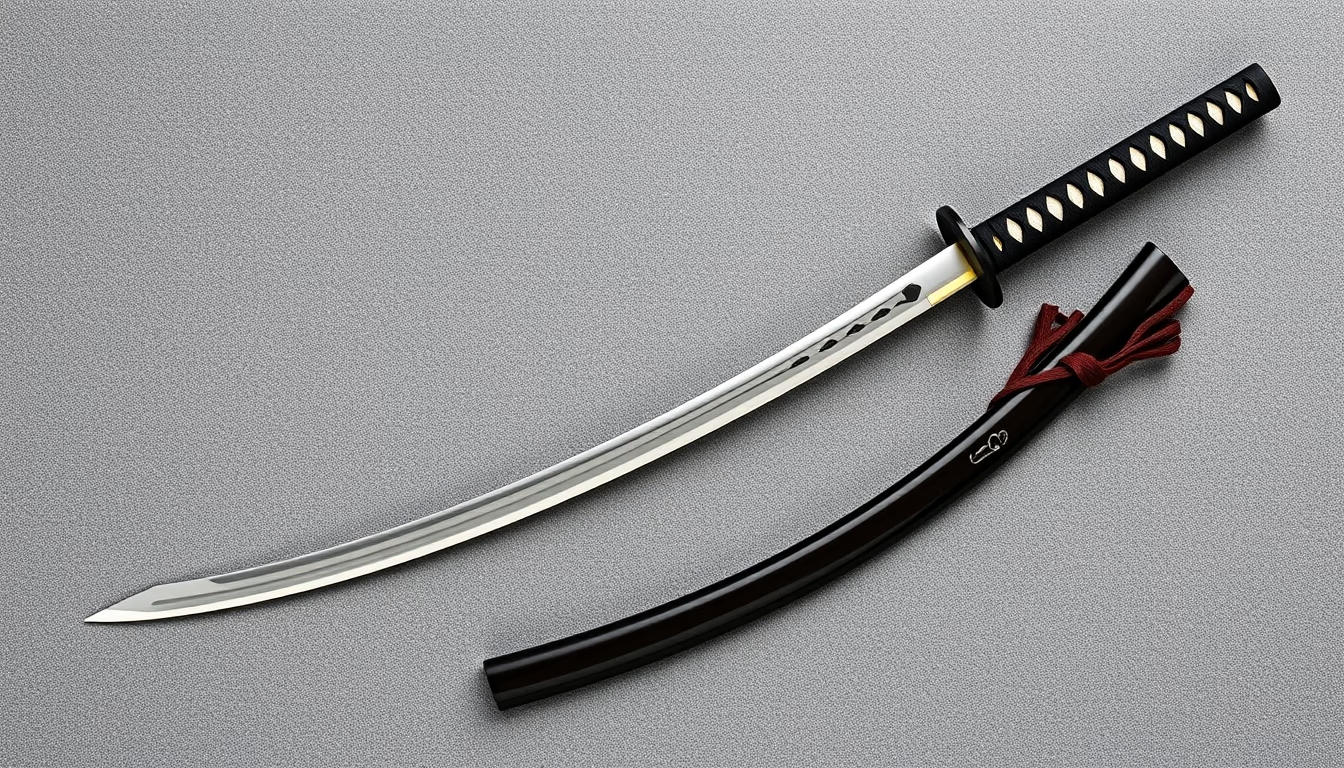
Falchion medieval curved
1344×768 · AVIF · CC BY 4.0
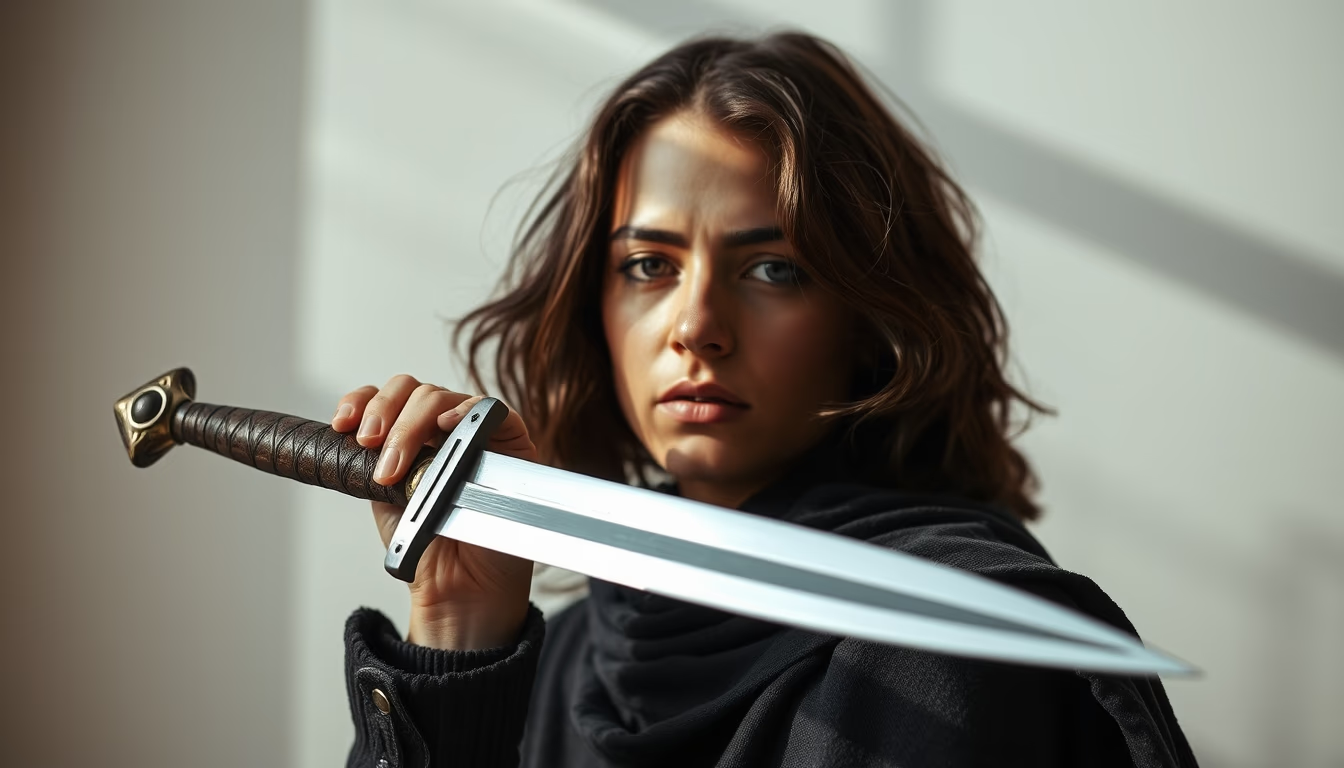
The medieval falchion with a pronounced curve was a broad-bladed, single-edged sword used in Europe from the 13th to 16th centuries for powerful slashing.
About this subject
The falchion is a single-edged, curved sword that emerged in Europe during the 13th century and remained in use until the 16th century. Unlike the two-handed longsword, the falchion was shorter and lighter, designed for fast, powerful slashing strokes. Its broad, curved blade, reminiscent of a cleaver, concentrated force at the point of impact, making it ideal for close-quarters combat against unarmored opponents.
The falchion was commonly used by infantry soldiers and mercenaries who needed a versatile weapon for the chaos of pitched battles. Unlike the oriental scimitar, the falchion had a less pronounced curve and often featured a false edge on the back of the blade. Some models, such as the German falchion, had a robust tip for thrusting, while Italian versions emphasized cutting.
Historically, the falchion appears in various medieval manuscripts, including the Codex Manesse and the Liber ad honorem Augusti, as well as in tapestries and paintings. Though less renowned than the longsword, the falchion influenced the development of later weapons like the sabre. Today, original examples can be seen at the Musée National du Moyen Âge in Paris and the Royal Armouries Museum in Leeds.
In popular culture, the falchion is often associated with rustic characters and peasant warriors, appearing in games such as Dark Souls and the The Witcher series. This association stems from its simple, functional appearance, contrasting with the ornate swords of nobility.
Frequently Asked Questions
What is the difference between a falchion and a scimitar?
The falchion is a European medieval sword with a broad, curved blade, while the scimitar is an Oriental sword with a more pronounced curve and thinner blade, used mainly in the Middle East and Asia.
For what kind of combat was the falchion best suited?
The falchion was ideal for close-quarters combat against unarmored opponents, such as infantry soldiers, due to its ability to deliver powerful slashing blows.
Are there original falchions preserved in museums?
Yes, original falchions can be found at the Musée National du Moyen Âge in Paris and the Royal Armouries Museum in Leeds, along with other European collections.
Direct URL
https://pub-c7d6a6ea828543ac903a74a341ccb2e1.r2.dev/imagens/falchion-medieval-curved-minimalist-composition-fresh2.avifHow to credit
Include a visible link back to UtilizAí. Copy one of the snippets below:
<a href="https://xn--utiliza-eza.com/en/midia/imagens/falchion-medieval-curved-minimalist-composition-fresh2">Falchion medieval curved</a> by <a href="https://xn--utiliza-eza.com">UtilizAí</a>, licensed under <a href="https://creativecommons.org/licenses/by/4.0/">CC BY 4.0</a>.
[Falchion medieval curved](https://xn--utiliza-eza.com/en/midia/imagens/falchion-medieval-curved-minimalist-composition-fresh2) by [UtilizAí](https://xn--utiliza-eza.com), CC BY 4.0
License: CC-BY-4.0