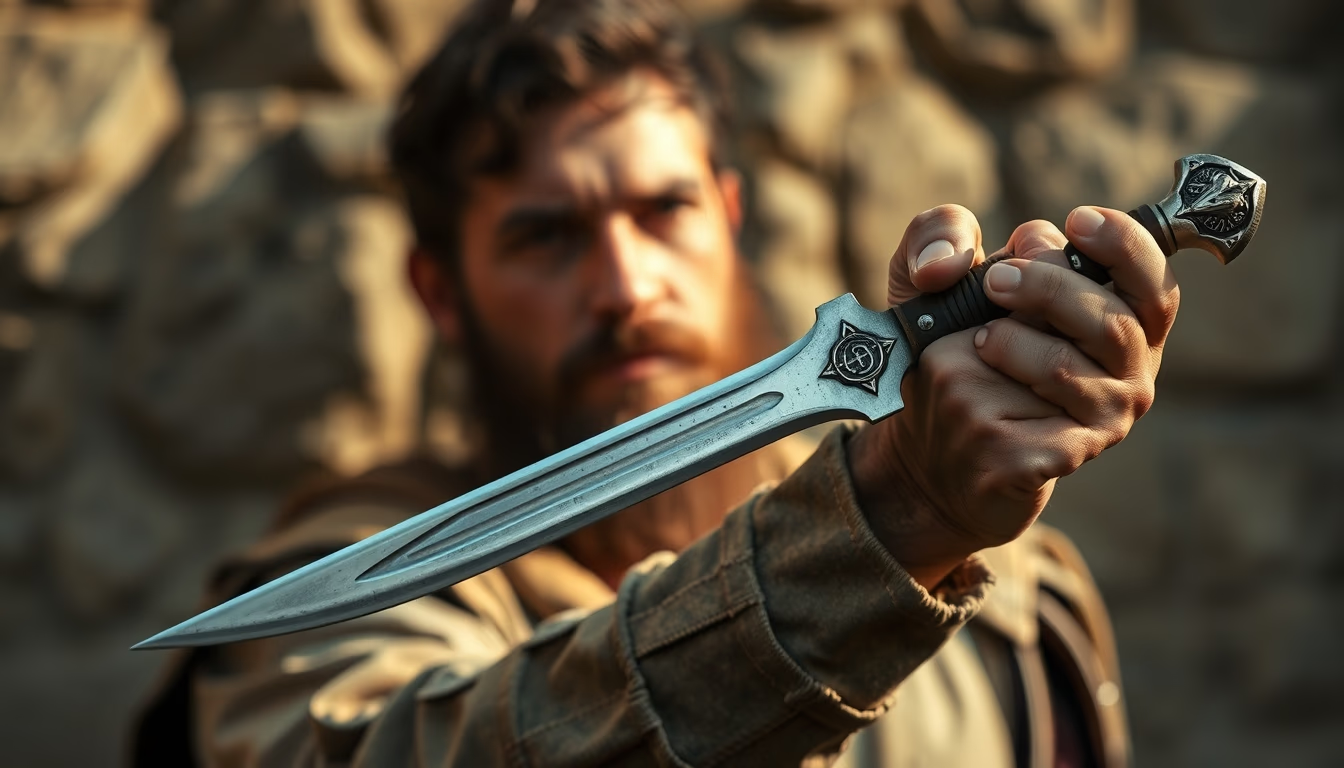
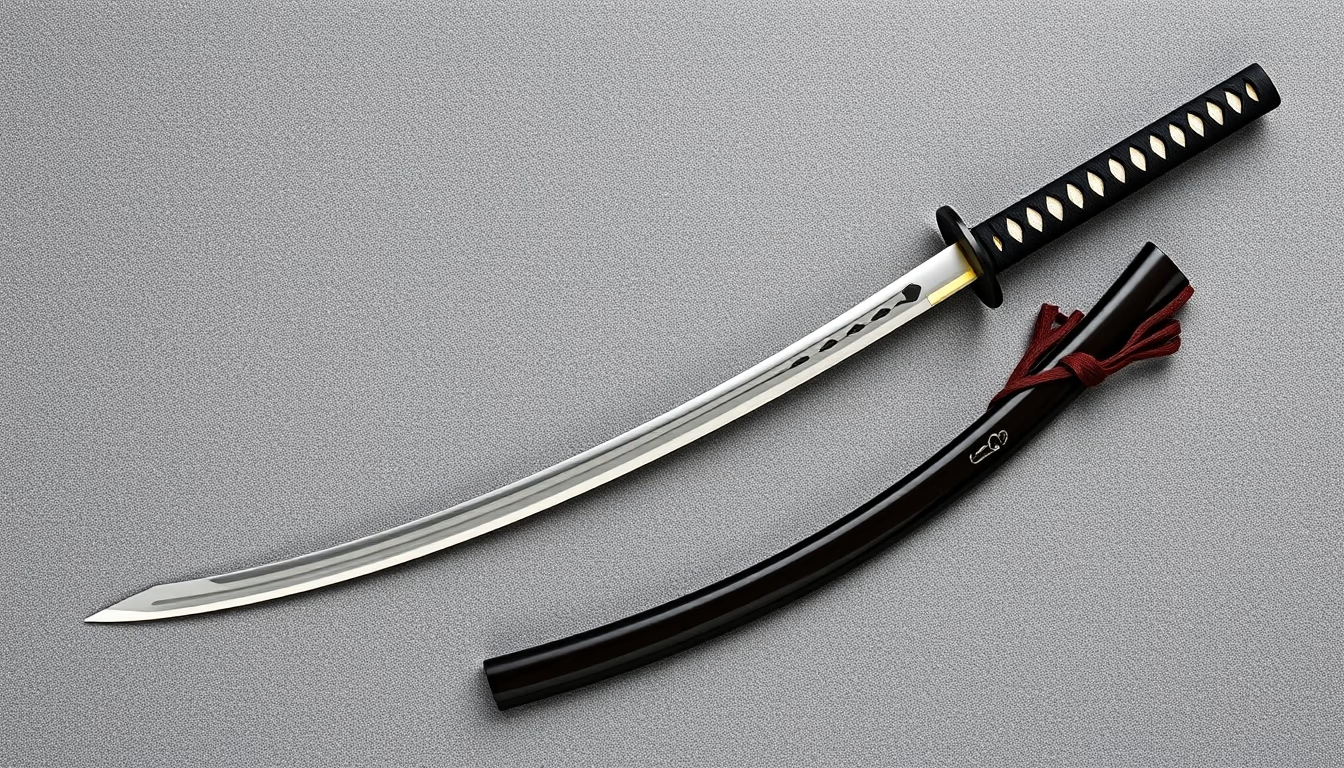
Falchion medieval curved
1344×768 · AVIF · CC BY 4.0
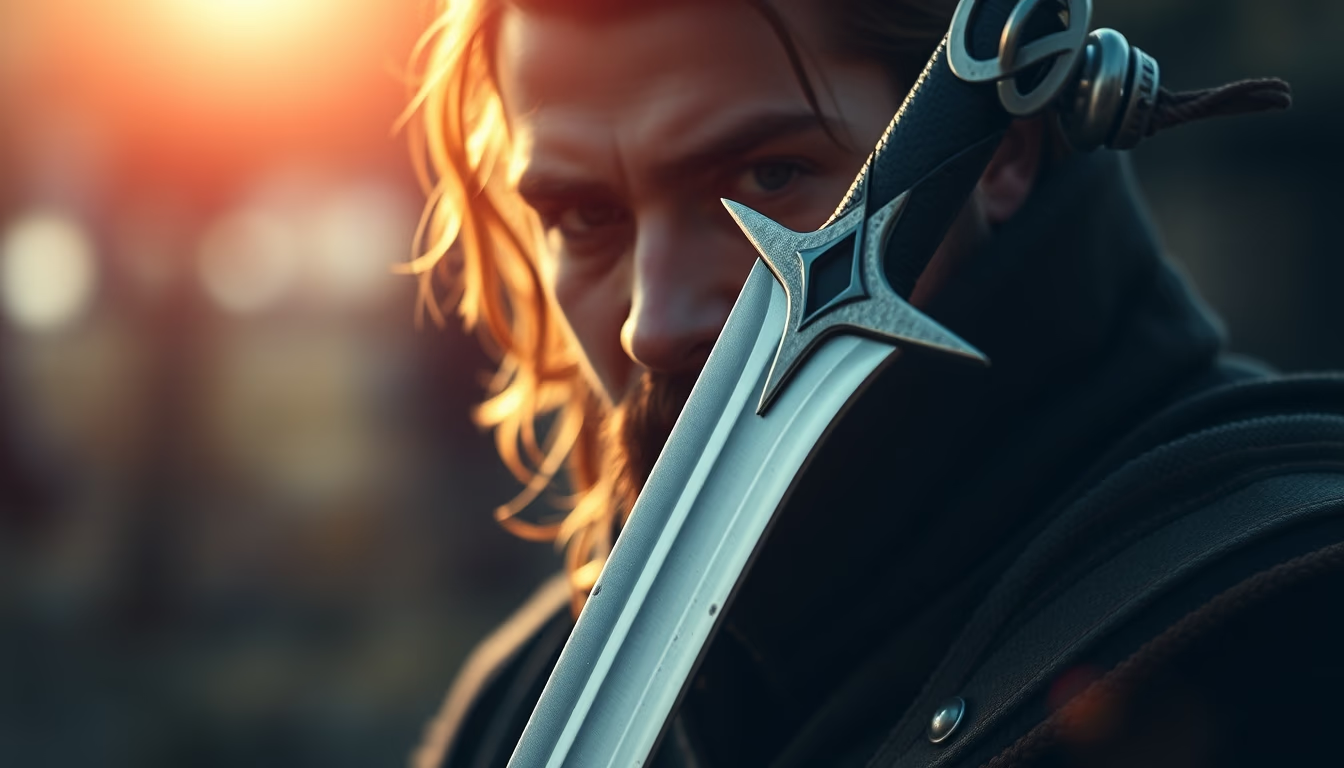
The medieval falchion is a curved, single-edged sword used between the 13th and 16th centuries in Europe, renowned for its cutting efficiency.
About this subject
The falchion is a type of European sword characterized by its curved, single-edged blade, blending features of a cleaver and a sword. Unlike straight longswords, the falchion had a wider blade toward the tip, concentrating mass for powerful cutting blows. Its length typically ranged from 60 to 90 centimeters, with an average weight between 1 and 1.5 kg, making it manageable for infantry soldiers.
Historically, the falchion was popular in Europe from the 13th to the 16th centuries, especially in regions like France, England, and Italy. Although often associated with lower-ranking troops due to its lower cost, it also appears in illuminated manuscripts and period sculptures, suggesting knights occasionally used it as a secondary weapon. Its shape was likely influenced by hunting knives and Scandinavian weapons like the scramasax.
From a technical standpoint, the falchion was effective at cutting through mail and thrusting into leather, but less efficient against full plate armor. Consequently, its use declined with the advancement of metal protections in the late Middle Ages. Despite this, its design influenced later weapons, such as halberds and sabres. Interestingly, the term 'falchion' derives from the Latin 'falx', meaning sickle, referencing its curved blade.
Today, the falchion is reproduced by modern bladesmiths and appears in role-playing games and historical films, keeping alive its image as a versatile and lethal weapon of medieval Europe.
Frequently Asked Questions
What is the difference between a falchion and a scimitar?
The falchion is a medieval European sword with a curved, single-edged blade, while the scimitar is an Eastern sword of Persian or Arab origin, with a more pronounced curve and generally lighter weight. The falchion has a wider, heavier blade focused on powerful cuts; the scimitar is more agile, used for thrusts and quick slashes.
Was the falchion used by knights?
Yes, although more common among infantry, there is historical and artistic evidence of knights using the falchion as a secondary weapon, especially in foot combat or as a cheaper alternative to other swords.
What is the origin of the falchion?
The falchion appeared in Europe in the 13th century, possibly inspired by hunting knives and the Germanic scramasax. Its curved shape may have been influenced by contact with Islamic cultures during the Crusades, but it is essentially a European weapon.
Direct URL
https://pub-c7d6a6ea828543ac903a74a341ccb2e1.r2.dev/imagens/falchion-medieval-curved-lo-fi-disposable-camera-fresh10.avifHow to credit
Include a visible link back to UtilizAí. Copy one of the snippets below:
<a href="https://xn--utiliza-eza.com/en/midia/imagens/falchion-medieval-curved-lo-fi-disposable-camera-fresh10">Falchion medieval curved</a> by <a href="https://xn--utiliza-eza.com">UtilizAí</a>, licensed under <a href="https://creativecommons.org/licenses/by/4.0/">CC BY 4.0</a>.
[Falchion medieval curved](https://xn--utiliza-eza.com/en/midia/imagens/falchion-medieval-curved-lo-fi-disposable-camera-fresh10) by [UtilizAí](https://xn--utiliza-eza.com), CC BY 4.0
License: CC-BY-4.0