Espresso machine pulling shot
1344×768 · AVIF · CC BY 4.0
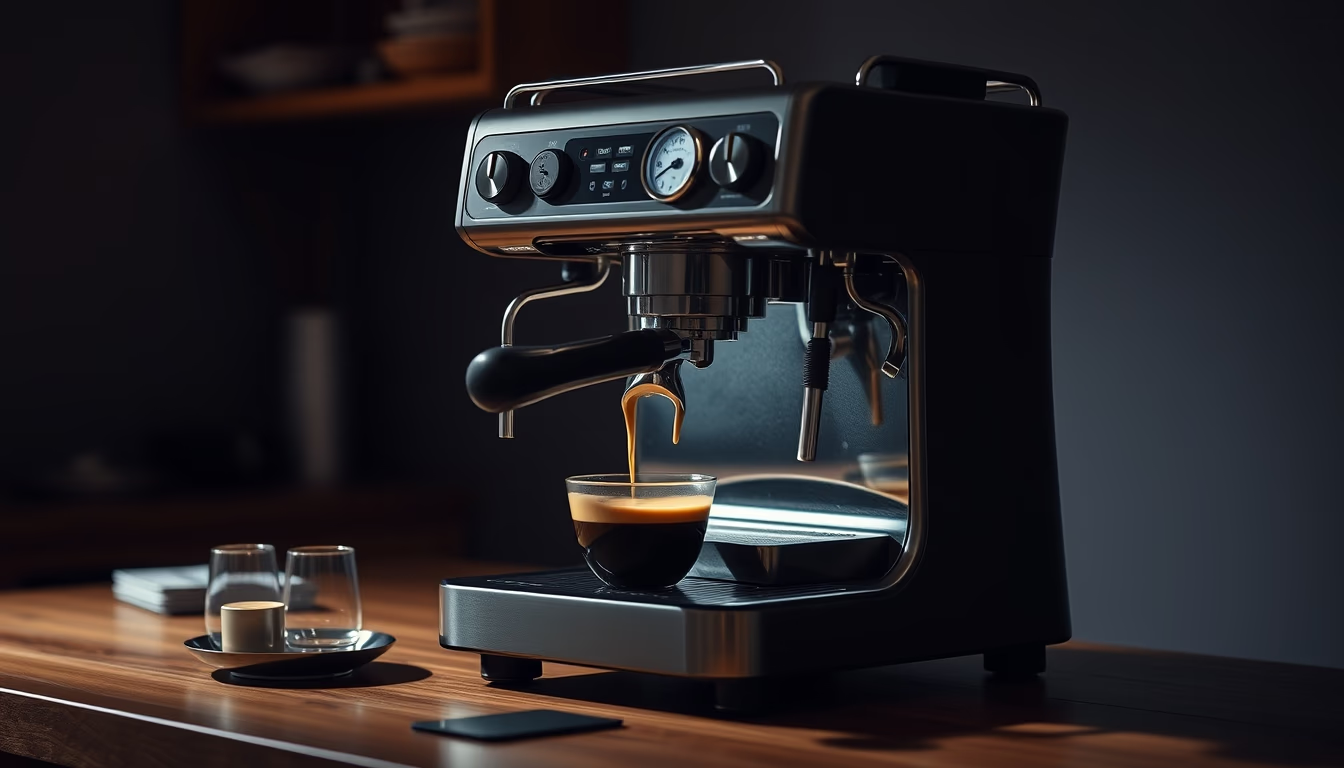
The espresso machine extracts coffee under high pressure, producing a concentrated and creamy beverage. Learn about its operation and cultural significance.
About this subject
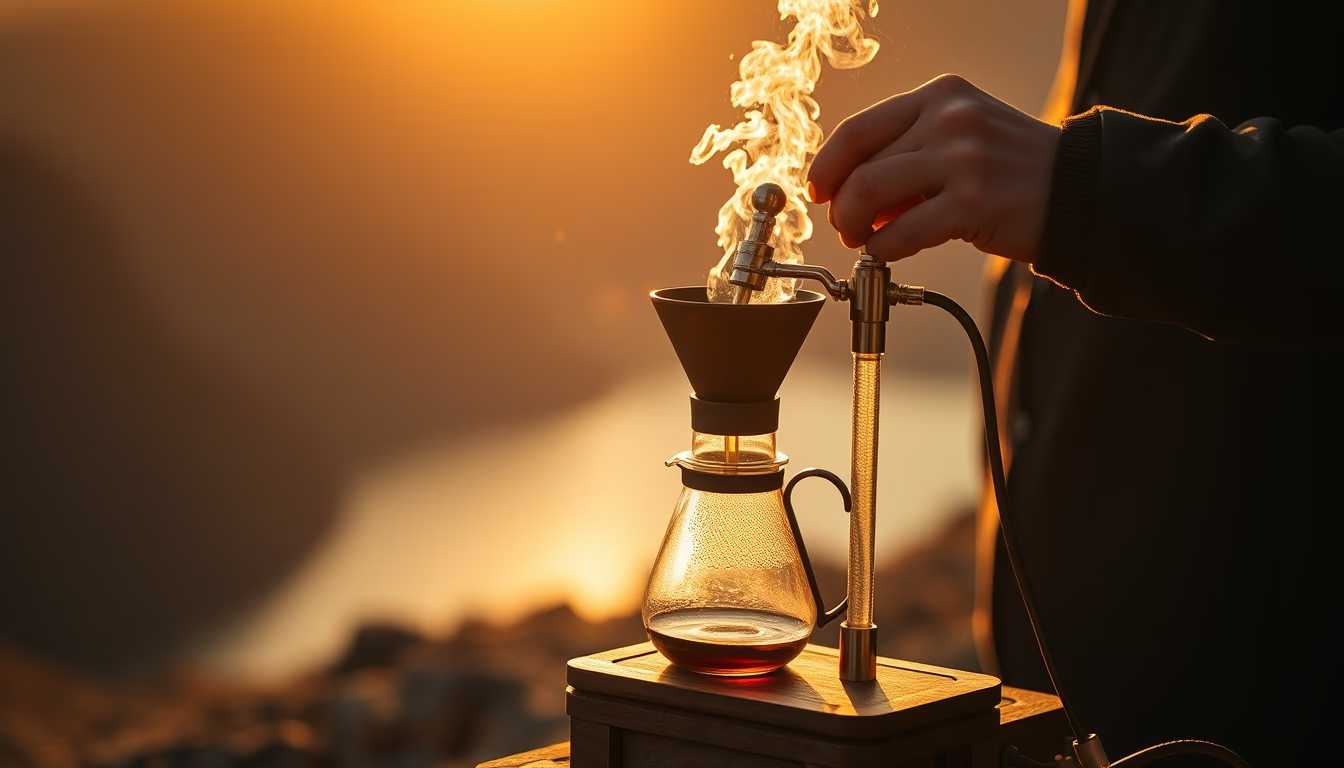
The espresso machine is an essential tool in coffee culture, responsible for extracting a concentrated and full-bodied beverage in seconds. The process forces hot water (between 90°C and 96°C) through finely ground coffee under a pressure of about 9 bars. This pressure, much higher than atmospheric, emulsifies the coffee's natural oils and creates the characteristic crema, a golden, stable foam that signals a successful extraction. The invention of the espresso machine dates back to the late 19th century, with patents by Angelo Moriondo (1884) and Luigi Bezzera (1901), but it was from the 1940s that the technology gained popularity, especially with the lever machine, which gave baristas more control over water flow.
Today, there are various types of espresso machines, from manual ones that require skill to operate a lever to semiautomatic and automatic models that regulate volume and pressure automatically. Super-automatic machines even grind the beans on the spot and prepare the drink with a single touch. Regardless of the model, all components, boiler, pressure pump, brew group, and portafilter, must work in harmony. Proper maintenance, such as regular cleaning of the steam wand and descaling, is crucial to preserve coffee quality and the equipment's lifespan.
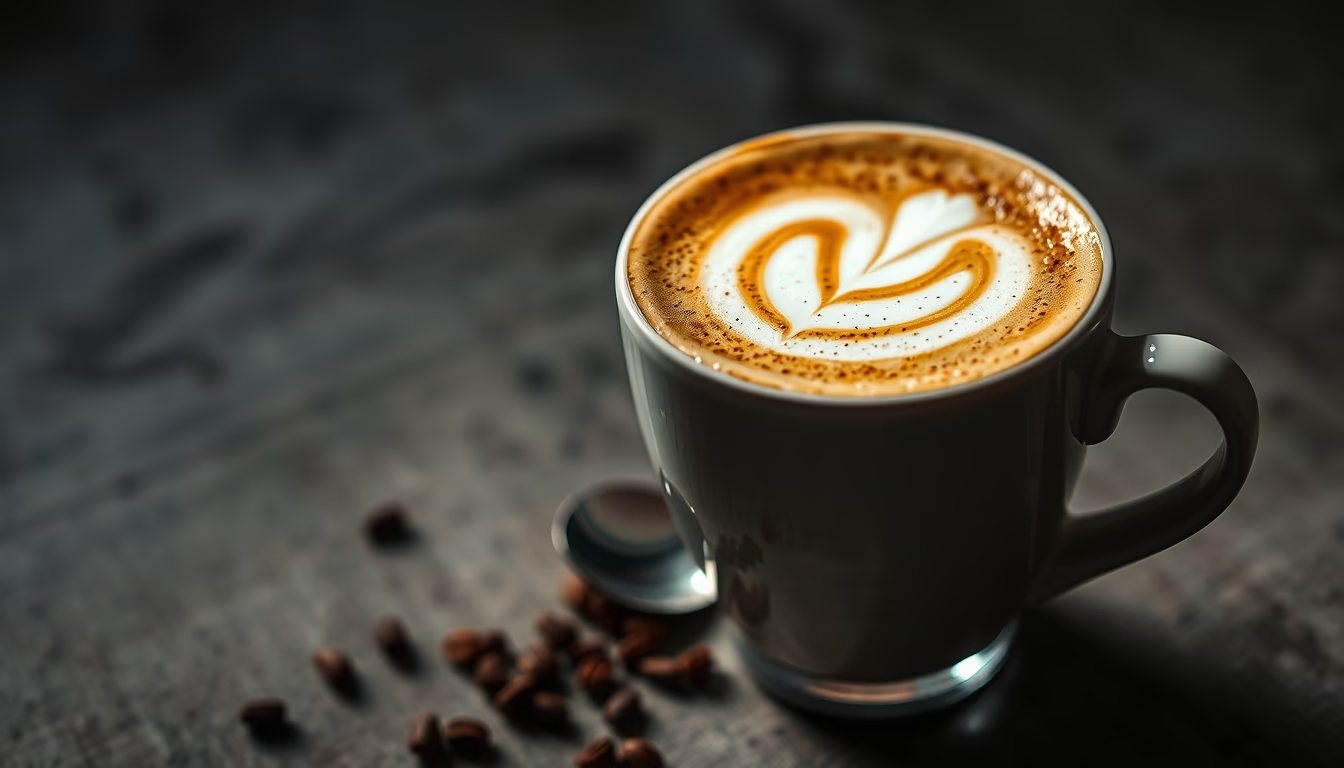
Espresso is not just a drink; it is the base for numerous variations like cappuccino, latte, and macchiato. Its preparation demands precision: the grind must be fine and uniform, the dose of coffee (about 7 to 9 grams for a single espresso) tamped with a force of roughly 15 kg, and the extraction should last between 25 and 30 seconds. These parameters are taught in barista schools and followed by professionals worldwide. Espresso culture is deeply rooted in Italy but has spread globally, with notable presence in countries like Brazil, one of the world's largest coffee producers, where espresso is enjoyed in cafes and homes.
The espresso machine also symbolizes innovation and daily ritual. In many places, preparing and drinking an espresso represents a refreshing pause. With technological advances, increasingly affordable home machines allow anyone to recreate the café experience at home. The trend for 2026 points to smart machines connected to apps that monitor extraction in real time, reinforcing the quest for consistency and personalization.
Frequently Asked Questions
What is the ideal pressure for espresso extraction?
The ideal pressure is around 9 bars, which is the standard pressure used by professional machines to extract flavors and create crema.
How long should an espresso extraction take?
A proper extraction should take between 25 and 30 seconds, from the moment water starts to flow from the portafilter.
What is the difference between manual and automatic espresso machines?
In a manual machine, the barista controls pressure and flow with a lever. In an automatic machine, the volume and pressure are electronically controlled, making it easier to use.
Direct URL
https://pub-c7d6a6ea828543ac903a74a341ccb2e1.r2.dev/imagens/espresso-machine-pulling-shot-magazine-editorial-p0.avifHow to credit
Include a visible link back to UtilizAí. Copy one of the snippets below:
<a href="https://xn--utiliza-eza.com/en/midia/imagens/espresso-machine-pulling-shot-magazine-editorial-p0">Espresso machine pulling shot</a> by <a href="https://xn--utiliza-eza.com">UtilizAí</a>, licensed under <a href="https://creativecommons.org/licenses/by/4.0/">CC BY 4.0</a>.
[Espresso machine pulling shot](https://xn--utiliza-eza.com/en/midia/imagens/espresso-machine-pulling-shot-magazine-editorial-p0) by [UtilizAí](https://xn--utiliza-eza.com), CC BY 4.0
License: CC-BY-4.0