Enzyme catalysis 3d
1344×768 · AVIF · CC BY 4.0
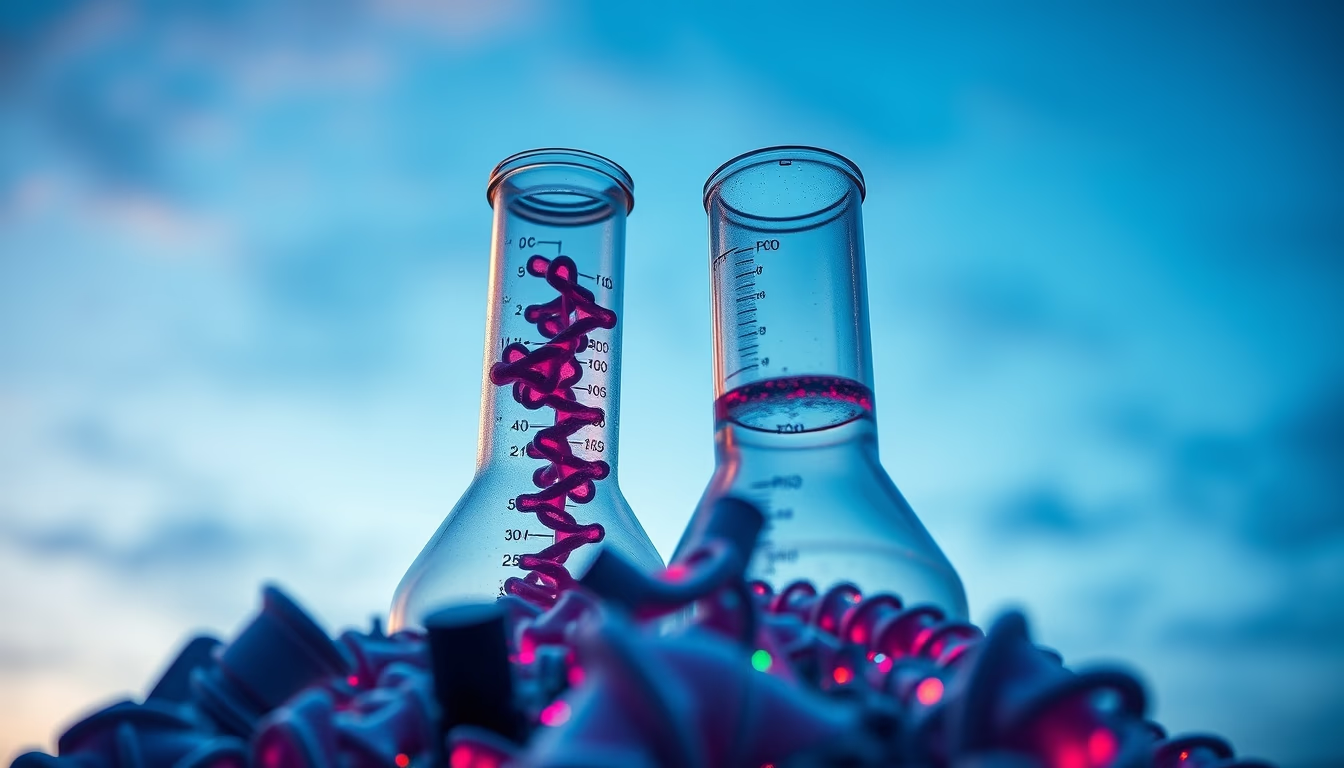
Enzyme catalysis is a fundamental biochemical process where enzymes accelerate chemical reactions in living organisms with high specificity and efficiency.
About this subject
Enzymes are specialized proteins that act as biological catalysts, lowering the activation energy required for a chemical reaction to proceed. This process is essential for life, allowing metabolic reactions to occur at rates compatible with cellular survival. Enzyme catalysis takes place at the active site, a specific three-dimensional region where the substrate binds, forming the enzyme-substrate complex. This interaction is often compared to a “lock-and-key” model, although the “induced fit” model is more accurate, as the enzyme undergoes conformational changes upon substrate binding to optimize catalysis.
Each enzyme is highly specific for its substrate, determining its role in metabolic pathways such as glycolysis, the Krebs cycle, and DNA replication. Factors like pH, temperature, and the presence of inhibitors or activators can influence enzymatic activity. For instance, pepsin, a digestive enzyme, works in the acidic environment of the stomach, while trypsin functions in the alkaline conditions of the small intestine. Enzyme kinetics, described by the Michaelis-Menten equation, quantifies reaction rates and enzyme-substrate affinity.
In addition to proteins, some RNA molecules called ribozymes also possess catalytic activity. Understanding enzyme catalysis is crucial in medicine, as many drugs target specific enzymes, for example, protease inhibitors used in HIV treatment. Advances in biotechnology enable the design of artificial enzymes for industrial applications, such as biofuel production and pharmaceutical synthesis.
Frequently Asked Questions
What is enzyme catalysis?
It is the process by which enzymes speed up chemical reactions in the body, lowering the required activation energy without being consumed in the reaction.
How does temperature affect enzymatic activity?
Temperature influences enzyme kinetics: activity generally increases up to an optimal point (around 37°C in humans), beyond which the enzyme denatures and loses function.
What are enzyme inhibitors?
They are molecules that bind to enzymes and reduce their activity, either reversibly or irreversibly. Many drugs act as enzyme inhibitors.
Direct URL
https://pub-c7d6a6ea828543ac903a74a341ccb2e1.r2.dev/imagens/enzyme-catalysis-3d-long-exposure-p7.avifHow to credit
Include a visible link back to UtilizAí. Copy one of the snippets below:
<a href="https://xn--utiliza-eza.com/en/midia/imagens/enzyme-catalysis-3d-long-exposure-p7">Enzyme catalysis 3d</a> by <a href="https://xn--utiliza-eza.com">UtilizAí</a>, licensed under <a href="https://creativecommons.org/licenses/by/4.0/">CC BY 4.0</a>.
[Enzyme catalysis 3d](https://xn--utiliza-eza.com/en/midia/imagens/enzyme-catalysis-3d-long-exposure-p7) by [UtilizAí](https://xn--utiliza-eza.com), CC BY 4.0
License: CC-BY-4.0