Enzyme catalysis 3d
1344×768 · AVIF · CC BY 4.0
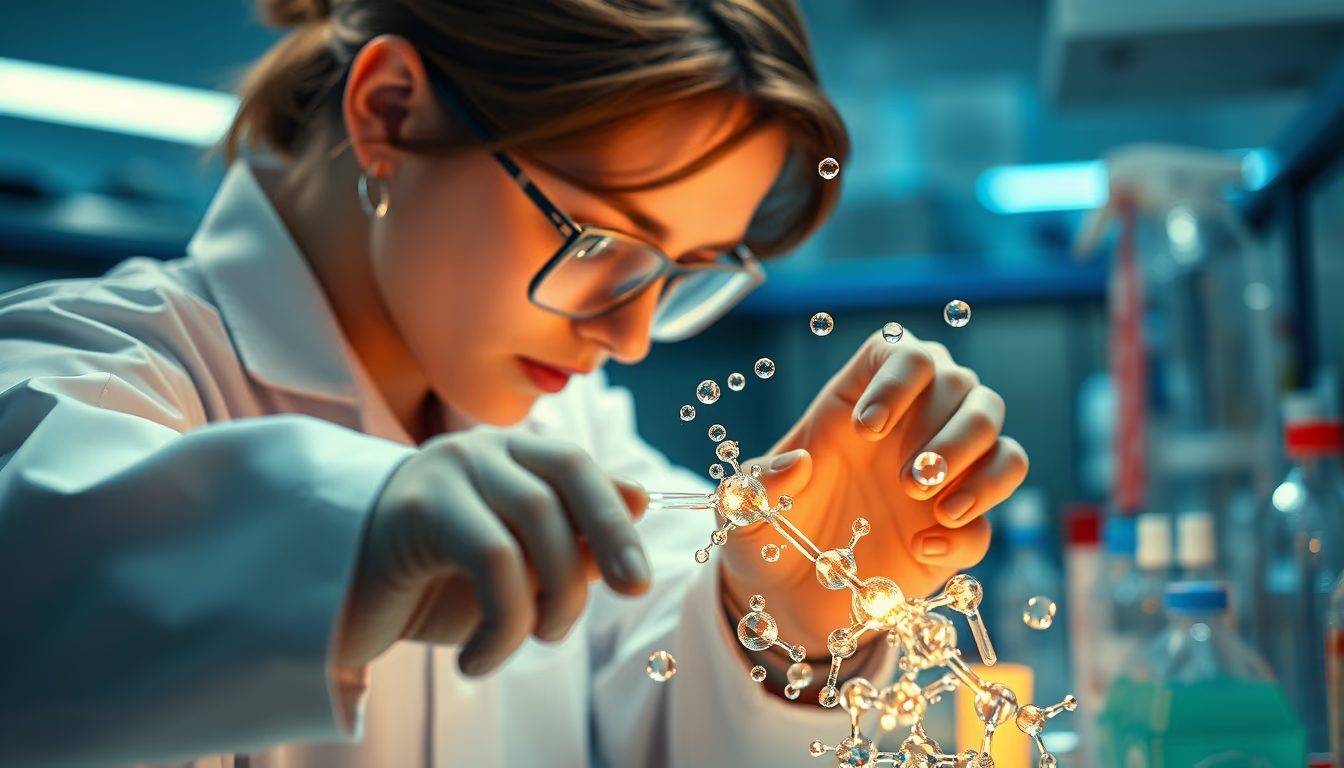
Enzymes are essential biological catalysts that accelerate metabolic reactions in living organisms with high specificity.
About this subject
Enzymes are specialized proteins that act as biological catalysts by lowering the activation energy required for chemical reactions in living organisms. Each enzyme features an active site where the substrate binds, forming an enzyme-substrate complex that stabilizes the transition state and accelerates the reaction. This mechanism is vital for processes such as digestion, cellular respiration, and DNA replication.
Enzymatic catalysis depends on factors like pH, temperature, and substrate concentration. For instance, lactase, the enzyme responsible for digesting lactose, works best in the acidic environment of the stomach. There are thousands of different enzymes in the human body, each dedicated to a specific reaction, showcasing evolutionary efficiency.
Approximately 75,000 enzymes have been identified across various organisms, and their activity is measured by the catalytic constant (kcat). Carbonic anhydrase is one of the fastest enzymes, converting carbon dioxide into bicarbonate at rates near the diffusion limit. Understanding enzymatic catalysis has led to the development of selective inhibitors, used as drugs to treat diseases such as hypertension and cancer.
Frequently Asked Questions
What is enzymatic catalysis?
Enzymatic catalysis is the process by which enzymes accelerate specific chemical reactions in living organisms, lowering the activation energy required and increasing reaction speed without being consumed.
How do enzymes speed up reactions?
Enzymes speed up reactions by providing a favorable environment in the active site, stabilizing the transition state. This lowers the energy barrier, allowing more molecules to reach the activated state in less time.
What factors affect enzyme activity?
Enzyme activity is influenced by pH, temperature, substrate concentration, and the presence of inhibitors. Each enzyme has optimal conditions, such as pepsin at acidic pH and trypsin at neutral pH.
Direct URL
https://pub-c7d6a6ea828543ac903a74a341ccb2e1.r2.dev/imagens/enzyme-catalysis-3d-film-grain-authentic-p4.avifHow to credit
Include a visible link back to UtilizAí. Copy one of the snippets below:
<a href="https://xn--utiliza-eza.com/en/midia/imagens/enzyme-catalysis-3d-film-grain-authentic-p4">Enzyme catalysis 3d</a> by <a href="https://xn--utiliza-eza.com">UtilizAí</a>, licensed under <a href="https://creativecommons.org/licenses/by/4.0/">CC BY 4.0</a>.
[Enzyme catalysis 3d](https://xn--utiliza-eza.com/en/midia/imagens/enzyme-catalysis-3d-film-grain-authentic-p4) by [UtilizAí](https://xn--utiliza-eza.com), CC BY 4.0
License: CC-BY-4.0