English horn rare
1344×768 · AVIF · CC BY 4.0
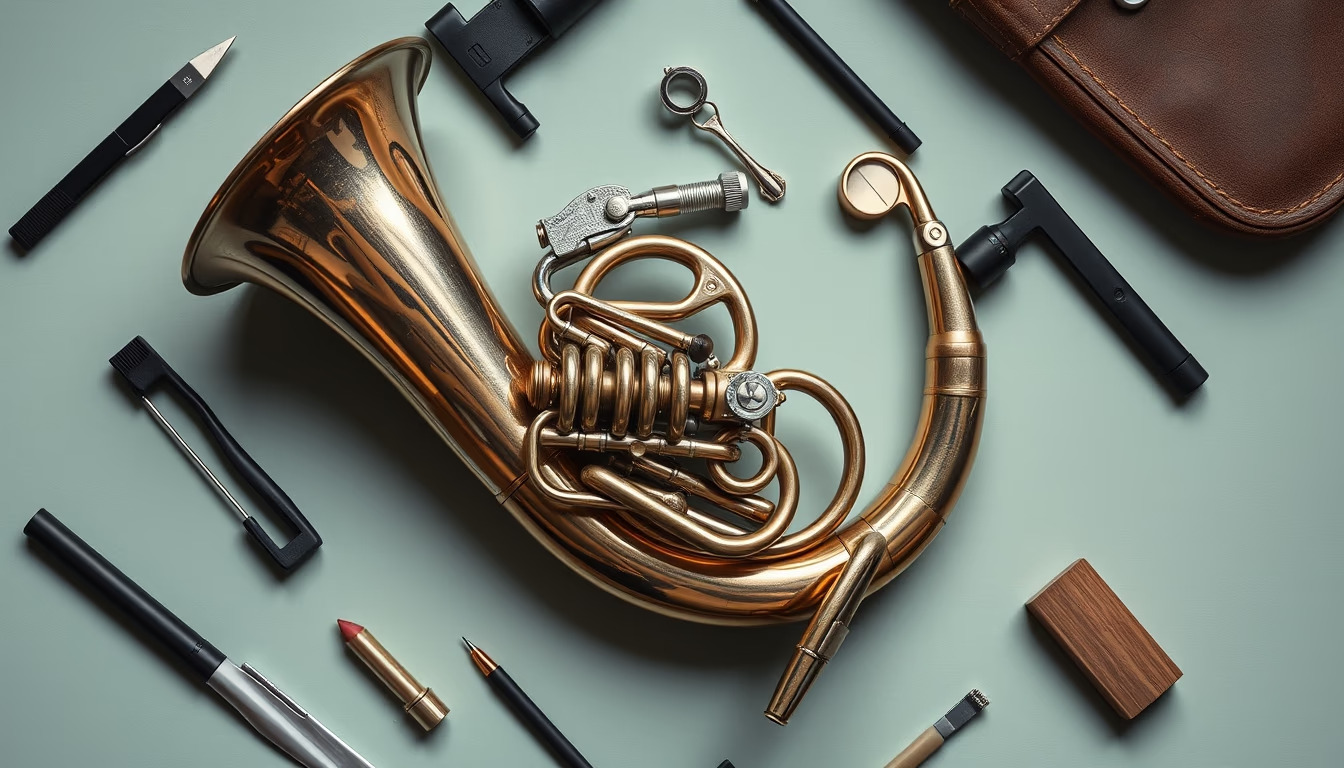
The English horn, a double-reed woodwind instrument, is known for its soft and melancholic timbre, essential in orchestral music.
About this subject
The English horn, also known as the cor anglais, is a double-reed woodwind instrument, a larger relative of the oboe with a deeper, fuller sound. Its range extends from E-flat below middle C to B-flat above middle C. Unlike the oboe, the English horn features a pear-shaped bell and a slightly longer tube, giving it a distinctly soft and melancholic timbre. Despite its name, it did not originate in England but in France, where it evolved from the oboe da caccia in the 18th century. The French term "cor anglais" may derive from "corne anglé" (angled horn), referring to its original curved shape.
In the orchestra, the English horn is often used to evoke pastoral or sad atmospheres due to its expressive sound. It is a transposing instrument, sounding a perfect fifth lower than written. Composers such as Hector Berlioz, Richard Wagner, and Claude Debussy composed memorable parts for it. In Tchaikovsky's "Swan Lake", the English horn has an iconic solo. It is also used in concert bands and chamber music.
Crafting an English horn requires great skill. Modern instruments are made from fine woods like grenadilla or rosewood, with metal keys. The double reed, made from cane (Arundo donax), is similar to the oboe's but larger. The instrument can be straight or curved; the curved model is now more common. Despite its beauty, it is less common than the oboe, making each instrument a rare and valued piece.
Frequently Asked Questions
Is the English horn actually English?
No, despite its name, the English horn is of French origin. The term "cor anglais" likely derives from "corne anglé" (angled horn), referring to its original curved shape.
What is the difference between an oboe and an English horn?
The English horn is larger and has a deeper sound than the oboe. It features a pear-shaped bell and sounds a perfect fifth lower than the oboe. Both use a double reed.
In which famous works does the English horn appear?
Works such as Tchaikovsky's "Swan Lake" and Saint-Saëns' "The Carnival of the Animals" feature English horn solos. It is also prominent in Debussy's "La Mer" and Berlioz's "Symphonie Fantastique".
Direct URL
https://pub-c7d6a6ea828543ac903a74a341ccb2e1.r2.dev/imagens/english-horn-rare-isometric-flat-lay-p1.avifHow to credit
Include a visible link back to UtilizAí. Copy one of the snippets below:
<a href="https://xn--utiliza-eza.com/en/midia/imagens/english-horn-rare-isometric-flat-lay-p1">English horn rare</a> by <a href="https://xn--utiliza-eza.com">UtilizAí</a>, licensed under <a href="https://creativecommons.org/licenses/by/4.0/">CC BY 4.0</a>.
[English horn rare](https://xn--utiliza-eza.com/en/midia/imagens/english-horn-rare-isometric-flat-lay-p1) by [UtilizAí](https://xn--utiliza-eza.com), CC BY 4.0
License: CC-BY-4.0