Electronic music waveform
1344×768 · AVIF · CC BY 4.0
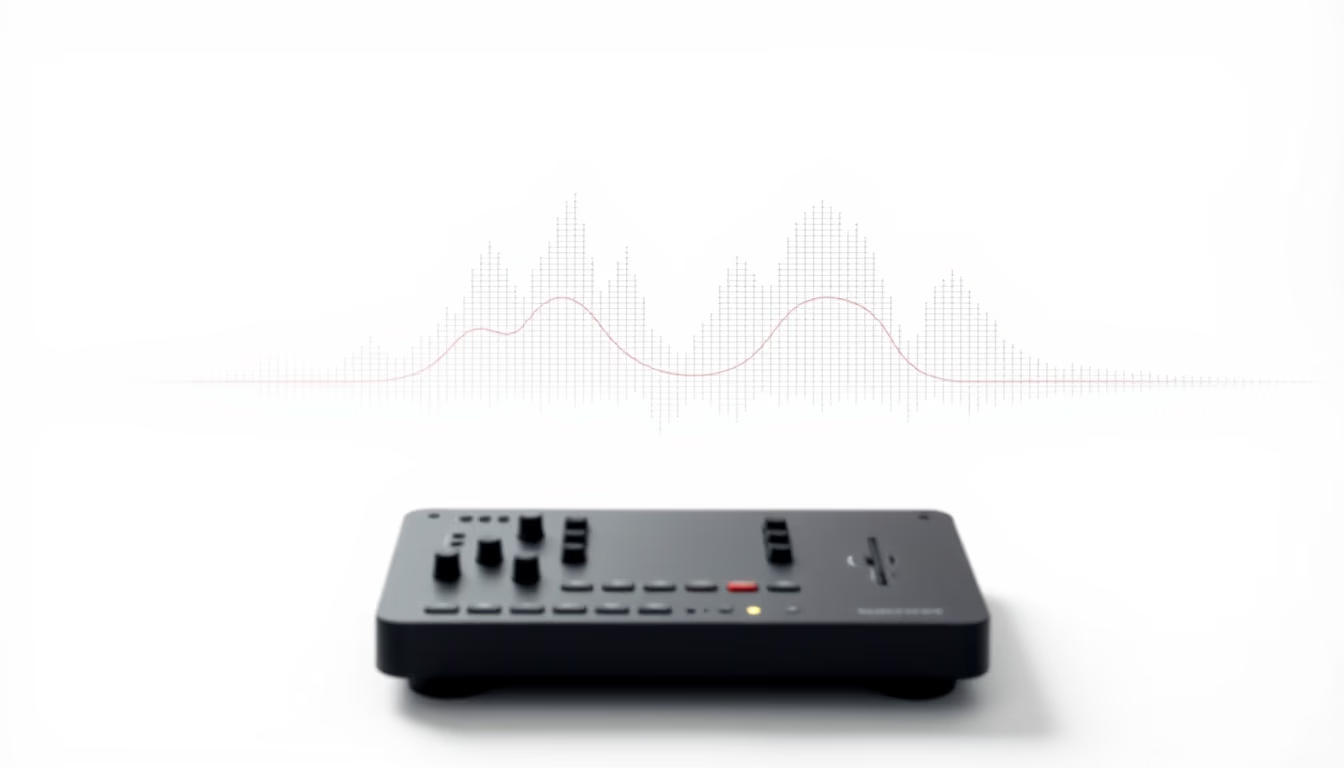
Electronic waveforms are the foundation of sound synthesis, graphically representing sound pressure variation over time.
About this subject
An electronic waveform is the visual representation of an audio signal in the time domain. It describes how sound amplitude varies over time, fundamental to sound synthesis and electronic music. The most common waveforms are sine, square, sawtooth, and triangle, each with distinct timbral characteristics. The sine wave is pure and smooth, while the square wave contains odd harmonics, used in analog synthesizer sounds. The sawtooth wave contains both odd and even harmonics, producing a bright timbre, and the triangle wave is softer than the square but with fewer harmonics.
Historically, electronic waveform synthesis dates back to early instruments like the Telharmonium (1897) and the theremin (1920). With the advent of modular synthesizers in the 1960s, waveforms became modulable and combinable, creating complex timbres. Subtractive synthesis, used in analog synthesizers, starts with harmonically rich waveforms (like sawtooth) and filters parts to shape the sound. Additive synthesis builds sounds by summing individual sine waves.
Waveforms are also used in frequency modulation (FM) and wavetable synthesis. FM synthesis, popularized by the Yamaha DX7 in the 1980s, uses sine waveforms as carriers and modulators to generate complex, metallic timbres. Wavetable synthesis scans through a table of pre-recorded waves, allowing smooth transitions between different forms, a technique used in synthesizers like the PPG Wave and Serum.
The cultural relevance of waveforms in electronic music spans from acid house to dubstep. The characteristic bass of Detroit techno often uses filtered square or sawtooth waves. In genres like drum and bass, complex waveforms are crafted to create deep basslines. Oscilloscopes displaying waveforms have become visual icons of electronic music, associated with rave culture and cyberpunk aesthetics.
Frequently Asked Questions
What is a waveform in electronic music?
It is a graphical representation of an audio signal showing amplitude variation over time. Each waveform (sine, square, sawtooth, triangle) has harmonic characteristics that define the sound's timbre.
What is the difference between subtractive and additive synthesis regarding waveforms?
Subtractive synthesis starts with harmonically rich waveforms (e.g., sawtooth) and uses filters to remove frequencies. Additive synthesis builds sound by summing simple sine waves, each controlling an individual frequency.
How are waveforms used in frequency modulation (FM) synthesis?
In FM synthesis, a modulating waveform (usually sine) alters the frequency of a carrier waveform, generating new harmonics. This creates complex, metallic timbres, as popularized by the Yamaha DX7 synthesizer.
Direct URL
https://pub-c7d6a6ea828543ac903a74a341ccb2e1.r2.dev/imagens/electronic-music-waveform-commercial-product-photography-p0.avifHow to credit
Include a visible link back to UtilizAí. Copy one of the snippets below:
<a href="https://xn--utiliza-eza.com/en/midia/imagens/electronic-music-waveform-commercial-product-photography-p0">Electronic music waveform</a> by <a href="https://xn--utiliza-eza.com">UtilizAí</a>, licensed under <a href="https://creativecommons.org/licenses/by/4.0/">CC BY 4.0</a>.
[Electronic music waveform](https://xn--utiliza-eza.com/en/midia/imagens/electronic-music-waveform-commercial-product-photography-p0) by [UtilizAí](https://xn--utiliza-eza.com), CC BY 4.0
License: CC-BY-4.0