Electric organ hammond
1344×768 · AVIF · CC BY 4.0
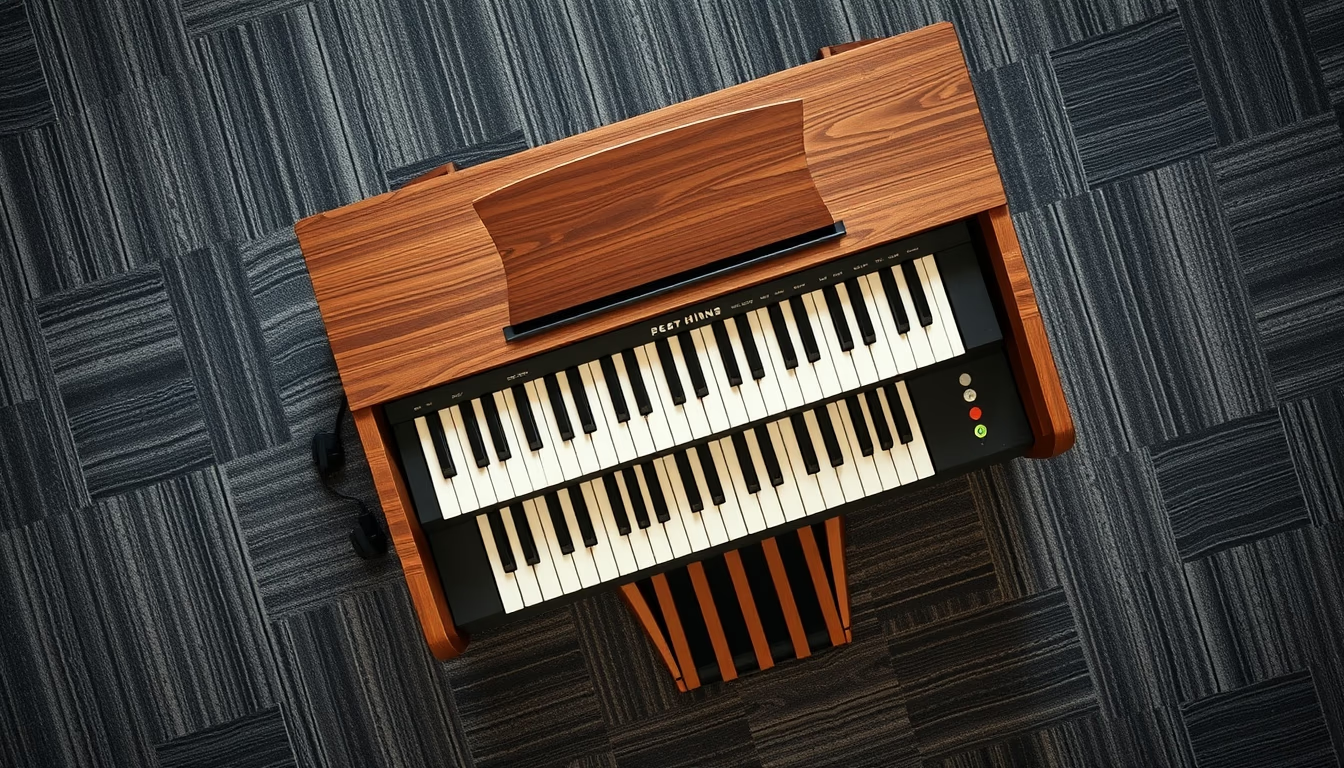
The Hammond organ is an electromechanical instrument that defined popular music of the 20th century, especially in jazz, blues, and rock.
About this subject
The Hammond organ was invented by Laurens Hammond in 1935, originally designed as a cheaper and more compact alternative to the pipe organs used in churches and theaters. Its sound is produced by a system of tonewheels that generate pure sine waves, later combined through drawbars that allow the musician to shape the timbre with precision. The most iconic model is the Hammond B3, released in 1954, which became the standard for jazz, blues, soul, and rock musicians.
The instrument gained fame when paired with the rotating Leslie speakers, which create a vibrant, chorusing effect. Great names such as Jimmy Smith, Booker T. Jones, Keith Emerson, and Joey DeFrancesco popularized the Hammond sound, establishing it as essential in jazz and progressive rock. In Brazil, the organ was adopted by samba and bossa nova musicians like pianist and organist Sivuca, as well as Brazilian soul and funk bands.
Production of original Hammond organs ceased in the 1970s, but the instrument continued to be used and revered. Today, digital emulations and modern clones recreate its sound, keeping its influence alive in genres such as gospel, reggae, and electronic music. The Hammond B3, in particular, is regarded as one of the most expressive and versatile instruments in history.
Frequently Asked Questions
How does the Hammond organ work?
The Hammond organ generates sound using tonewheels that spin near electromagnetic pickups, creating electrical signals. The player controls the intensity of each frequency with drawbars, allowing a vast range of timbres.
What is the difference between a Hammond B3 and C3?
The Hammond B3 and C3 are mechanically identical but differ in cabinet: the B3 has legs and a decorative skirt, while the C3 has closed wooden sides. The B3 is more portable and became the favorite for touring musicians.
Why is the Leslie speaker important for the Hammond sound?
The Leslie uses a rotating speaker or deflector system to create a Doppler effect, producing natural vibrato and chorus. This sound became inseparable from the Hammond, adding movement and richness to the tone.
Direct URL
https://pub-c7d6a6ea828543ac903a74a341ccb2e1.r2.dev/imagens/electric-organ-hammond-isometric-flat-lay-p1.avifHow to credit
Include a visible link back to UtilizAí. Copy one of the snippets below:
<a href="https://xn--utiliza-eza.com/en/midia/imagens/electric-organ-hammond-isometric-flat-lay-p1">Electric organ hammond</a> by <a href="https://xn--utiliza-eza.com">UtilizAí</a>, licensed under <a href="https://creativecommons.org/licenses/by/4.0/">CC BY 4.0</a>.
[Electric organ hammond](https://xn--utiliza-eza.com/en/midia/imagens/electric-organ-hammond-isometric-flat-lay-p1) by [UtilizAí](https://xn--utiliza-eza.com), CC BY 4.0
License: CC-BY-4.0