Electric organ hammond
1344×768 · AVIF · CC BY 4.0
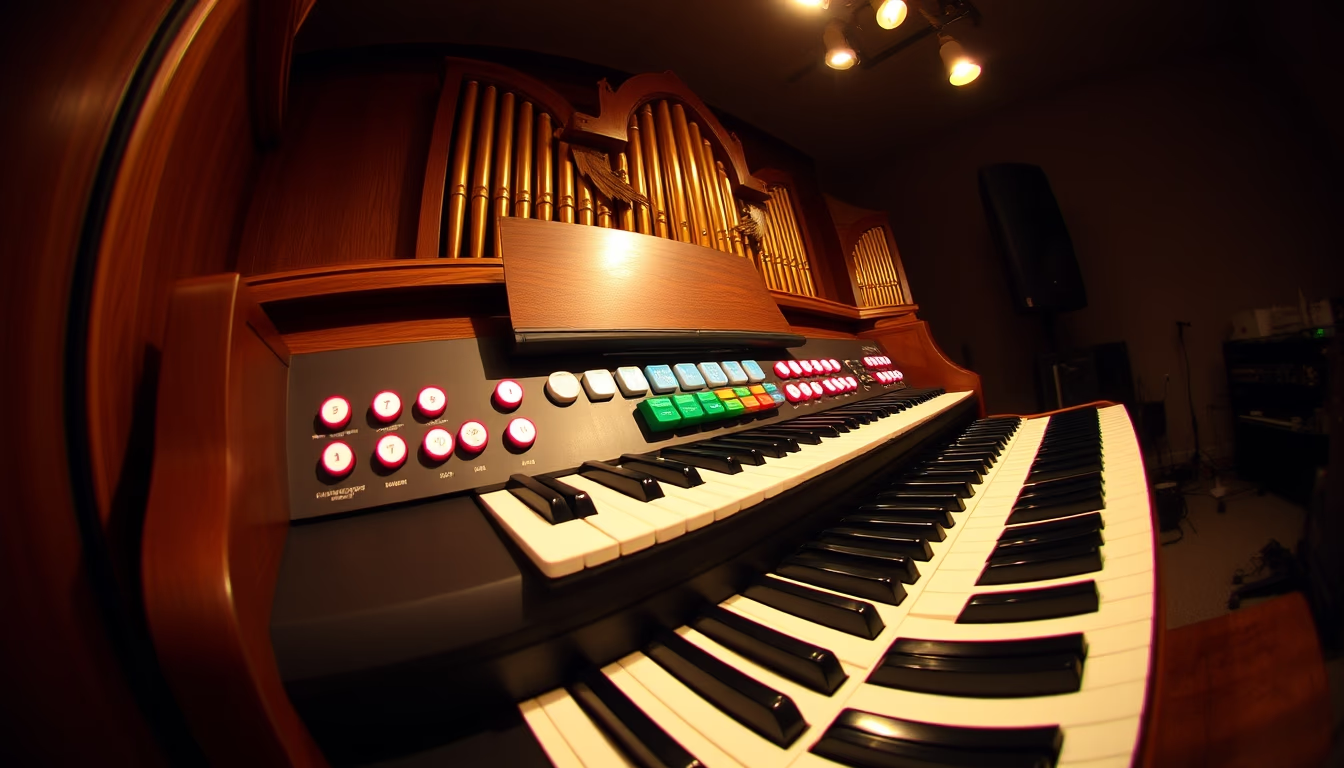
The Hammond organ, invented in the 1930s, revolutionized music with its electromechanical sound and became essential in jazz, blues, and rock.
About this subject
The Hammond organ was created by Laurens Hammond in 1935 as a more affordable and portable alternative to large pipe organs. Instead of pipes, it uses a tonewheel generator system that produces sound waves via metal discs rotating in magnetic fields. Each wheel generates a specific frequency, combined by keys to form notes. This design gives the Hammond a unique timbre, full-bodied with a characteristic sustain.
The sound is often amplified through a rotating Leslie speaker, creating an unmistakable vibrato and tremolo effect. The Hammond became synonymous with jazz, with pioneers like Jimmy Smith expanding its use into soul jazz and funk. In rock, musicians such as Jon Lord (Deep Purple) and Gregg Allman incorporated the organ into classic songs. The B-3 model, introduced in 1955, is the most famous, featuring two manuals and bass pedals.
Beyond popular music, the Hammond was also adopted in gospel and Latin music. Its versatility allowed it to be used in styles as diverse as blues, R&B, and progressive rock. Production of original Hammond organs ceased in 1975, but digital replicas and synthesizers keep its sound alive. The instrument is considered a milestone in the history of electronic music and continues to be played and appreciated by enthusiasts worldwide.
Frequently Asked Questions
How does a Hammond organ work?
The Hammond uses a tonewheel system: metal discs spinning in magnetic fields generate electrical frequencies. Keys activate combinations of tonewheels, which are mixed and sent to an amplifier. The characteristic sound comes from natural distortion and the Leslie speaker.
What is the difference between a Hammond and a pipe organ?
Pipe organs produce sound by air passing through metal or wood pipes. The Hammond is electromechanical, generating sound via rotating discs. It is more compact, portable, and has a more sustained, distorted timbre, whereas pipe organs have faster attack and natural harmonics.
Why is the Hammond sound so distinctive?
The unique Hammond sound comes from the combination of tonewheels (producing sine waves with harmonics), the preamplifier circuit with gentle distortion, and the rotating Leslie speaker, which creates a Doppler effect modulating pitch and volume. This timbre is instantly recognizable in jazz, rock, and gospel.
Direct URL
https://pub-c7d6a6ea828543ac903a74a341ccb2e1.r2.dev/imagens/electric-organ-hammond-fish-eye-wide-angle-p2.avifHow to credit
Include a visible link back to UtilizAí. Copy one of the snippets below:
<a href="https://xn--utiliza-eza.com/en/midia/imagens/electric-organ-hammond-fish-eye-wide-angle-p2">Electric organ hammond</a> by <a href="https://xn--utiliza-eza.com">UtilizAí</a>, licensed under <a href="https://creativecommons.org/licenses/by/4.0/">CC BY 4.0</a>.
[Electric organ hammond](https://xn--utiliza-eza.com/en/midia/imagens/electric-organ-hammond-fish-eye-wide-angle-p2) by [UtilizAí](https://xn--utiliza-eza.com), CC BY 4.0
License: CC-BY-4.0