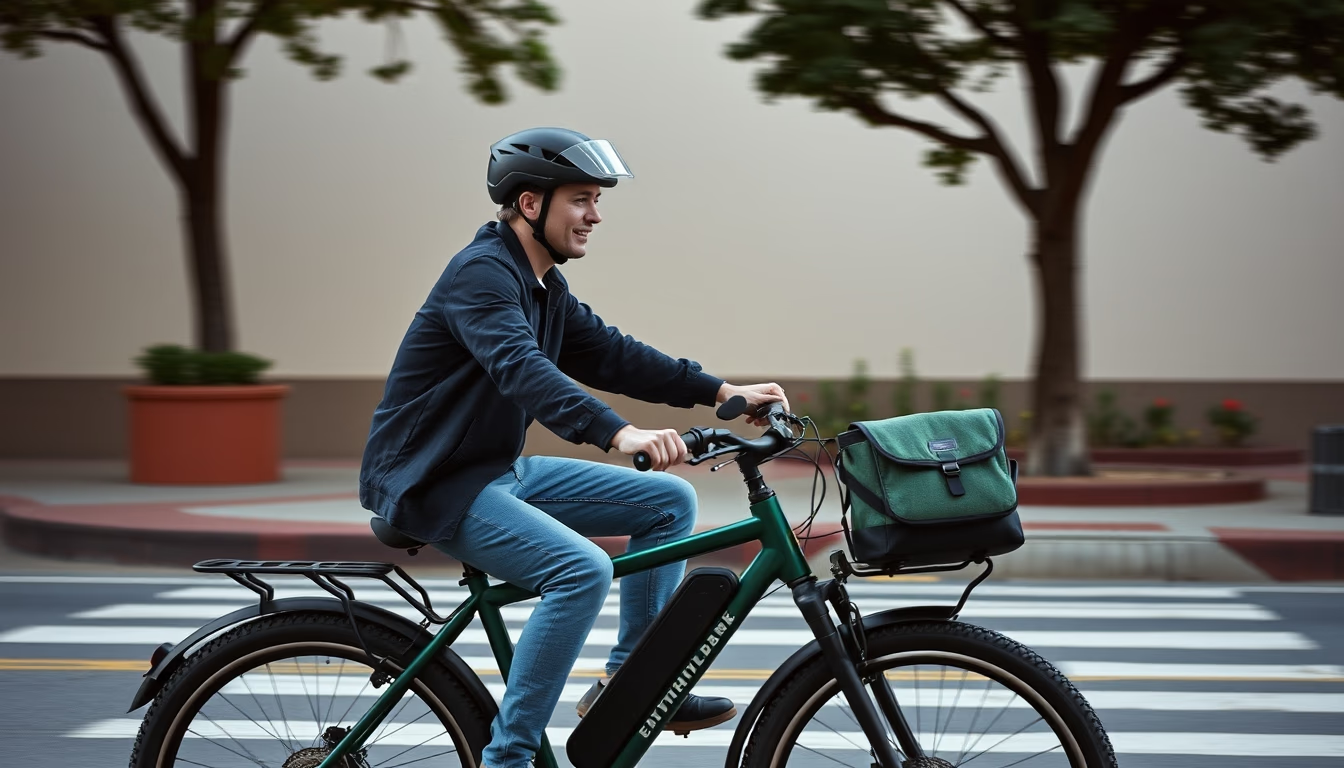
Electric bike commuter
1344×768 · AVIF · CC BY 4.0

Electric bikes are reshaping urban commuting, offering a practical and eco-friendly alternative for daily travel.
About this subject
The use of electric bikes for daily commuting, known as e-bike commuting, is rapidly increasing worldwide. In cities like São Paulo, London, and Beijing, cyclists adopt this mode of transport to avoid traffic jams and reduce emissions. Studies indicate global e-bike sales are expected to exceed 40 million units by 2026, driven by government incentives and the search for cheaper alternatives to cars.
The benefits go beyond fuel savings. Pedaling with electric assistance allows longer distances without excessive sweating, making it feasible to replace car or public transport trips. Average speed in urban areas is often equal to or higher than cars during peak hours. Countries like the Netherlands and Germany already have integrated bike lane networks with charging stations, facilitating continuous use.
E-bike range varies from 30 to 100 kilometers, depending on battery, terrain, and assistance level. Modern lithium batteries recharge in 3 to 6 hours on standard outlets. For commerce, models equipped with racks and baskets are popular among delivery riders. In Brazil, regulations require motor power not exceed 350 W to exempt a license, as long as top speed is limited to 25 km/h.
Interestingly, e-bikes also promote inclusion: people with physical limitations or older adults can return to cycling. Cities like Copenhagen and Paris already offer subsidies for e-bike purchases as part of sustainable mobility plans. With increasing urban density, the electric bike is expected to become a pillar of global micromobility by the end of the decade.
Frequently Asked Questions
What are the advantages of using an electric bike for commuting?
E-bikes reduce travel time in congested traffic, eliminate fuel and parking costs, and offer moderate physical activity. They also help lower urban air pollution.
Do you need a license to ride an electric bike?
In many countries, e-bikes with a motor up to 250W (or 350W in Brazil) and a top speed of 25 km/h are classified as bicycles and require no license. More powerful models may be considered mopeds.
What is the average range of an electric bike?
Range typically varies from 30 to 100 km, depending on battery capacity, terrain, rider weight, and assistance level. A common 500Wh battery provides about 50 to 70 km in mixed use.
Direct URL
https://pub-c7d6a6ea828543ac903a74a341ccb2e1.r2.dev/imagens/electric-bike-commuter-travel-photography-p1.avifHow to credit
Include a visible link back to UtilizAí. Copy one of the snippets below:
<a href="https://xn--utiliza-eza.com/en/midia/imagens/electric-bike-commuter-travel-photography-p1">Electric bike commuter</a> by <a href="https://xn--utiliza-eza.com">UtilizAí</a>, licensed under <a href="https://creativecommons.org/licenses/by/4.0/">CC BY 4.0</a>.
[Electric bike commuter](https://xn--utiliza-eza.com/en/midia/imagens/electric-bike-commuter-travel-photography-p1) by [UtilizAí](https://xn--utiliza-eza.com), CC BY 4.0
License: CC-BY-4.0