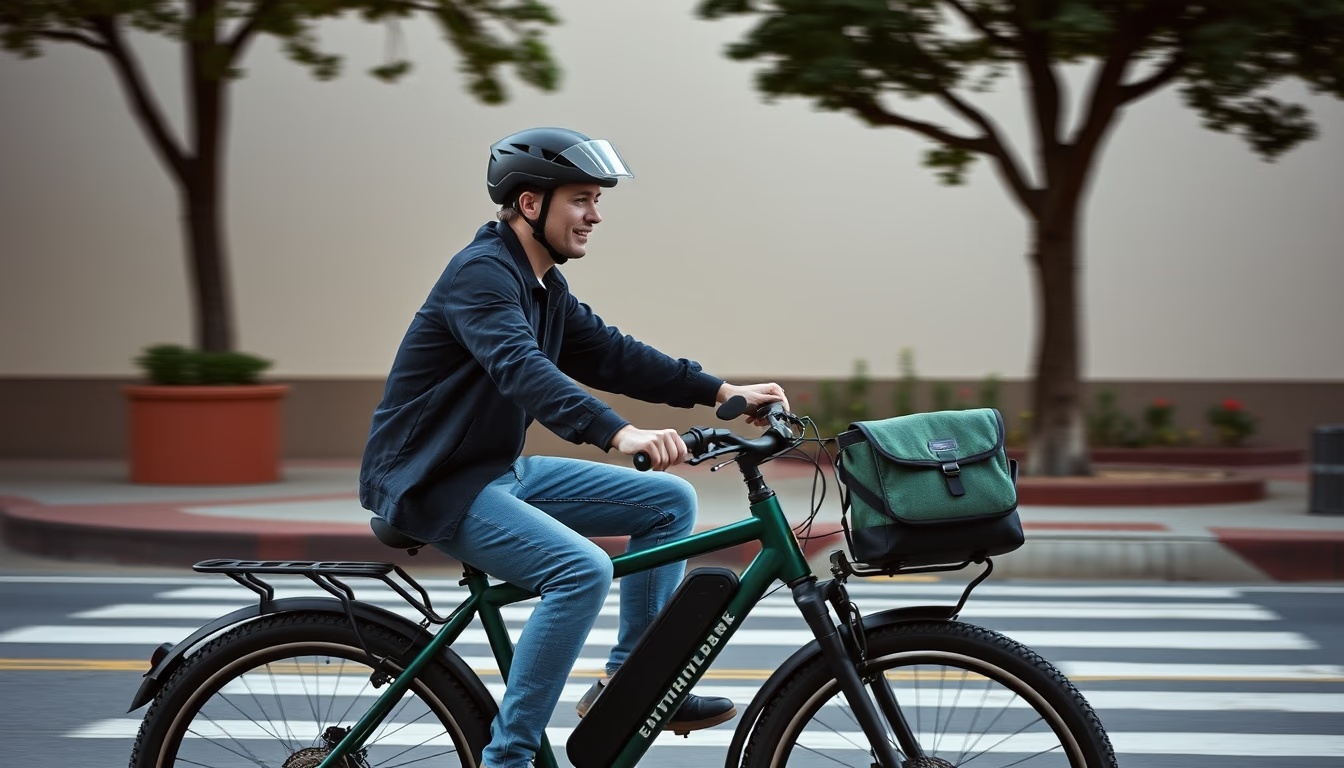
Electric bike commuter
1344×768 · AVIF · CC BY 4.0
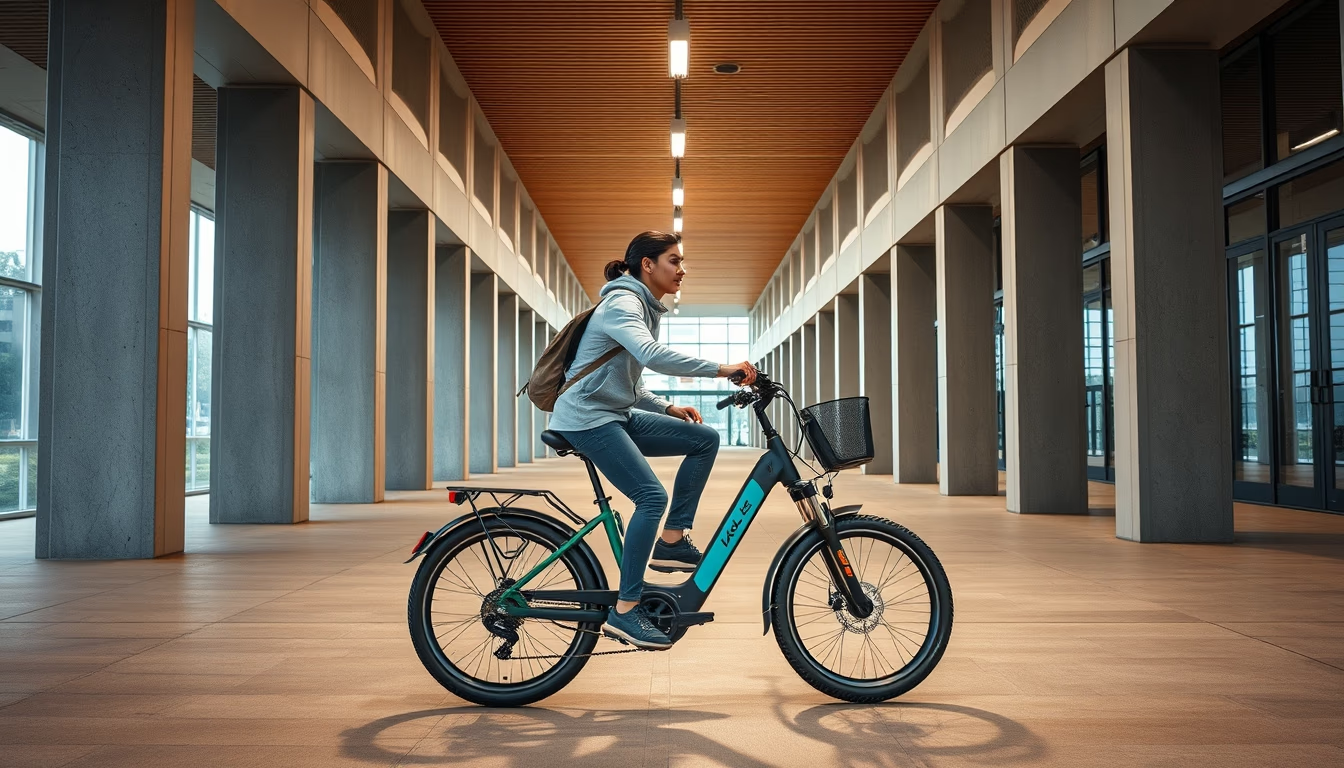
Electric bicycles are reshaping urban commuting, merging sustainable mobility with the agility needed to navigate city traffic.
About this subject
Electric bicycles, or e-bikes, have become a viable alternative to motorized individual transport in metropolises like São Paulo, London, and Beijing. Equipped with an electric motor that assists pedaling, they enable faster and less strenuous commuting, especially on hilly terrain. Data from the Brazilian Bicycle Sector Association (Aliança Bike) indicates that e-bike sales grew over 40% in Brazil between 2020 and 2023, driven by the search for post-pandemic transport alternatives and municipal subsidies, such as IPVA exemption in some cities.
In the architectural context of cities, cycling infrastructure is a key factor in e-bike adoption. Cities like Copenhagen and Amsterdam serve as models, with bike lanes integrated into urban design, secure parking, and electric bike-sharing systems. In Brazil, São Paulo expanded its cycling network from 64 km in 2015 to over 700 km in 2024, and programs like Bike Sampa include e-bikes in the rental system. This integration between urban planning and active mobility reduces congestion and CO2 emissions.
Interestingly, e-bikes not only shorten average commute times by 15 to 20 minutes per trip, according to studies by the Institute of Applied Economic Research (Ipea), but also promote health benefits. Motor assistance allows people of different fitness levels to adopt cycling as a regular means of transport, increasing equity in mobility access. Moreover, lithium battery technology has evolved to offer ranges of 40 to 100 km per charge, depending on assistance level, and recharging via common outlets, making them practical for daily use.
The future of e-bikes in urban settings is tied to innovations in solid-state batteries and integration with smart traffic systems. Brazilian startups like Gro Mobility are developing models with 5G connectivity and collision sensors, while federal incentives such as the Bicicleta Brasil program aim to boost national production and green jobs. The trend is for e-bikes to become increasingly common in urban landscapes, complementing public transport and reducing car dependence.
Frequently Asked Questions
What is the average range of an urban electric bicycle?
Range varies from 40 to 100 km per charge, depending on assistance level, rider weight, terrain, and temperature. Modern lithium batteries recharge in 3 to 6 hours via standard outlets.
Do I need a driver's license to ride an e-bike in Brazil?
No. According to Contran Resolution 996/2023, electric bicycles with motors up to 350 W and a top speed of 25 km/h are classified as regular bicycles, requiring no license or registration.
Do e-bikes actually help reduce traffic and pollution?
Yes. Studies show that replacing car trips with e-bikes can cut CO2 emissions by up to 90% per kilometer. Additionally, each e-bike occupies less road and parking space, easing congestion.
Direct URL
https://pub-c7d6a6ea828543ac903a74a341ccb2e1.r2.dev/imagens/electric-bike-commuter-architectural-photography-p4.avifHow to credit
Include a visible link back to UtilizAí. Copy one of the snippets below:
<a href="https://xn--utiliza-eza.com/en/midia/imagens/electric-bike-commuter-architectural-photography-p4">Electric bike commuter</a> by <a href="https://xn--utiliza-eza.com">UtilizAí</a>, licensed under <a href="https://creativecommons.org/licenses/by/4.0/">CC BY 4.0</a>.
[Electric bike commuter](https://xn--utiliza-eza.com/en/midia/imagens/electric-bike-commuter-architectural-photography-p4) by [UtilizAí](https://xn--utiliza-eza.com), CC BY 4.0
License: CC-BY-4.0