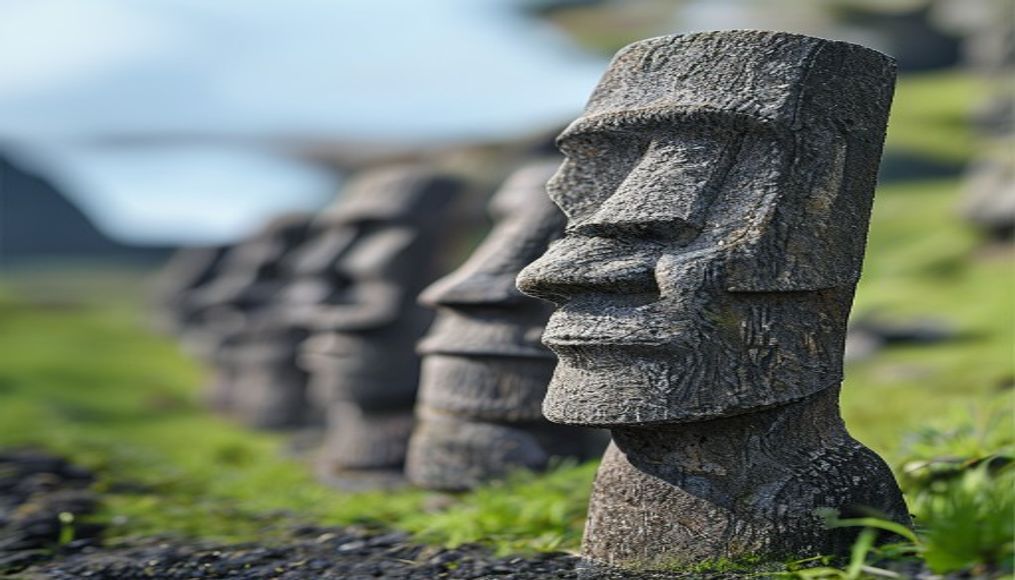
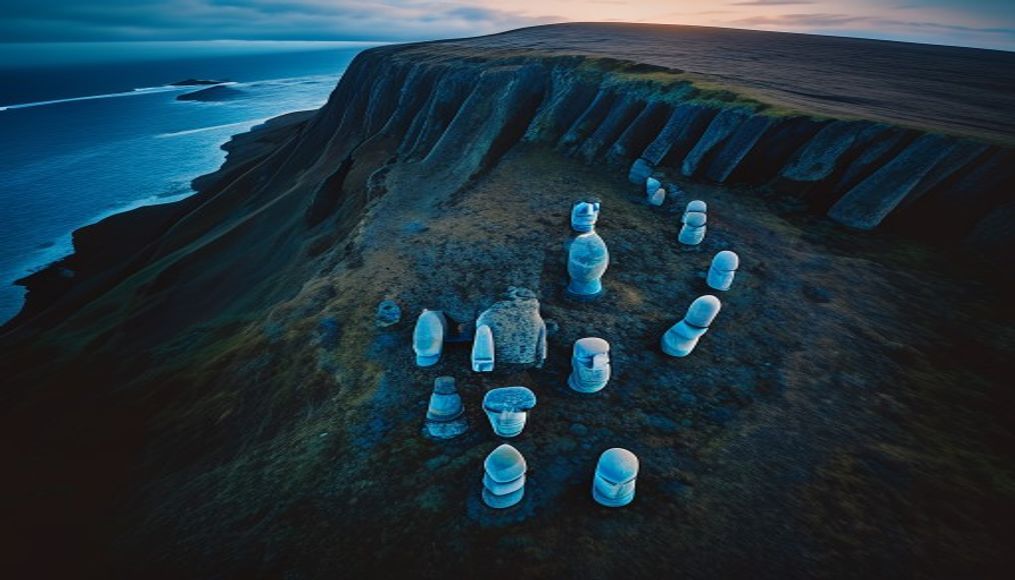
Easter island moai statues
1344×768 · AVIF · CC BY 4.0
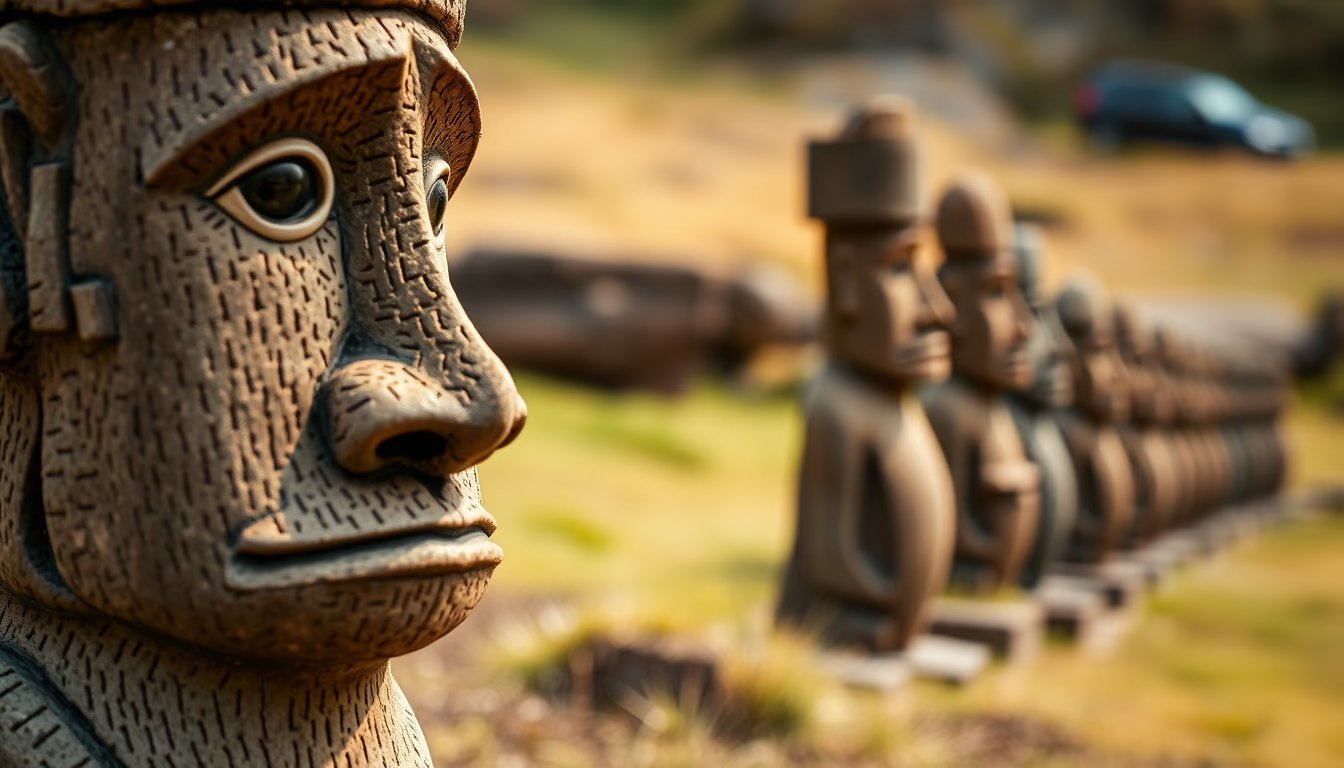
The moai statues of Easter Island are volcanic stone monuments created by the Rapa Nui people between 1250 and 1500 AD, reaching up to 20 meters in height.
About this subject
The moai are monolithic statues carved from volcanic tuff at Rano Raraku, a quarry on Easter Island (Rapa Nui), a Chilean territory in the South Pacific. Created between the 13th and 16th centuries, they represent deified ancestors of the Rapa Nui people and were erected on ceremonial platforms called ahu, usually facing inland except for the seven moai at Ahu Akivi, which face the sea.
Each moai was hewn with basalt tools, a process that could take months. The largest statues reach 20 meters in height and weigh over 80 tons. After carving, they were transported along stone roads to the ahu using techniques combining sledges, rollers, and ropes, possibly with the help of ramps and levers. Many moai have a pukao, a cylindrical hat made from red scoria from Puna Pau, representing hair or headdress.
Construction ceased abruptly around 1600, likely due to internal conflicts, resource depletion, and intentional toppling of statues. In the 20th century, restoration projects led by archaeologists like William Mulloy and by CONAF re-erected dozens of moai. In 2022, a fire damaged part of the site, but the statues remain a UNESCO World Heritage Site since 1995.
Today, there are 887 cataloged moai, of which 394 still lie in Rano Raraku, unfinished or awaiting transport. The largest concentration of standing moai is at Ahu Tongariki, with 15 statues aligned, restored after a tsunami in 1960. The entire island is an open-air museum, drawing visitors worldwide to witness this unique expression of Polynesian engineering and spirituality.
Frequently Asked Questions
How many moai statues are on Easter Island?
There are 887 cataloged moai, of which 394 remain at the Rano Raraku quarry, unfinished or untransported.
How were the moai transported?
They were likely moved using wooden sledges, rollers, and ropes, with ramps and levers. Recent studies suggest they were 'walked' by rocking side to side.
Why were the moai toppled?
The toppling occurred around 1600, possibly due to intertribal warfare, resource competition, and environmental collapse after deforestation of the island.
Direct URL
https://pub-c7d6a6ea828543ac903a74a341ccb2e1.r2.dev/imagens/easter-island-moai-statues-tilt-shift-miniature-p7.avifHow to credit
Include a visible link back to UtilizAí. Copy one of the snippets below:
<a href="https://xn--utiliza-eza.com/en/midia/imagens/easter-island-moai-statues-tilt-shift-miniature-p7">Easter island moai statues</a> by <a href="https://xn--utiliza-eza.com">UtilizAí</a>, licensed under <a href="https://creativecommons.org/licenses/by/4.0/">CC BY 4.0</a>.
[Easter island moai statues](https://xn--utiliza-eza.com/en/midia/imagens/easter-island-moai-statues-tilt-shift-miniature-p7) by [UtilizAí](https://xn--utiliza-eza.com), CC BY 4.0
License: CC-BY-4.0