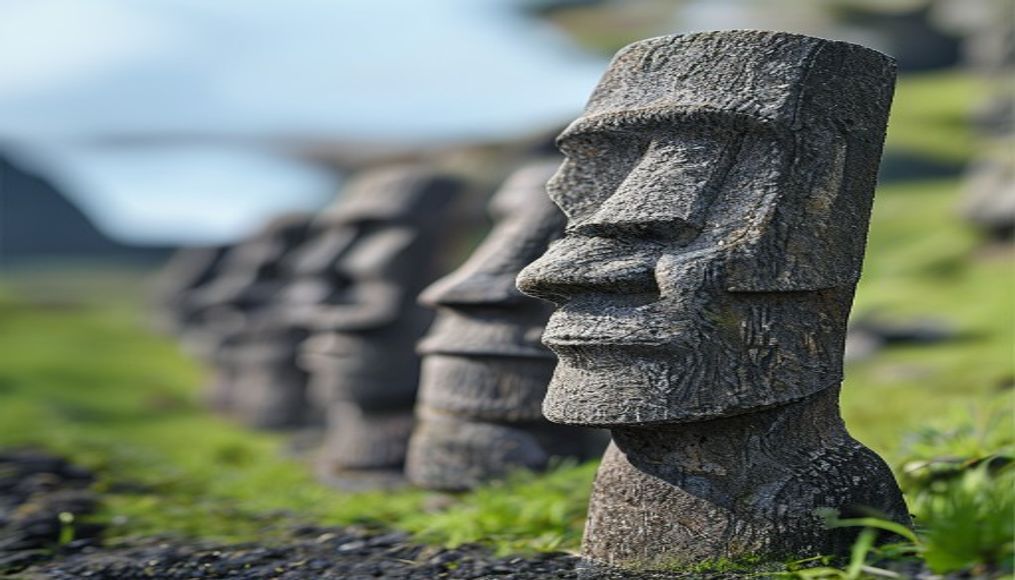
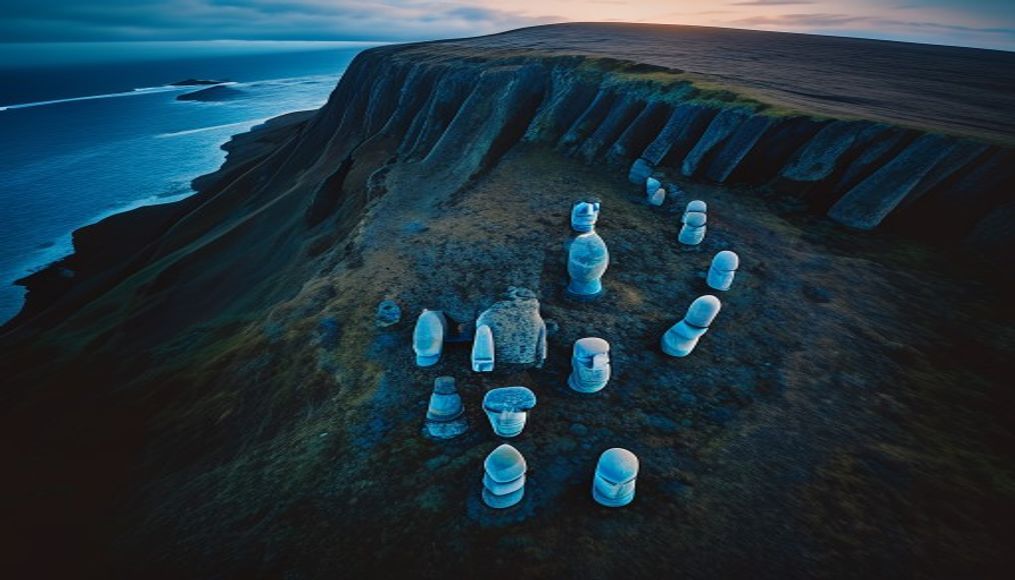
Moais da Ilha de Páscoa statues
1344×768 · AVIF · CC BY 4.0
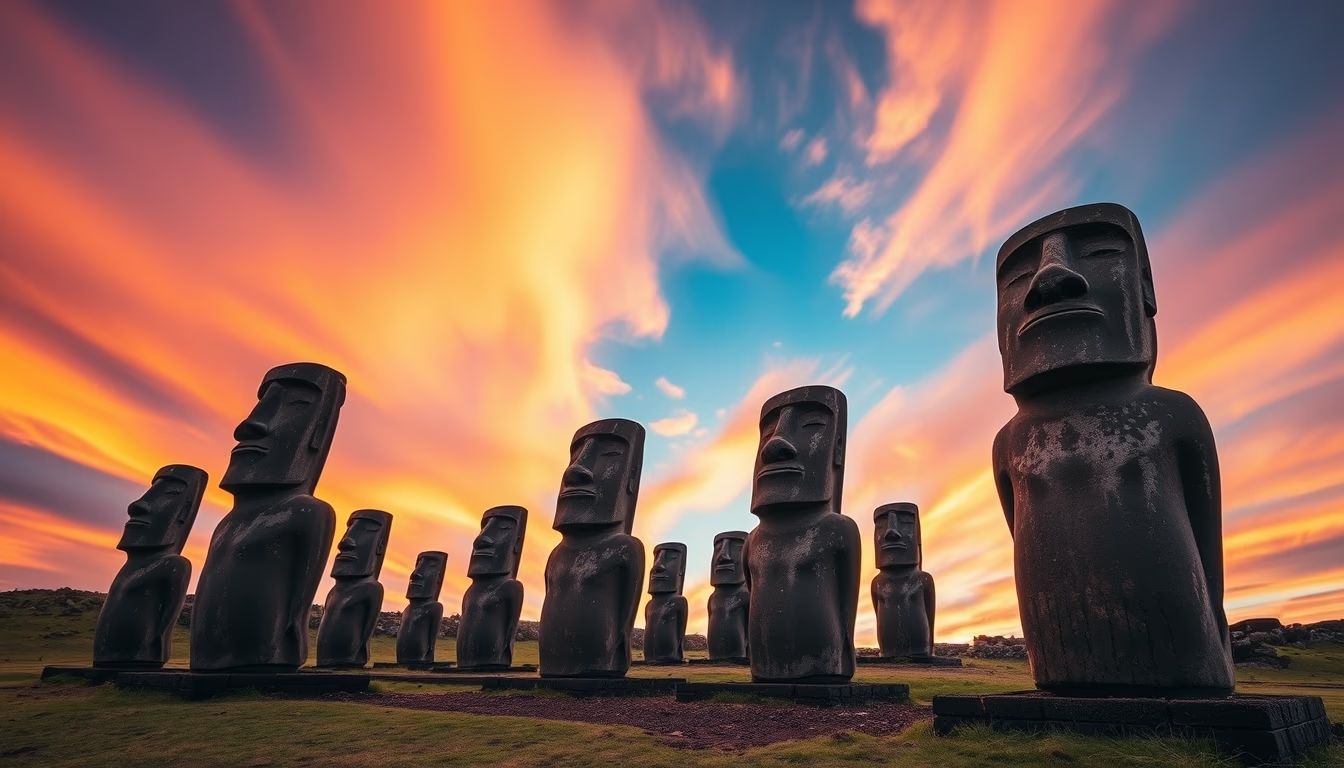
Os Moais da Ilha de Páscoa são monumentos de pedra esculpidos pelo povo Rapa Nui entre os séculos XIII e XVI, representando ancestrais.
Sobre o tema
Os Moais são estátuas monolíticas de pedra vulcânica encontradas na Ilha de Páscoa, um território chileno no Oceano Pacífico. Foram esculpidos pelo povo Rapa Nui entre aproximadamente 1250 e 1500 d.C. A maioria dos moais foi talhada no vulcão Rano Raraku, uma pedreira que fornecia tufo vulcânico. Cada estátua representa um ancestral falecido de alto status, servindo como uma espécie de guardião espiritual.
Existem cerca de 1.000 moais espalhados pela ilha, com alturas que variam de 2 a 20 metros. O maior moai jamais construído, chamado Paro, mede 10 metros de altura e pesa 82 toneladas. As estátuas foram transportadas por distâncias consideráveis usando técnicas de rolagem sobre troncos e cordas, o que exigia enorme esforço coletivo. Muitos moais foram derrubados durante guerras tribais e apenas alguns foram reerguidos em tempos modernos.
Além da famosa fileira de moais em Ahu Tongariki, com seus 15 moais reerguidos, a ilha também abriga o sítio de Rano Raraku, onde figuras inacabadas ainda estão presas na rocha. Os moais foram declarados Patrimônio Mundial da UNESCO em 1995. A construção dessas estátuas está ligada ao colapso ecológico da ilha, devido ao desmatamento para transporte, o que levou à escassez de recursos e conflitos internos.
Perguntas frequentes
Por que os moais foram construídos?
Os moais foram erguidos para representar ancestrais falecidos de alto status, servindo como guardiões espirituais das comunidades Rapa Nui. Acreditava-se que eles emanavam poder espiritual, ou mana, sobre a tribo.
Como os moais foram movidos sem tecnologia moderna?
A teoria mais aceita é que os moais eram transportados deitados sobre trenós de madeira, puxados por cordas e roldanas, com o auxílio de trilhos de toras. Estudos recentes sugerem que também podiam ser 'caminhados' com movimentos de balanço.
Por que a civilização Rapa Nui entrou em colapso?
O colapso é atribuído à superexploração dos recursos naturais, especialmente o desmatamento para mover e erguer os moais. Isso levou à erosão do solo, escassez de alimentos e conflitos tribais que culminaram na derrubada das estátuas.
URL direta
https://pub-c7d6a6ea828543ac903a74a341ccb2e1.r2.dev/imagens/easter-island-moai-statues-long-exposure-p4.avifComo creditar
Inclua um link visível de volta pro UtilizAí. Copie um dos snippets abaixo:
<a href="https://xn--utiliza-eza.com/midia/imagens/easter-island-moai-statues-long-exposure-p4">Moais da Ilha de Páscoa statues</a> by <a href="https://xn--utiliza-eza.com">UtilizAí</a>, licensed under <a href="https://creativecommons.org/licenses/by/4.0/">CC BY 4.0</a>.
[Moais da Ilha de Páscoa statues](https://xn--utiliza-eza.com/midia/imagens/easter-island-moai-statues-long-exposure-p4) by [UtilizAí](https://xn--utiliza-eza.com), CC BY 4.0
Licença: CC-BY-4.0