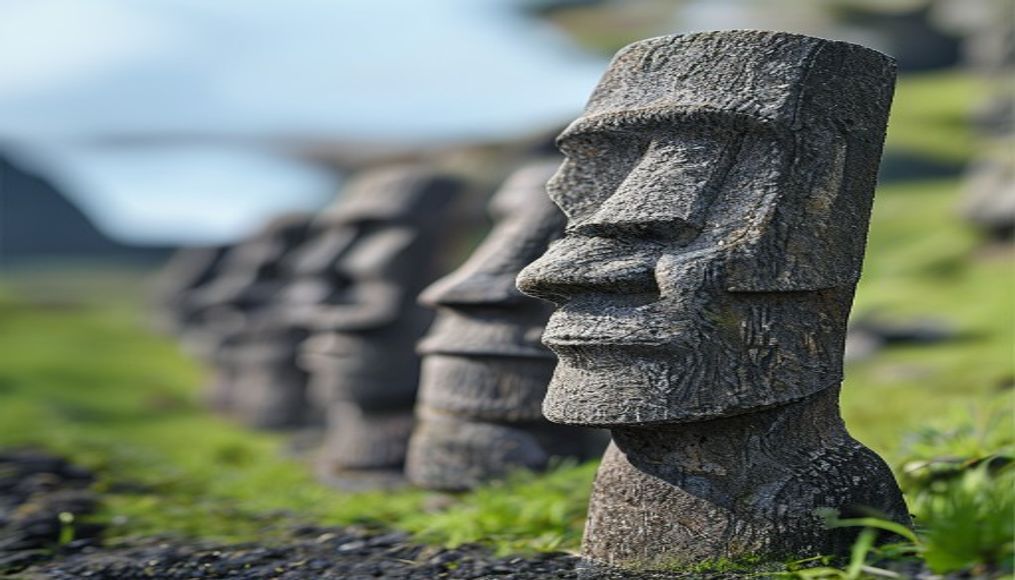
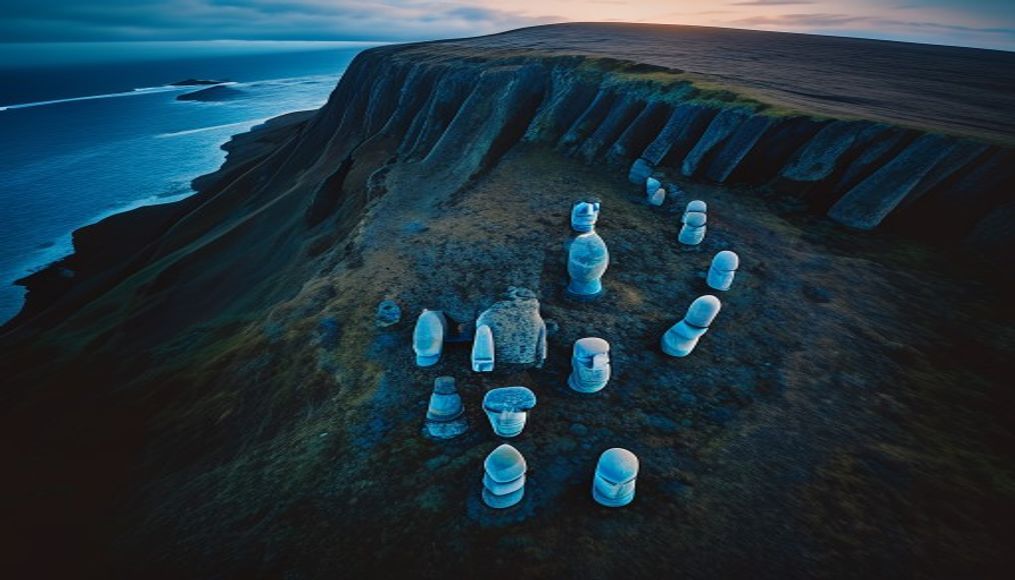
Easter island moai statues
1344×768 · AVIF · CC BY 4.0
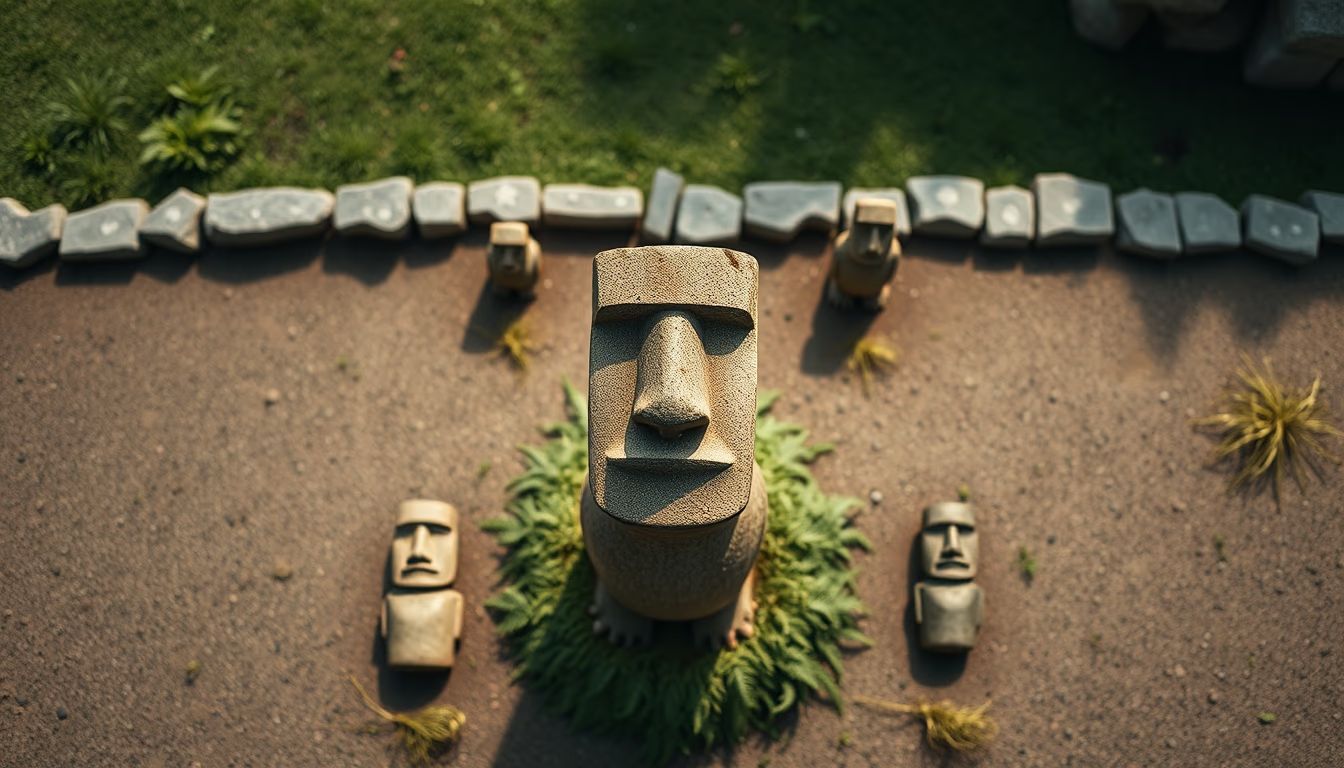
The moai are monolithic statues carved by the Rapa Nui people on Easter Island, representing important ancestors and leaders, with over 900 pieces scattered across the island.
About this subject
The moai are the iconic stone statues of Easter Island, carved between the 13th and 16th centuries by the Rapa Nui people. Each moai was hewn from hardened volcanic ash, mainly at the Rano Raraku quarry. The figures represent tribal chiefs, religious leaders, or deified ancestors, and were erected on ceremonial platforms called ahu, facing inland to protect the community. Over 900 moai have been identified, but only about a third were transported to their final sites; the rest remain in the quarry or along transport routes.
The construction technique is impressive: average moai stand about 13 feet tall and weigh 14 tons, but the largest ever erected, named Paro, reaches 32 feet and 82 tons. The largest unfinished moai, still attached to the bedrock, would have been 69 feet and 270 tons. It is believed that the Rapa Nui used wooden sleds and rollers to move the statues, and recent studies suggest they were "walked" by rocking them side to side with ropes, in a walking motion. Deforestation of the island for building these sleds contributed to the ecological collapse of the society.
The cultural significance of moai goes beyond mere statuary: they were the embodiment of mana, the spiritual power of leaders. Each moai was carved to capture the essence of the deceased, and white coral eyes with black obsidian pupils were inserted in ceremonies to activate its power. The toppling of moai after tribal wars and European contact in the 18th century led to many being knocked down. Today, moai are a UNESCO World Heritage site and one of the most iconic symbols of Polynesian archaeology, attracting researchers and tourists from around the world.
Frequently Asked Questions
How were the moai transported across Easter Island?
The moai were moved using wooden sleds and rollers, but recent studies suggest they were 'walked' by rocking them side to side with ropes, mimicking a walking motion. This method required fewer resources and allowed for long-distance travel.
How many moai are there on Easter Island?
Over 900 moai have been catalogued, of which about 300 were transported to ceremonial platforms (ahu). The rest remain at the Rano Raraku quarry or along ancient transport routes, many unfinished.
What is the largest moai ever found?
The largest moai successfully erected is Paro, standing 32 feet tall and weighing 82 tons. However, the largest unfinished moai, still attached to the bedrock, would have been 69 feet and 270 tons, but was never completed.
Direct URL
https://pub-c7d6a6ea828543ac903a74a341ccb2e1.r2.dev/imagens/easter-island-moai-statues-isometric-flat-lay-p5.avifHow to credit
Include a visible link back to UtilizAí. Copy one of the snippets below:
<a href="https://xn--utiliza-eza.com/en/midia/imagens/easter-island-moai-statues-isometric-flat-lay-p5">Easter island moai statues</a> by <a href="https://xn--utiliza-eza.com">UtilizAí</a>, licensed under <a href="https://creativecommons.org/licenses/by/4.0/">CC BY 4.0</a>.
[Easter island moai statues](https://xn--utiliza-eza.com/en/midia/imagens/easter-island-moai-statues-isometric-flat-lay-p5) by [UtilizAí](https://xn--utiliza-eza.com), CC BY 4.0
License: CC-BY-4.0