Douro valley terraces
1344×768 · AVIF · CC BY 4.0
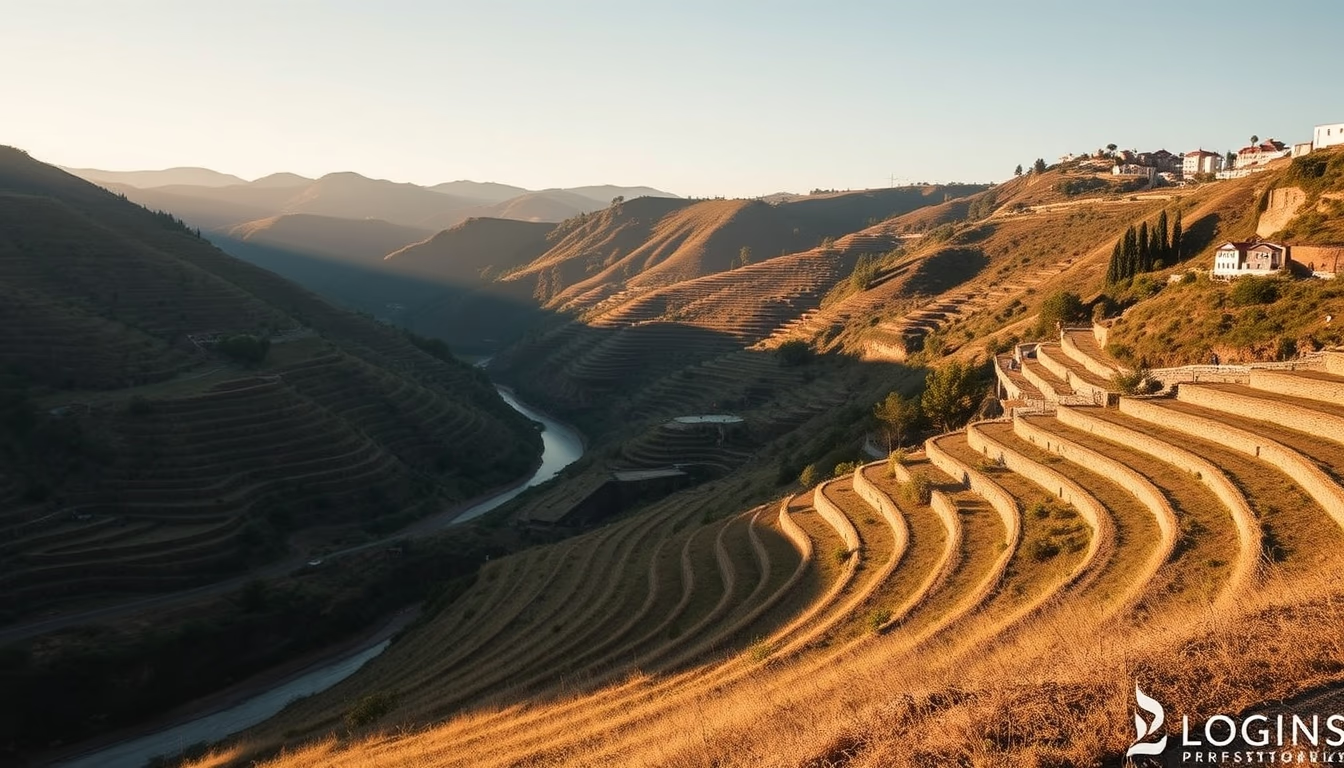
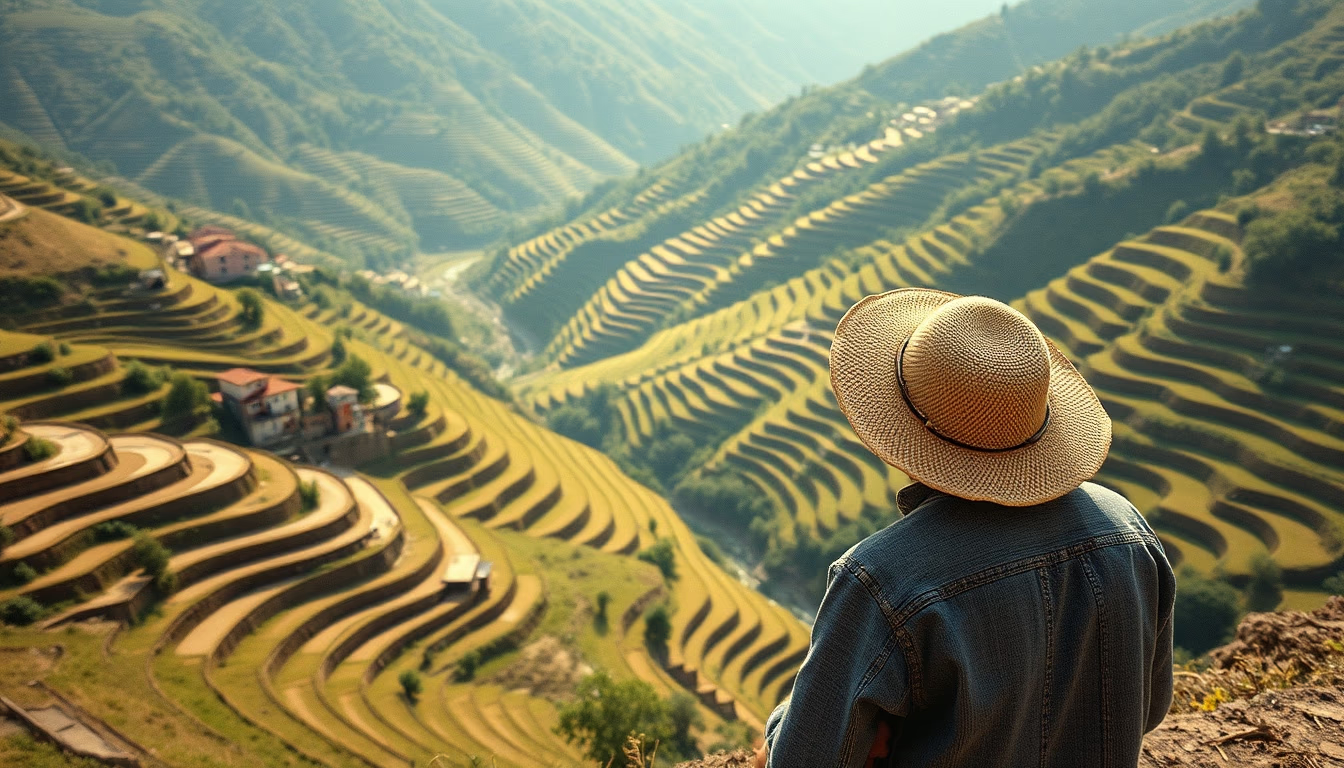
The Douro Valley terraces in Portugal form a millennia-old wine landscape carved into schist, home to Port wine and a UNESCO World Heritage site.
About this subject
The Douro Valley in northern Portugal is one of the oldest and most stunning wine regions in the world. Its steep slopes were transformed over centuries into terraces supported by schist stone walls, enabling vine cultivation on otherwise unusable terrain. This mountain farming technique dates back to Roman times, but it was from the 18th century, with the demarcation of the Port wine region, that the terraces became the landscape's hallmark. The schist, a dark metamorphic rock, absorbs heat during the day and releases it at night, favor grape ripening in a Mediterranean climate of hot summers and harsh winters.
The region was designated a UNESCO World Heritage site in 2001, not only for its scenic beauty but as a living example of an evolving cultural landscape. The Douro terraces host vineyards of varieties such as Touriga Nacional, Tinta Roriz, and Touriga Franca, which produce renowned Port wines (tawny, ruby, vintage) and still Douro wines. Production is divided into three sub-regions: Baixo Corgo (wetter, more productive), Cima Corgo (central, medium quality), and Douro Superior (drier, hotter, full-bodied wines). Each has distinct soil and microclimate characteristics.
Interestingly, building and maintaining the terraces requires intense manual labor. Stones are fitted without mortar, allowing natural drainage. Many terraces are hundreds of years old and are still cultivated by hand or with small tractors. The Douro River, which cuts through the region, is navigable and was historically used to transport Port wine barrels to Vila Nova de Gaia for aging. Today, wine tourism boosts the local economy, with quintas offering tastings and accommodation.
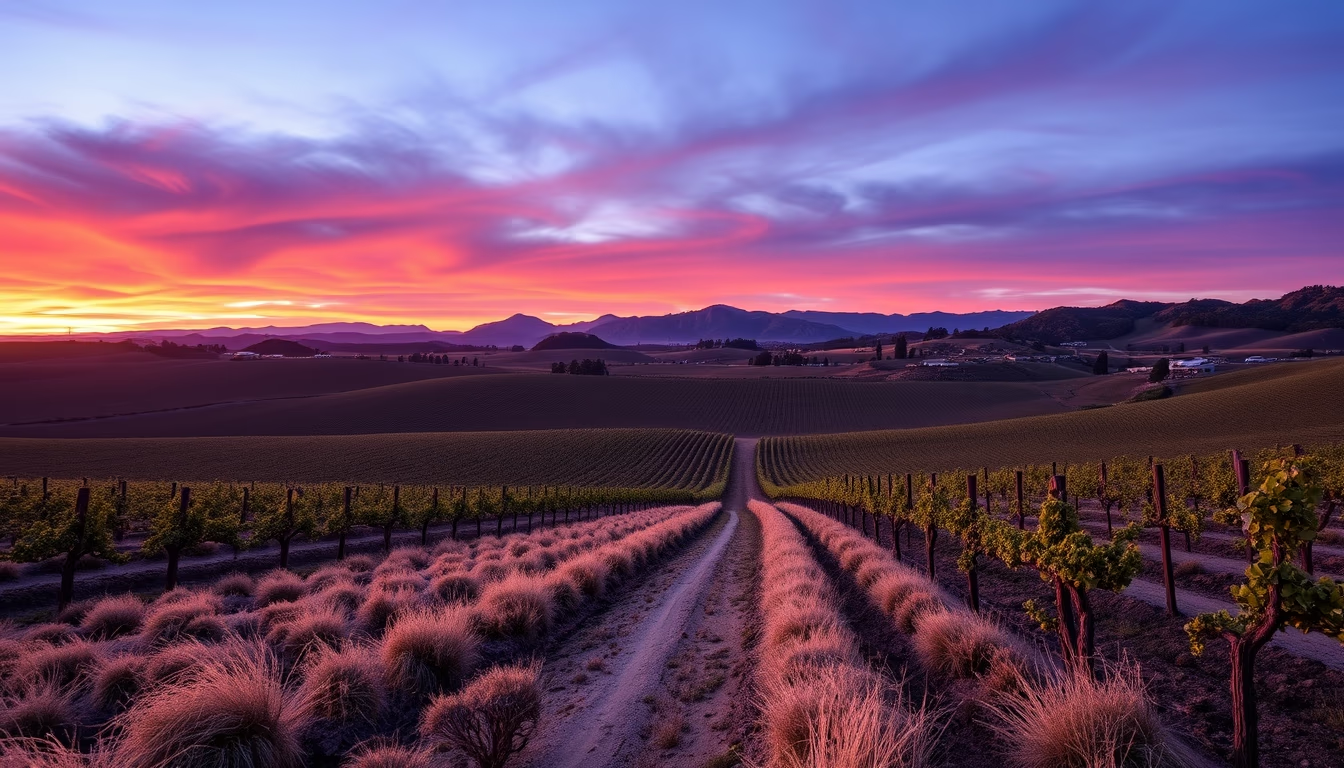
The landscape changes dramatically with the seasons: in autumn, the vine leaves turn golden and red; in spring, intense green dominates; in summer, the heat makes the schist shimmer. This harmony between nature and human labor makes the Douro a unique example of heroic viticulture.
Frequently Asked Questions
Why are the Douro terraces so important for Port wine?
The terraces allow grape cultivation on steep slopes, maximizing sun exposure and drainage. The schist retains heat, favoring grape ripening essential for Port. This ancient technique is fundamental to the region's identity.
How are the Douro terraces built and maintained?
They are built with schist stones fitted without mortar, forming walls that hold the soil. Maintenance is manual or with small tractors, and many terraces are centuries old, requiring constant repairs after heavy rains.
Which grape varieties are grown on the Douro terraces?
The main ones are Touriga Nacional, Tinta Roriz (Tempranillo), Touriga Franca, Tinta Barroca, and Tinto Cão. For whites, Viosinho, Gouveio, and Rabigato stand out. These varieties adapt well to the schist and climate.
Direct URL
https://pub-c7d6a6ea828543ac903a74a341ccb2e1.r2.dev/imagens/douro-valley-terraces-magazine-editorial-fresh11.avifHow to credit
Include a visible link back to UtilizAí. Copy one of the snippets below:
<a href="https://xn--utiliza-eza.com/en/midia/imagens/douro-valley-terraces-magazine-editorial-fresh11">Douro valley terraces</a> by <a href="https://xn--utiliza-eza.com">UtilizAí</a>, licensed under <a href="https://creativecommons.org/licenses/by/4.0/">CC BY 4.0</a>.
[Douro valley terraces](https://xn--utiliza-eza.com/en/midia/imagens/douro-valley-terraces-magazine-editorial-fresh11) by [UtilizAí](https://xn--utiliza-eza.com), CC BY 4.0
License: CC-BY-4.0